Türkiye's Answer to America's Leonidas? ASELSAN EJDERHA Explained

How were 51 drones stopped in seconds, with a single command and no missiles? At its Gölbek Firing and Test Center, Turkish defence company ASELSAN demonstrated its EJDERHA high-power electromagnetic system: first two fibre-optic, cable-guided drones were disabled at about 1,000 metres, then 51 drones that took off at the same time were stopped within seconds.
ASELSAN, Türkiye's largest defence electronics company, marked its 51st anniversary with a two-stage demonstration at its Gölbek Firing and Test Center near Ankara. According to the company's statement on 15 November, in the first stage EJDERHA disabled two different fibre-optic drones from about 1,000 metres. In the second stage, 51 drones launched at the same time were stopped within seconds with a single command. No missiles or bullets were used.
ASELSAN General Manager Ahmet Akyol said: "ASELSAN's EJDERHA system has become the first system in the world to bring down 51 drones with a single button, without firing a missile or using any ammunition."
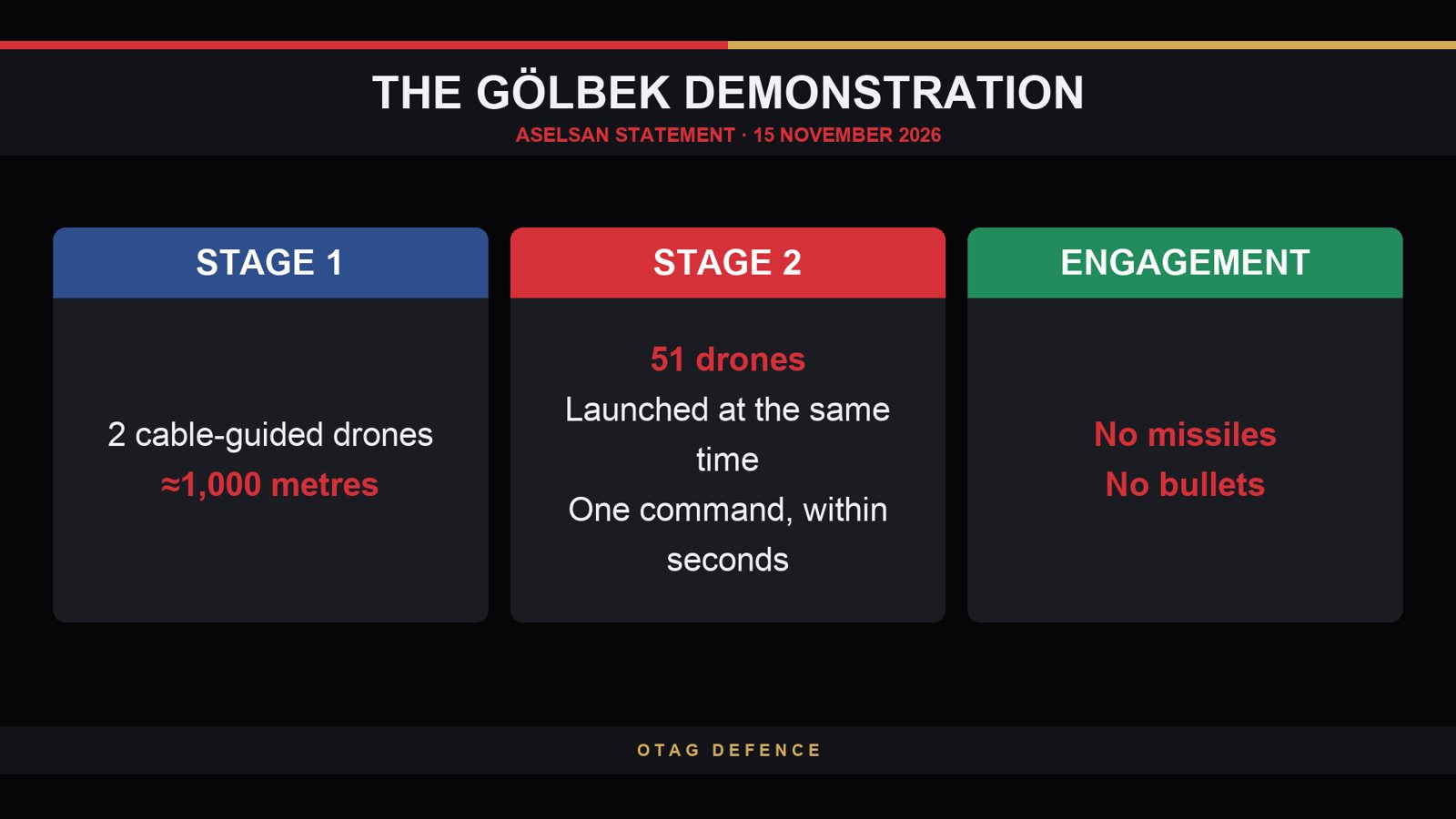
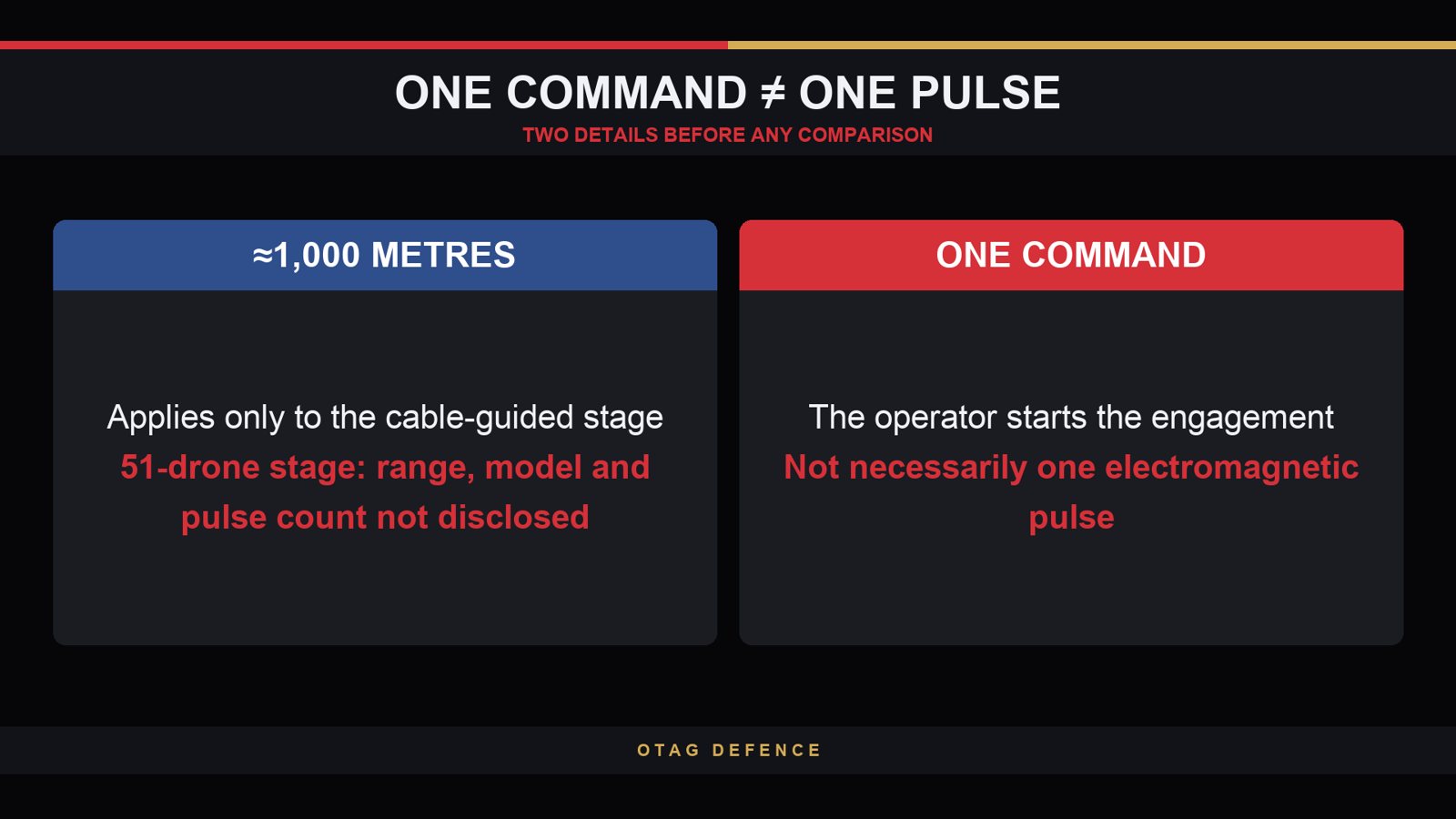
To read the result correctly, two details matter. First, the figure of about 1,000 metres belongs only to the fibre-optic drone stage. For the 51-drone stage, the distance, the drone model used and the number of electromagnetic pulses were not disclosed.
Second, "a single command" describes the operator starting the engagement. It does not have to mean a single electromagnetic pulse. This difference becomes important when comparing the result with similar demonstrations around the world.
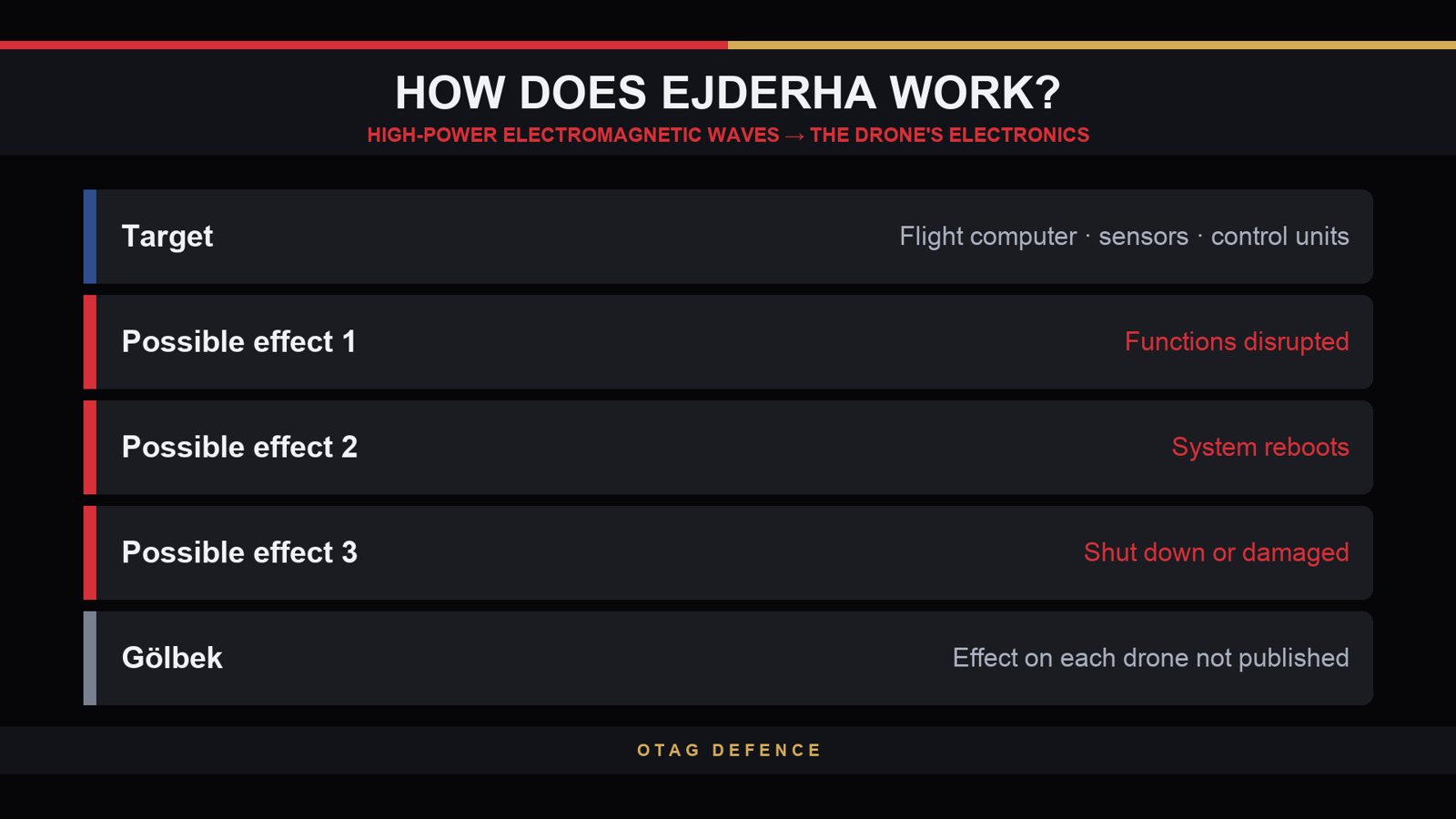
For a drone to fly, its flight computer, sensors and electronic control units have to work as well as its motors. EJDERHA, which means "dragon" in Turkish, uses vacuum electronics technology to generate high-power electromagnetic waves and directs that energy at the target.
The effect depends on the target's electronics and on the conditions of the engagement: functions can be disrupted, the system can reboot, it can shut down or it can be damaged. Which effect occurred on each target at Gölbek was not shared.
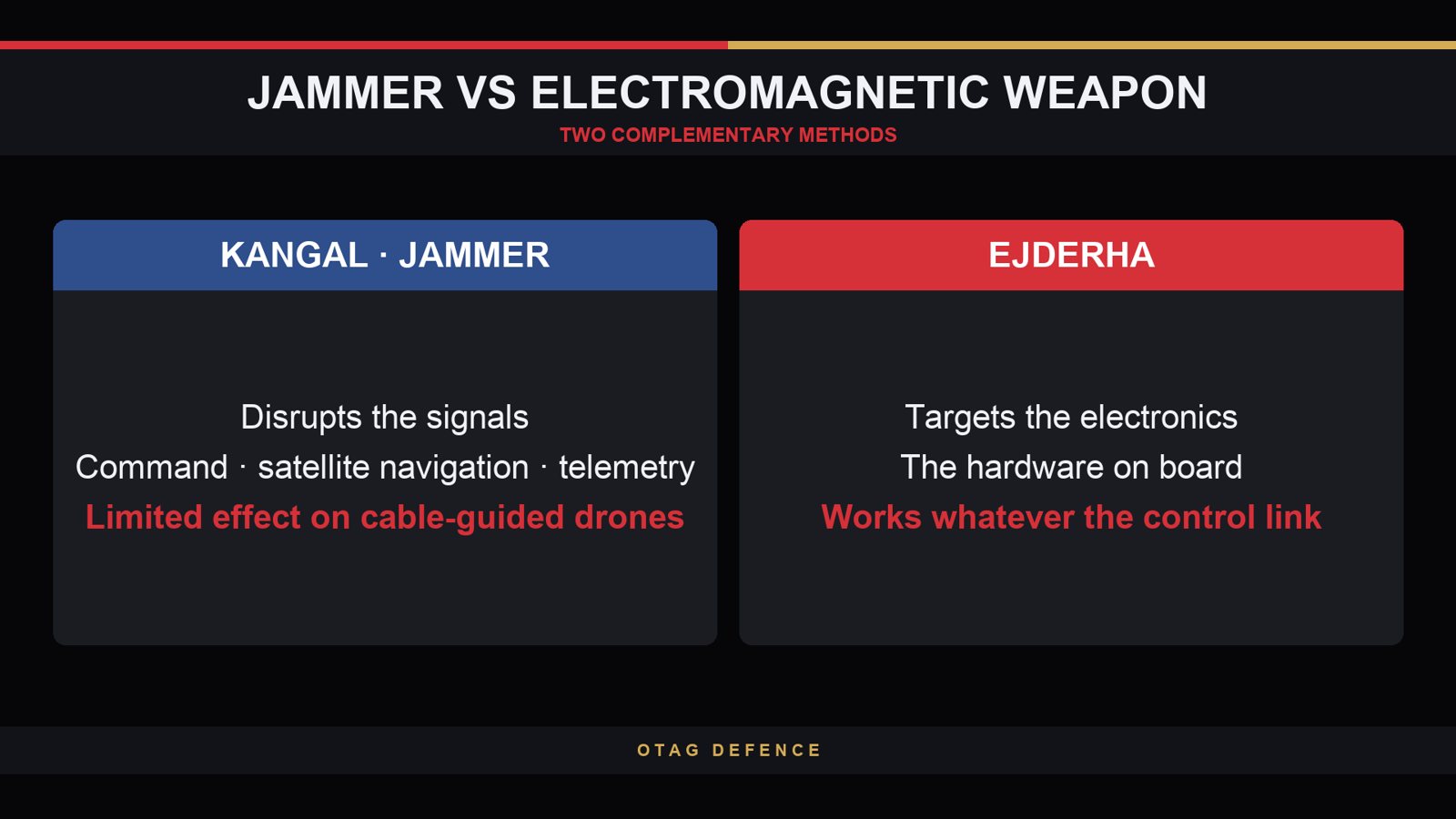
The difference becomes clearer when EJDERHA is compared with ASELSAN's KANGAL system. KANGAL jams a drone's control, satellite navigation and telemetry signals. EJDERHA, by contrast, reaches the electronics on board the drone directly. In other words, whatever type of control link the drone uses, there is a second way to stop it. At a demonstration in September, ASELSAN presented the two systems together as complementary capabilities.
That is also why the fibre-optic drone stage matters. When a drone is controlled through a fibre-optic cable, its commands travel along the cable, so jamming has limited effect; but the drone's electronics still have to work. EJDERHA stopping two fibre-optic targets at about 1,000 metres shows that, under the test conditions disclosed, it achieved results against this threat.
The Gölbek result is not a one-off demonstration; it is the latest step in a test process that has lasted more than a year.
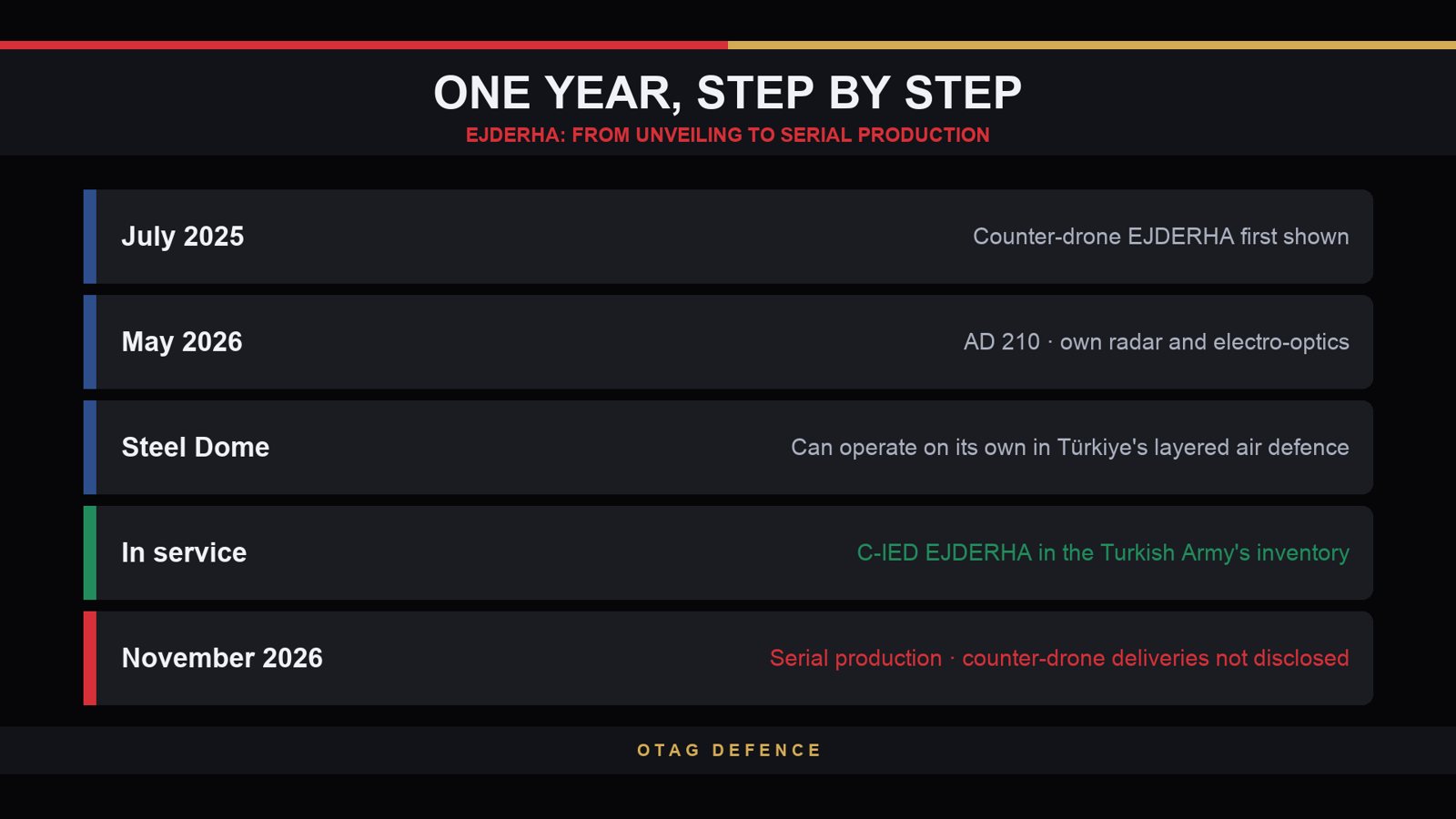
In July 2025 the counter-drone version, AD 200, was unveiled on a towed platform at the IDEF defence exhibition in Istanbul. At the end of 2025, after drone swarm tests, it entered production.
In January 2026 at Gölbek, the system engaged three fibre-optic FPV drones at the same time from hundreds of metres. FPV, or first-person view, drones are kamikaze drones flown with a live camera feed. In April, a mobile EJDERHA developed against booby-trapped explosives entered the inventory of the Turkish Land Forces.
The AD 210, unveiled in May at the SAHA 2026 exhibition, added a radar and advanced electro-optical equipment, so the system can now operate on its own. And then November: first two fibre-optic drones from 1,000 metres, then 51 drones.
Over this period, both the number of targets and the disclosed distance grew step by step. This is also the advantage of electromagnetic systems: under suitable conditions, a single engagement can reach the electronics of more than one drone.
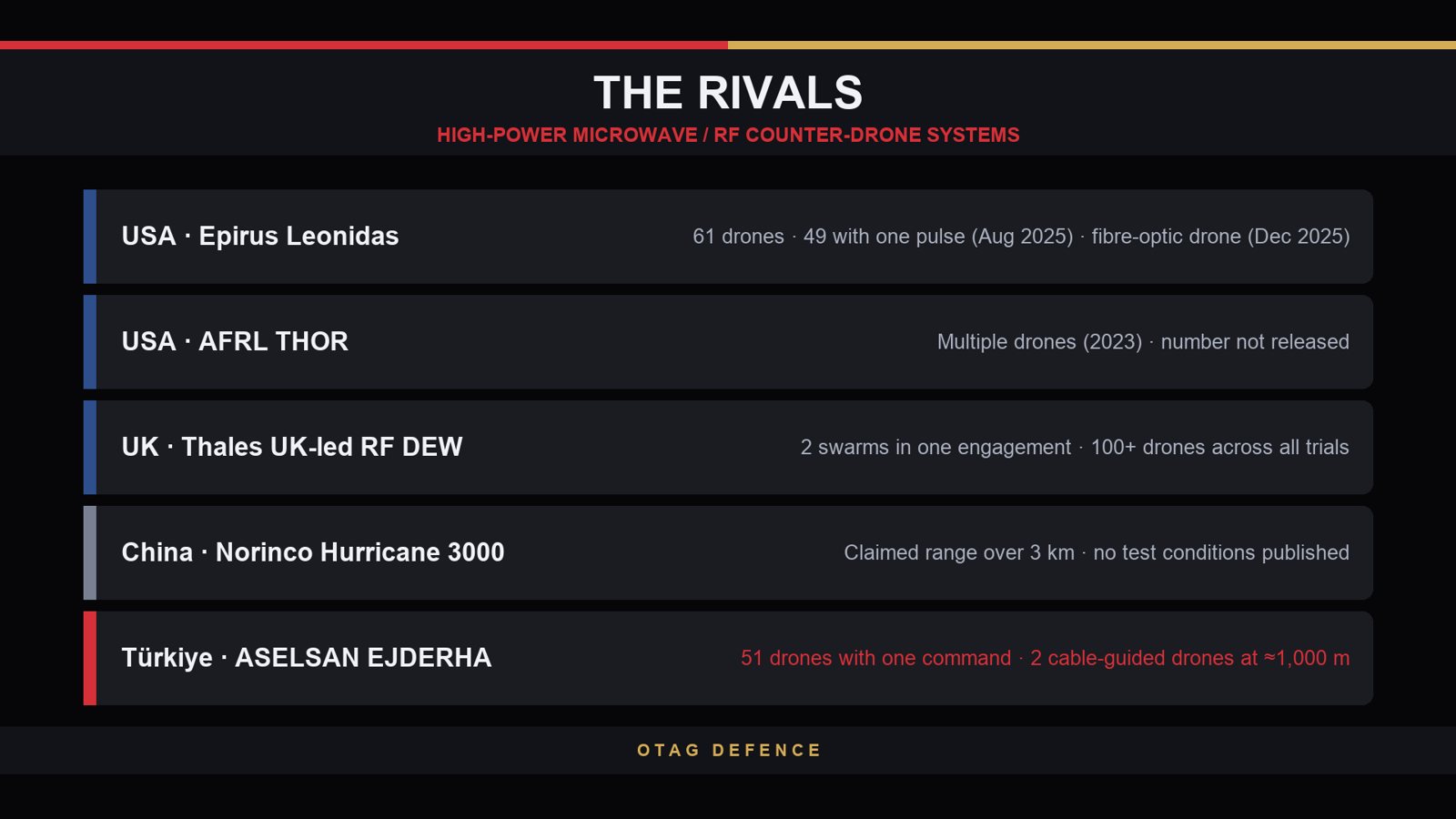
Türkiye is not the only country working in this field. The American company Epirus said that at its Leonidas demonstration in August 2025 it disabled all 61 drones, stopping 49 of them with a single electromagnetic pulse. In December 2025 it also announced a successful engagement against a fibre-optic drone.
The U.S. Air Force's THOR system, a demonstrator developed by Thales in the United Kingdom and a system from Norinco in China are also in this field; but in these examples either the number of drones or the test conditions were not disclosed.
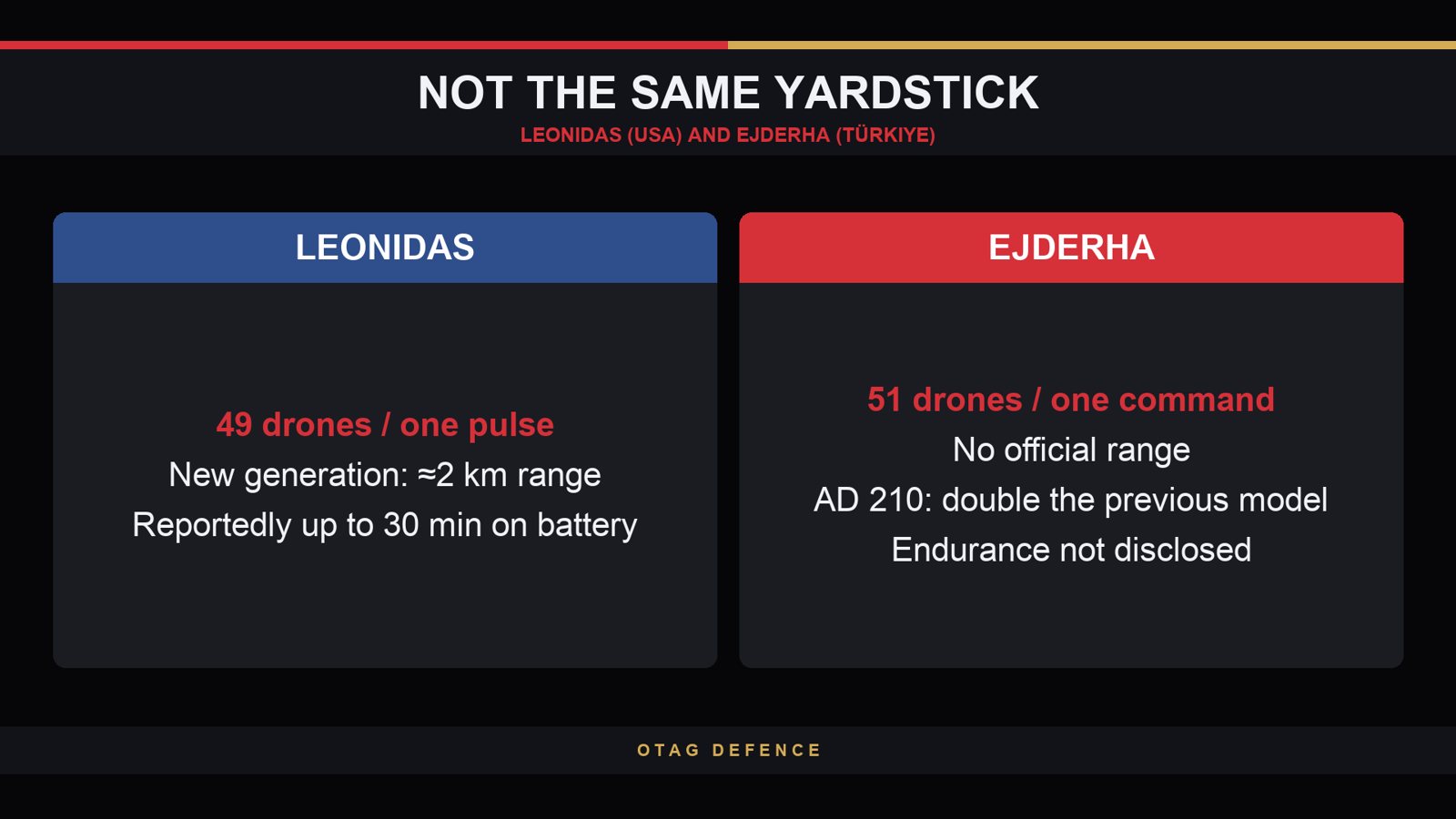
Epirus's 49 refers to a single pulse; ASELSAN's 51 refers to a single command. That is why the two results cannot be compared on the same scale.
The same is true of range. About 2 kilometres is quoted for the new-generation version of Leonidas. ASELSAN has not published an official range for EJDERHA; it says only that the AD 210's range is twice that of the previous model.
These figures are not enough to rank the systems. For Türkiye, the concrete gain is this: in a field that is being worked on intensively around the world, there is now a published multi-target result from a domestic system.
On 15 November, Akyol said the system had entered serial production; he had earlier described this stage as "low-rate serial production". The Gölbek announcement did not say which model was used in the demonstration, and the number of counter-drone systems delivered has not been disclosed. The version announced as having entered the inventory is the EJDERHA developed against explosives.
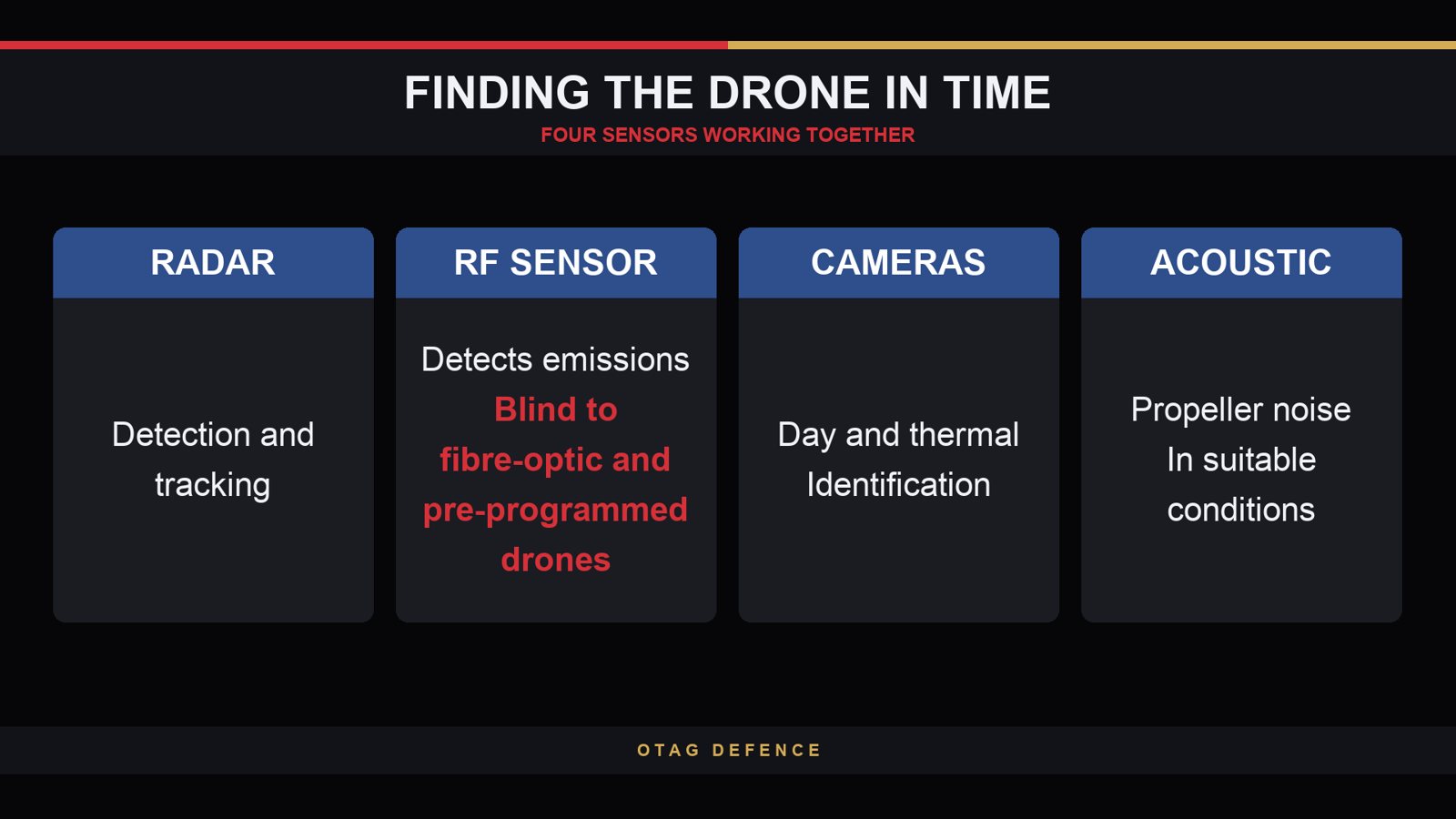
To protect a facility, finding a drone in time matters as much as stopping it. For that, radar, radio-frequency sensors, daylight and thermal cameras and acoustic sensors work together. But a fibre-optic or pre-programmed drone can fly without transmitting any signal.
That is why the radar and camera added to the AD 210 are important: the system can detect and track targets without depending on an external sensor.
At Gölbek, 51 drones took off together; but no data on autonomous swarm behaviour was shared. A real swarm may spread out and come from different directions instead of gathering at one point.
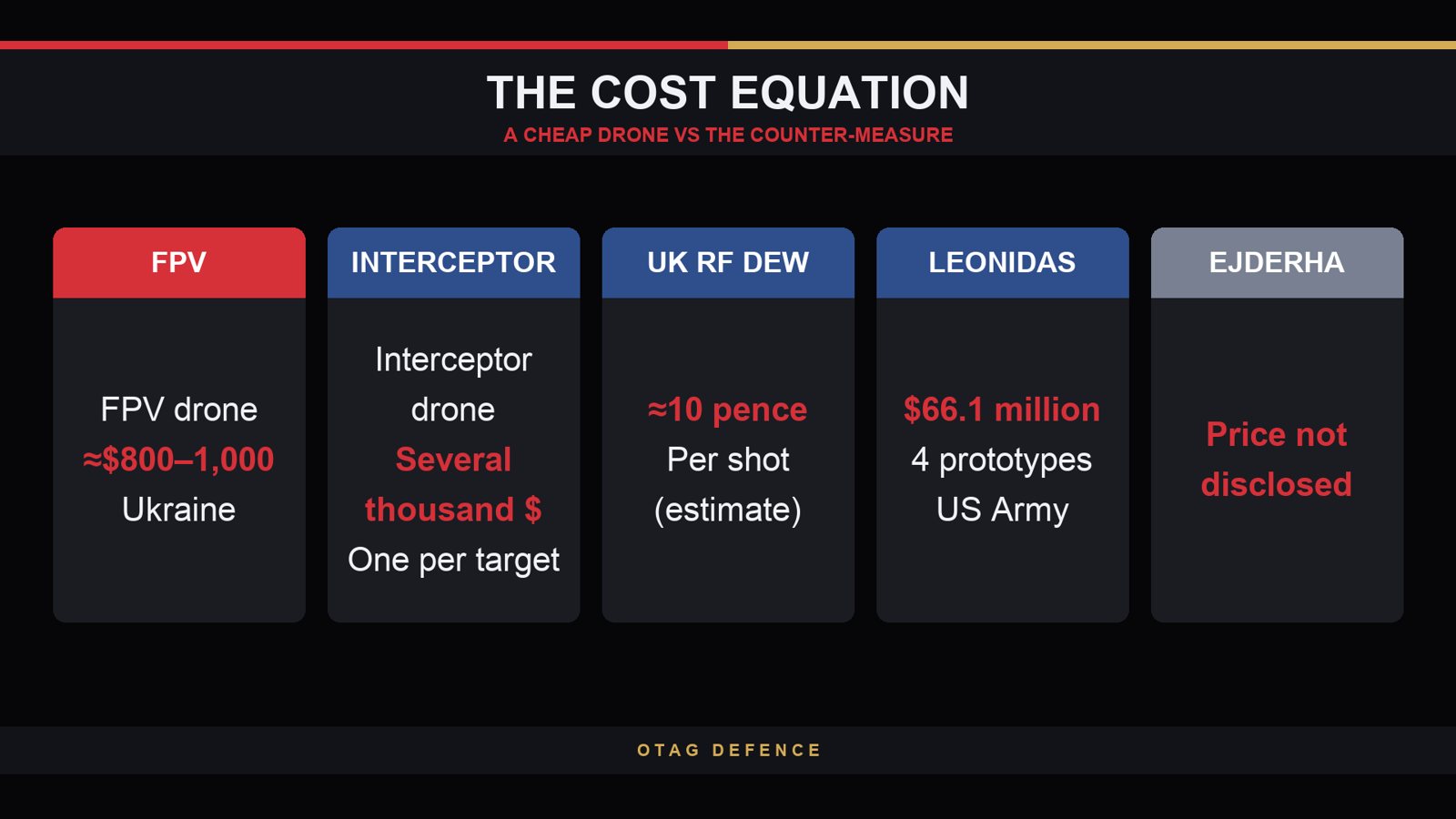
These massed threats are where EJDERHA could make the biggest difference. The system targets mini and micro-class drones, especially FPVs. An FPV drone used in Ukraine costs about 800 to 1,000 dollars. Interceptor drones, one of the cheapest kinetic solutions, cost several thousand dollars. Using a separate interceptor for every small drone both pushes the cost above the target's and quickly drains stocks. A system that uses no ammunition and can affect several targets in a single engagement could change this equation.
EJDERHA's unit price and operating cost have not been disclosed; so a numerical calculation of a wide rollout in Türkiye is not possible today.
Continuous operation is also an open question. The new-generation Leonidas can run for up to 30 minutes on its own battery; this figure has not been released for EJDERHA. No test against drones with shielded electronics has been shared either.
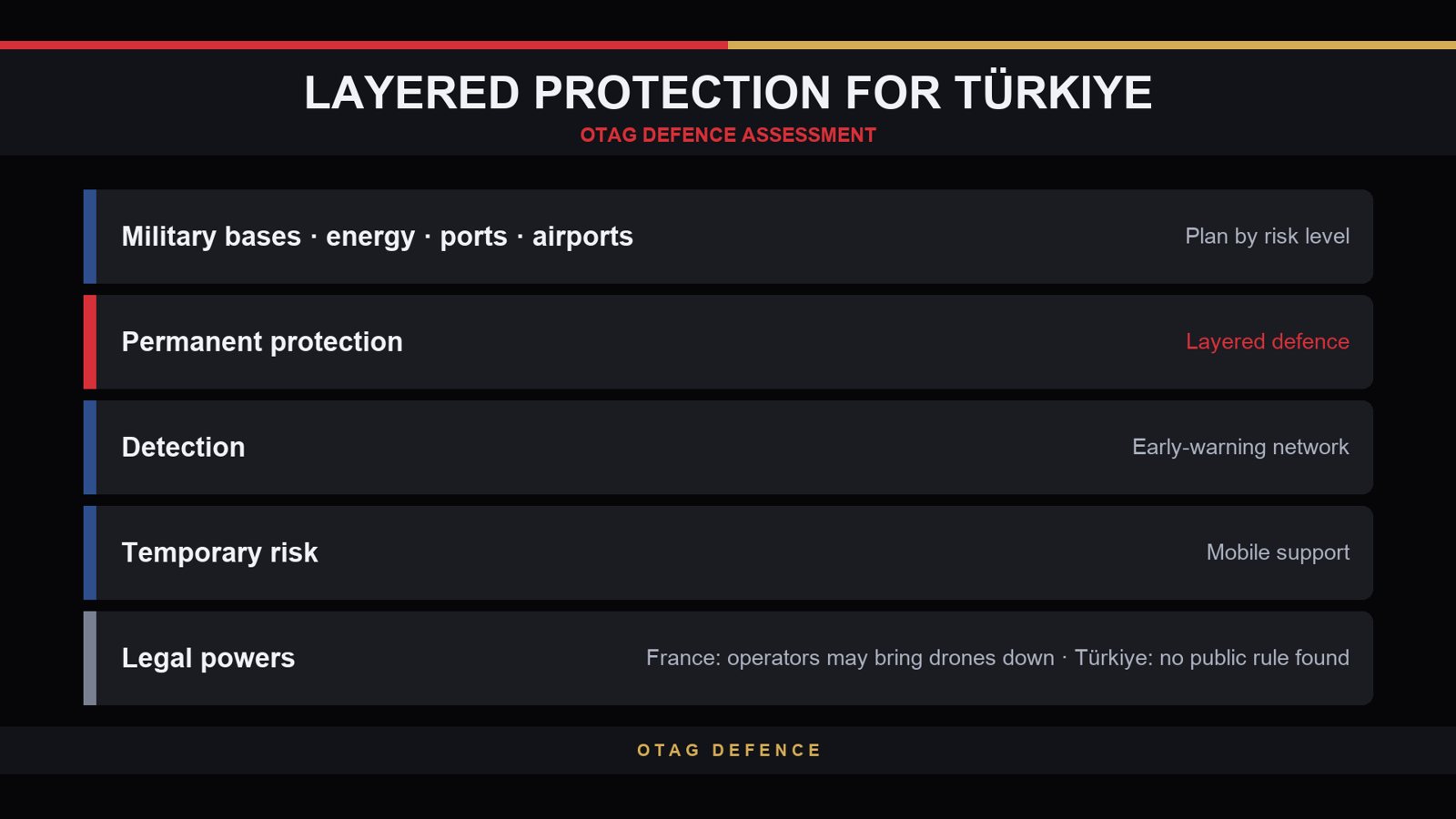
In Otag Defence's assessment, Türkiye should plan this investment according to the risk level of each facility. At airports, electromagnetic compatibility with navigation equipment; at energy facilities, keeping operations running safely; and where a disabled drone will fall should all be part of the plan.
The authority to intervene at civilian facilities is a separate question. A law passed in France in August gives approved operators of critical infrastructure the power to detect, jam and bring down drones. In Türkiye, we found no regulation in publicly available sources that gives operators of critical facilities this authority.
For some facilities, layered protection on permanent duty may make more economic sense; for others, a detection and early-warning network; and for temporary rises in risk, mobile support.
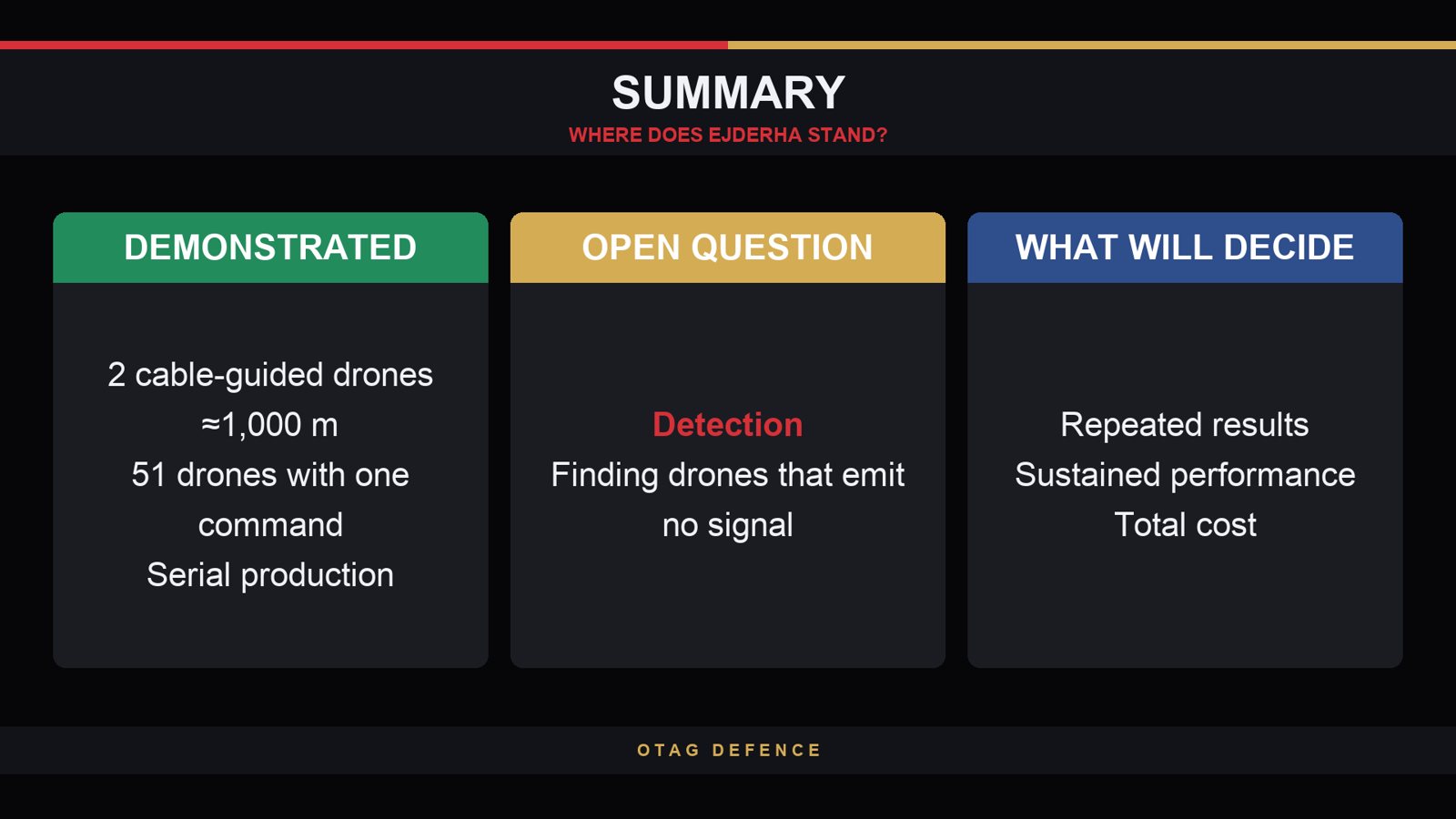
The result ASELSAN has announced shows an important capability in Türkiye's defence against small drones. Serial production also lays the groundwork for that capability to spread.
The question Gölbek leaves open is detection. Drones that do not transmit radio signals need to be found in the field, in time, by radar and cameras.
From here, three things will be decisive: repeated results against different targets, performance in continuous operation, and the total cost of protection. Whether EJDERHA can keep an air base, a port or an energy facility working safely for days on end will show what the 51-drone demonstration is really worth for defence.
Shorts on this topic
Share your view in the comments under the video.
Comment on YouTubeSources
- ASELSAN – EJDERHA stops 51 drones on its 51st anniversary (official video)
- NTV – ASELSAN's EJDERHA brings down 51 drones with one command (in Turkish)
- Hürriyet Daily News – ASELSAN says EJDERHA disables 51 drones at once
- Anadolu Agency – Aselsan says Ejderha system takes down 51 drones
- CNN Türk / AA – EJDERHA and Steel Dome (January 2026) (in Turkish)
- ASELSAN – EJDERHA / AD 200 at IDEF 2025 (official video)
- ASELSAN – EJDERHA AD 210 and KANGAL FPV 100 (official video)
- Epirus – Leonidas defeats 49-drone swarm
- Epirus – Leonidas defeats fibre-optic controlled drone
- US Air Force Research Laboratory – THOR swarm demonstration
- UK Ministry of Defence – RF DEW (official video)
- Reuters – Europe weighs giving infrastructure companies powers to bring down drones
Footage: ASELSAN, Epirus, DVIDS, Reuters, STM, Baykar, Tüpraş, BOTAŞ.
More analysis
 8:32
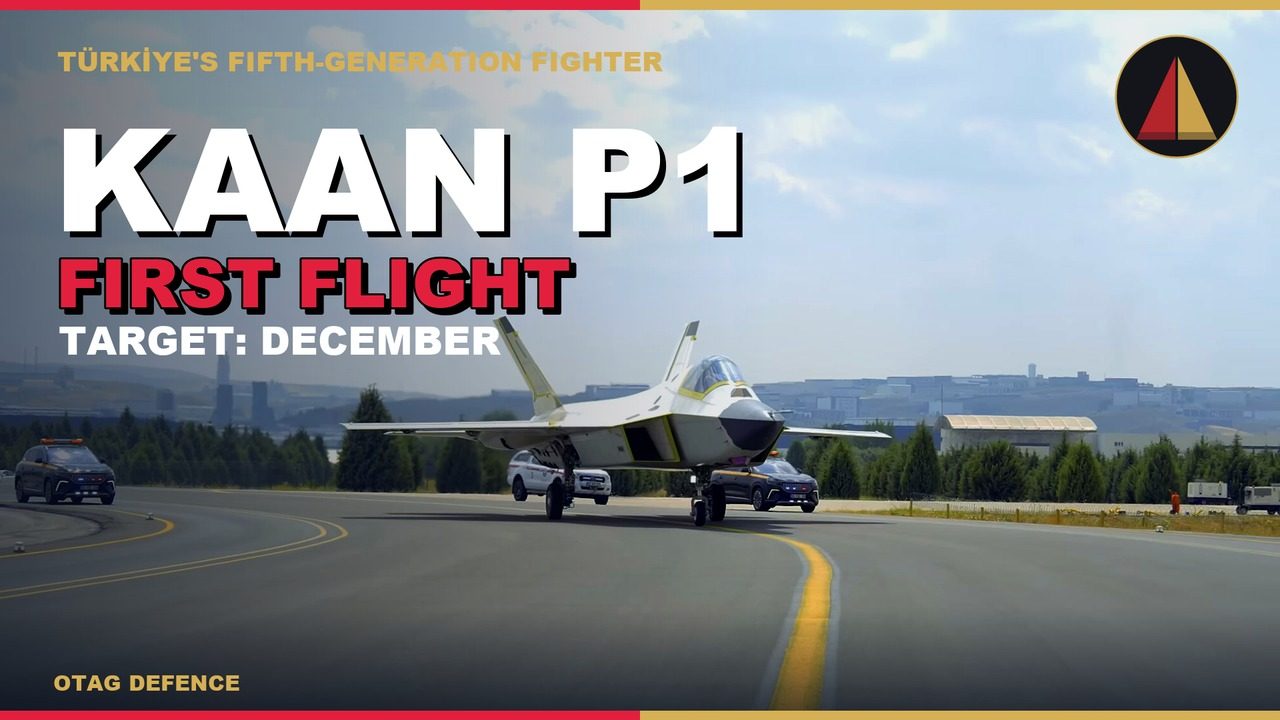
Türkiye's KAAN Stealth Fighter: Second Prototype Targets December First Flight
Otag Defence assessment“For KAAN, the question for 2026 is no longer "will it fly?" It is "how fast will the prototypes multiply?"”
 7:29
Türkiye's Kizilelma: The World's First Unmanned Fighter Jet in Service?
Is KIZILELMA really the world's first unmanned fighter in service? What does entering service actually mean? And what will Türkiye do with three aircraft?
7:54
Türkiye's Answer to America's Leonidas? ASELSAN EJDERHA Explained
ASELSAN, Türkiye's largest defence electronics company, marked its 51st anniversary with a two-stage demonstration at its Gölbek Firing and Test Center near Ankara. According to the company's statement on 15 November, in the first stage EJDERHA disabled two different fibre-optic drones from about 1,000 metres. In the second stage, 51 drones launched at the same time were stopped within seconds with a single command. No missiles or bullets were used.