Türkiye's Kizilelma: The World's First Unmanned Fighter Jet in Service?
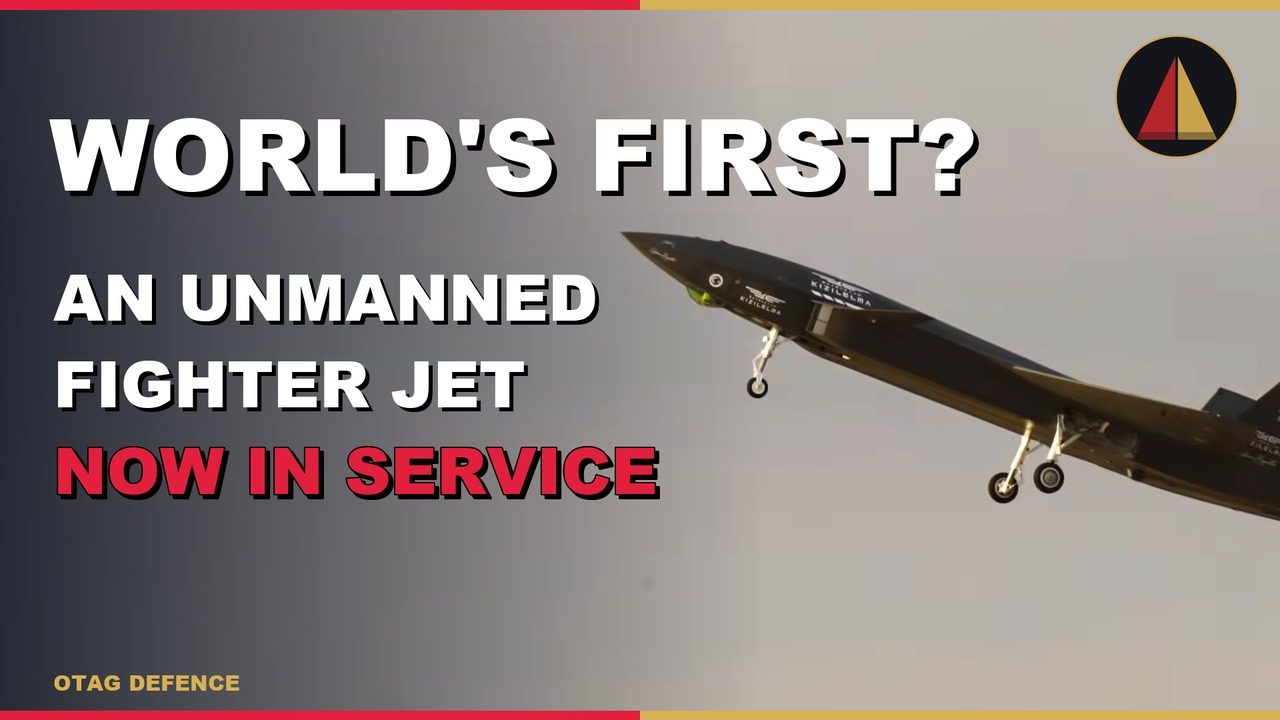
On November 19, 2026, Turkish drone maker Baykar delivered the first three Kizilelma unmanned fighter jets to Türkiye's security forces after acceptance tests, calling it a first in aviation history.
Is KIZILELMA really the world's first unmanned fighter in service? What does entering service actually mean? And what will Türkiye do with three aircraft?
19 November 2026 marks a threshold for Turkish aviation. According to Baykar, the Turkish company behind the Bayraktar TB2 drone, the first three KIZILELMA unmanned fighter jets have completed their acceptance tests and entered the inventory of Türkiye's security forces. Over the course of the project, test and training flights added up to 600 sorties.
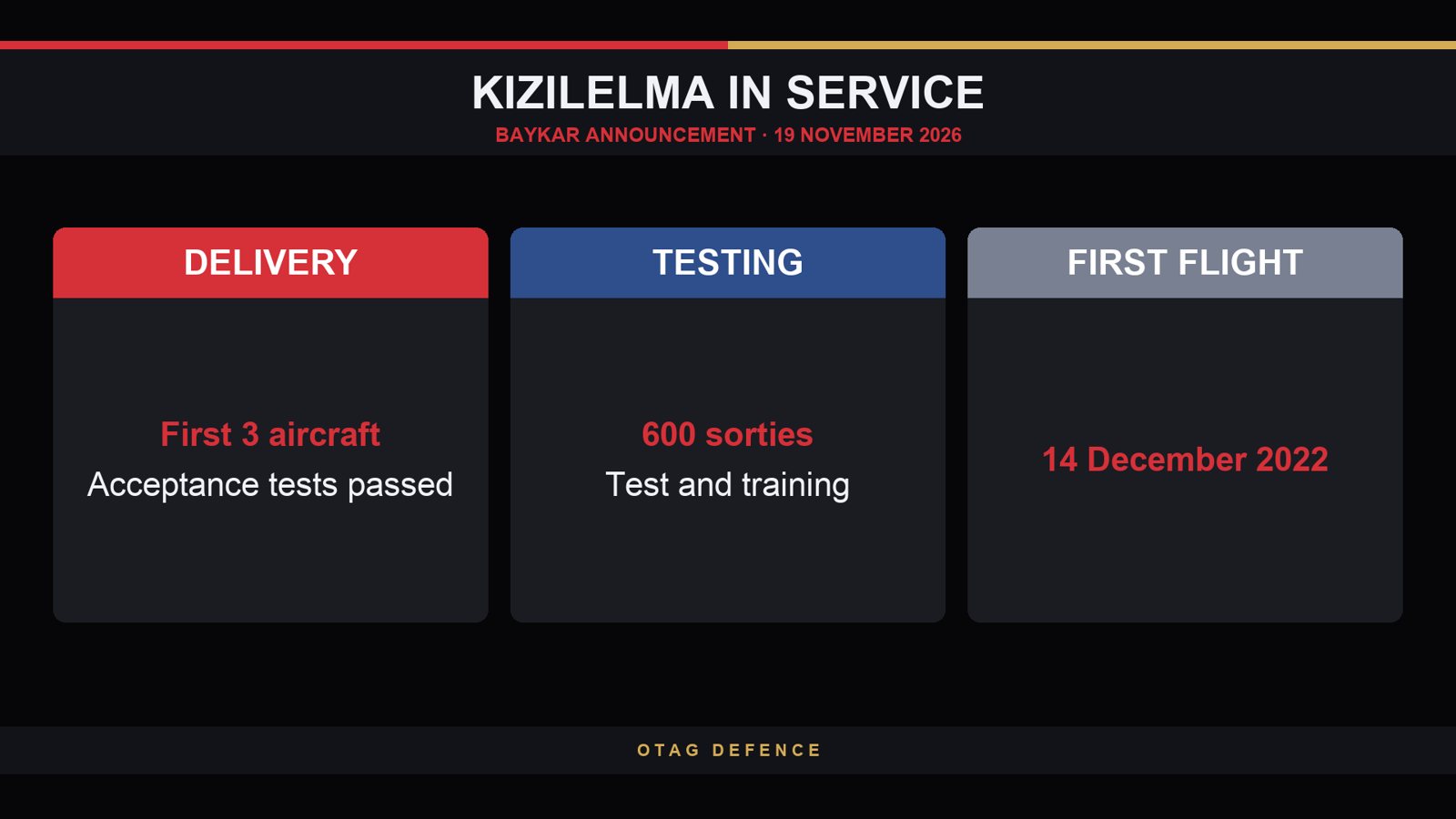
In its statement Baykar did not name the receiving service; it used the phrase "security forces". Haber Aero had earlier reported that the aircraft would join the Turkish Air Force, and press reports also say the first three aircraft went to the Air Force.
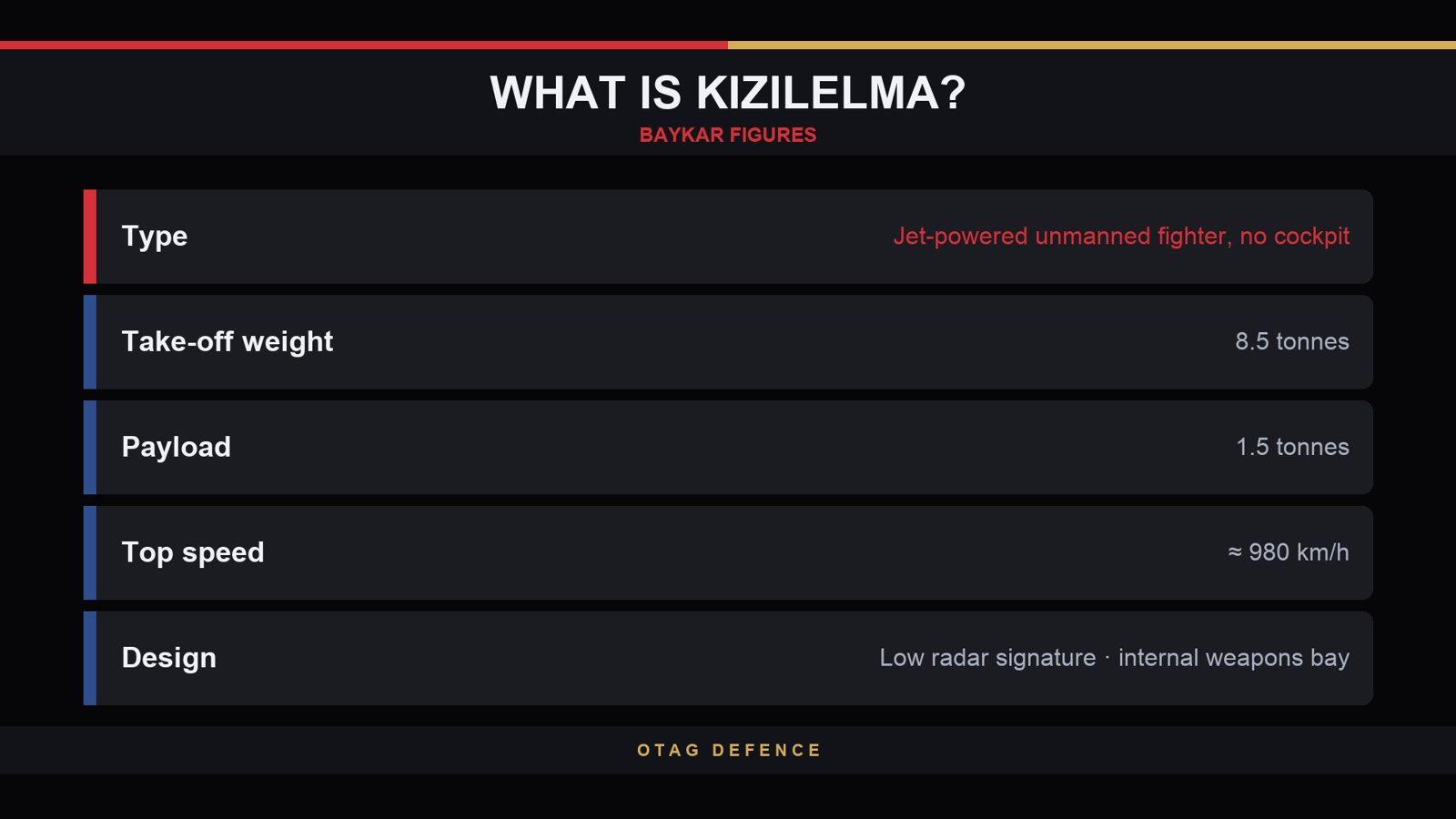
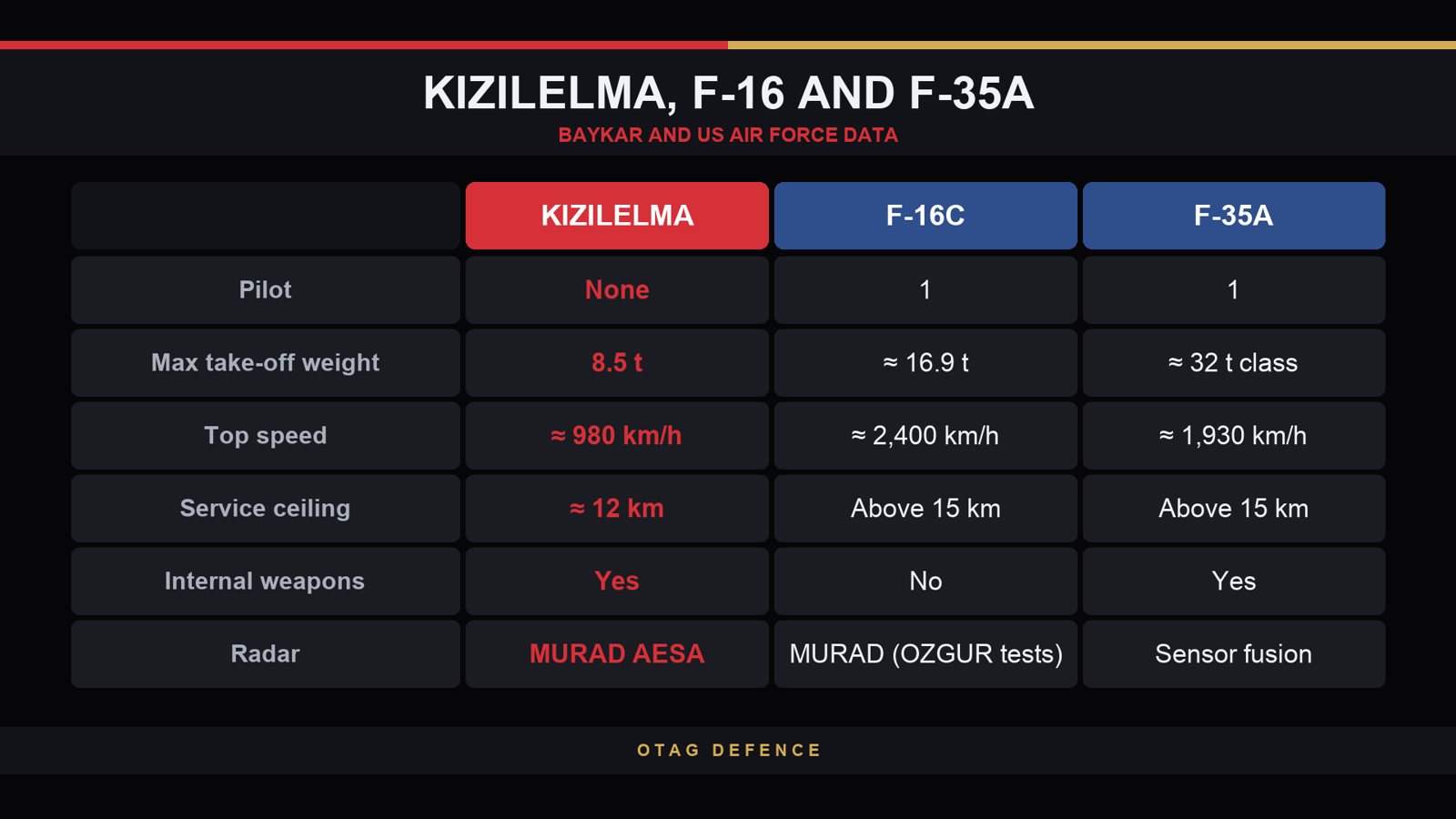
For readers new to the program: KIZILELMA is not a slow surveillance drone. It is a jet-powered combat aircraft with no cockpit, designed for air-to-air combat and ground attack. According to Baykar, it has a take-off weight of 8.5 tonnes, carries 1.5 tonnes of payload and flies at up to about 980 km/h. Its shape is designed for a low radar signature, and it can carry weapons inside its fuselage. We covered its technical features in our tenth video. Today we look at what the delivery means, where it stands in the world and what comes next.
First, a short look at the journey. Design images of KIZILELMA were released in July 2021. The aircraft made its first flight on 14 December 2022, and in 2023 it flew in close formation with the AKINCI drone, the first close formation flight of two unmanned aircraft in the world.
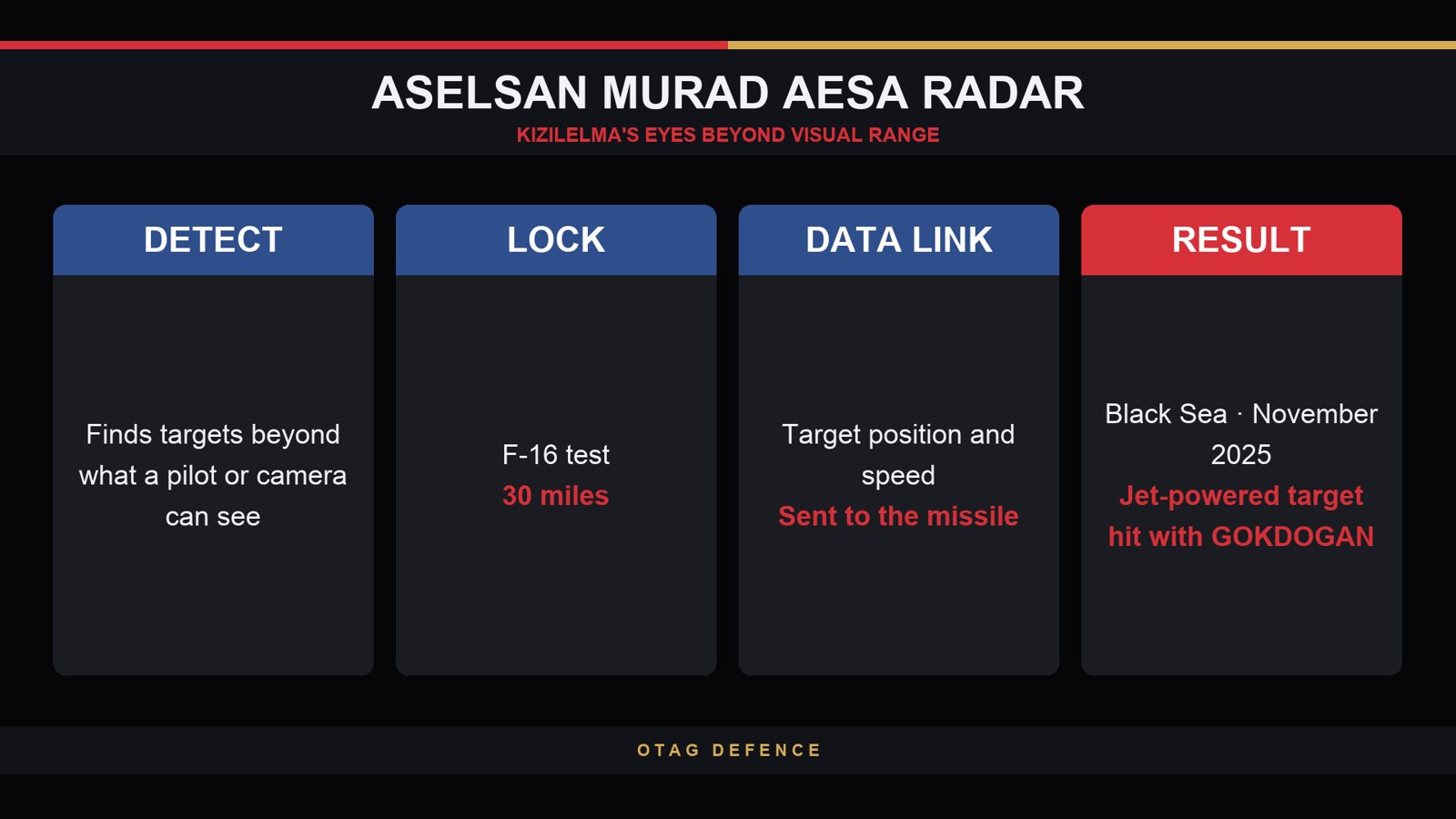
2025 was the year of weapons. In October came the first firings with the TOLUN and TEBER-82 munitions. In November, off Sinop on the Black Sea coast, a jet-powered target marked by ASELSAN's MURAD radar was shot down with the GÖKDOĞAN missile developed by TÜBİTAK SAGE, Türkiye's state defence research institute. The key part behind that shot is the MURAD radar, built by Turkish defence electronics firm ASELSAN. This AESA radar finds and tracks a target at ranges a pilot or a camera cannot see. In a test a month earlier, it detected and locked onto an F-16 30 miles away and passed the target's position and speed to the missile over a data link. With that, KIZILELMA moved into the class of combat aircraft that can hit a target beyond visual range. In December, two KIZILELMAs flew in close formation using what Baykar calls smart fleet autonomy.
2026 brought an autonomous formation flight with Italian M-346 jet trainers, a direct hit with the supersonic JET-230 missile, and the first firings from the internal weapons bay.
The picture is this: about five years and four months passed from the first design images to delivery, and about three years and eleven months from first flight to delivery. And Baykar funded the project from start to finish with its own resources.
In January 2026 Baykar had announced that two serial production aircraft would be delivered in the first quarter of the year. The delivery came in November, with three aircraft. Even so, the main promise for 2026 was kept: KIZILELMA entered service this year.
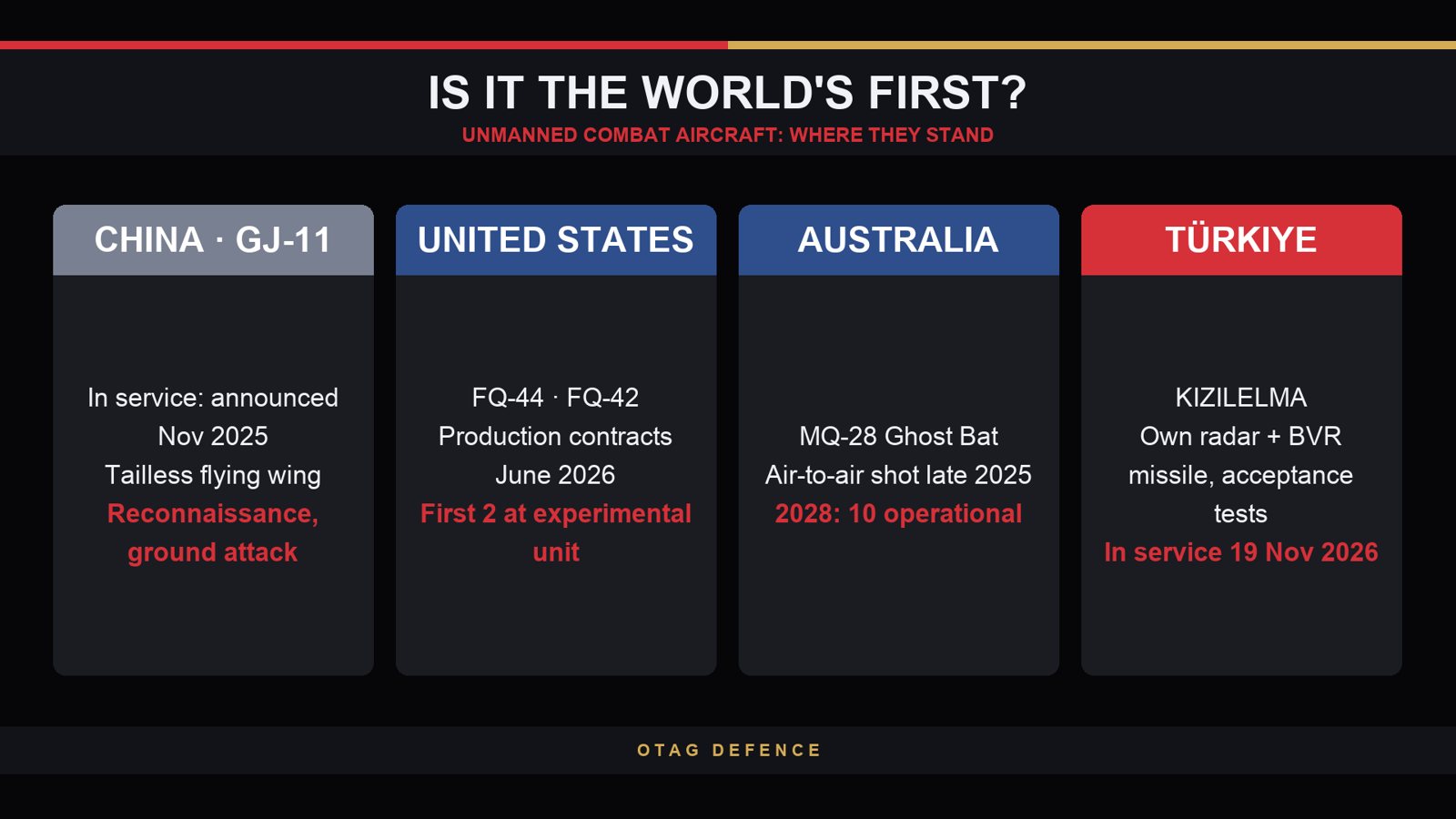
Now the real question: is Türkiye really the first country to put an unmanned fighter jet into service? The answer depends on how you define "unmanned fighter".
Let us start with China. The Chinese Air Force announced in November 2025 that the GJ-11 had entered service. This month Chinese state television said the aircraft had flown its first live-fire strike mission. But the GJ-11 is a tailless flying wing, designed mainly for reconnaissance and ground attack.
The situation in the United States is different. In June 2026 the U.S. Air Force awarded the first production contracts for its Collaborative Combat Aircraft: Anduril's FQ-44 Fury and General Atomics' FQ-42 Vengeance. The first two aircraft were delivered in August and September, but they went to the Experimental Operations Unit at Creech Air Force Base in Nevada. In other words, for now these aircraft are not in a combat squadron but in a unit developing the concept for how they will be used. The goal is more than 150 aircraft by the end of the decade.
Australia's MQ-28 Ghost Bat fired a live air-to-air missile at the end of 2025. But its first operational aircraft are due in 2028, with a target of 10 operational aircraft that year.
Otag Defence's assessment is this: if we are looking for the first unmanned combat aircraft to enter service, China's announcement came first. But in the fighter class, the first platform to openly show that it can find an air target with its own radar and destroy it with a beyond-visual-range missile, and then enter service after acceptance tests, appears today to be KIZILELMA. The strength of Baykar's claim lies in that openness.
So where does KIZILELMA stand next to crewed fighters? Like the F-35, it can carry its weapons inside its fuselage; the F-16 cannot. The same MURAD radar has also gone through flight tests in ÖZGÜR, the modernisation program for Turkish F-16s. In other words, KIZILELMA's strength is not speed. It is the ability to fly alongside these aircraft without a pilot, with a low radar signature and a domestic radar.
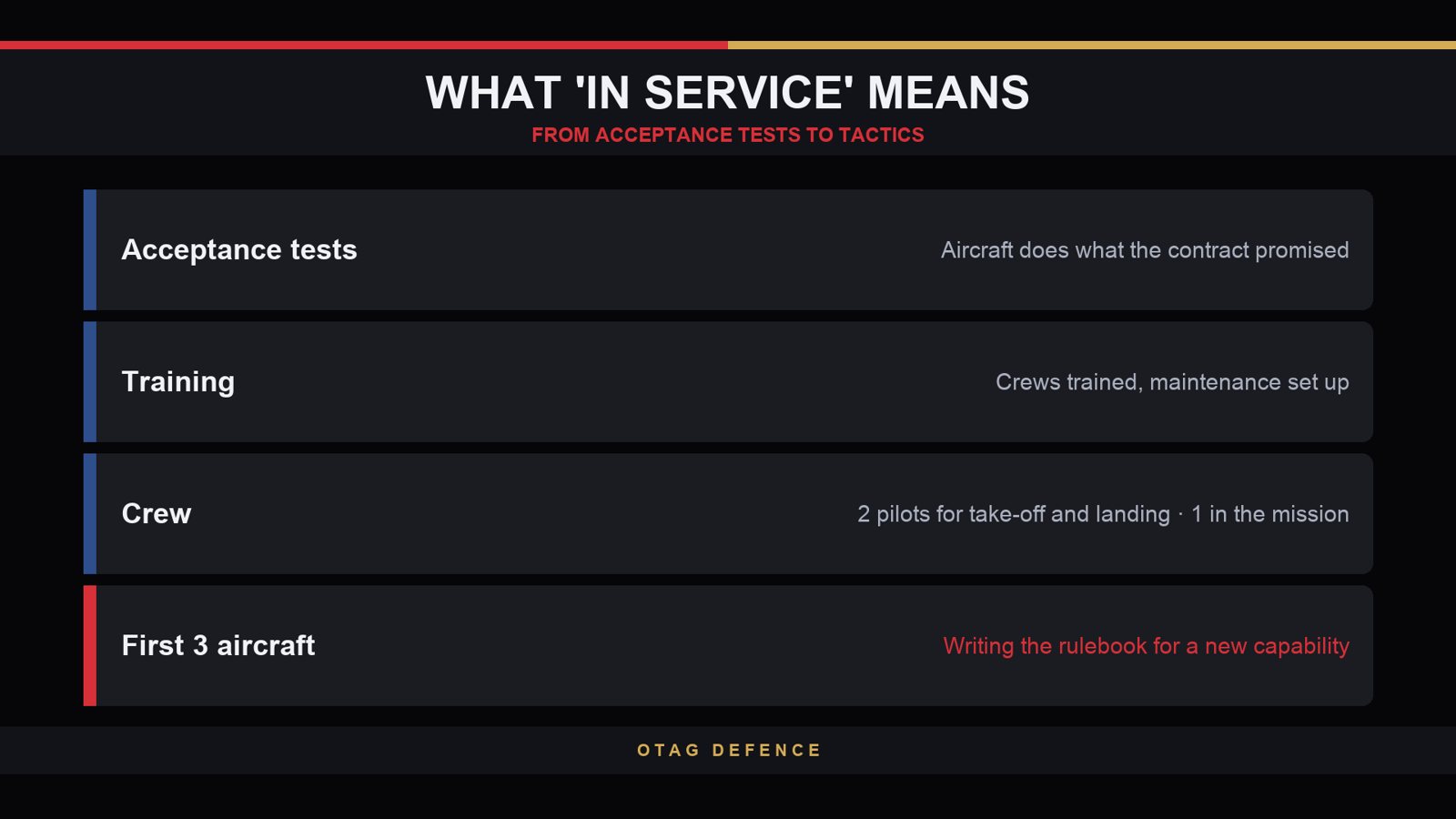
And what does "entered service" mean? Acceptance tests document that the aircraft delivers the performance promised in the contract. After that, personnel are trained, the maintenance chain is set up and tactics are written.
Halil Akar of Baykar's Flight Training and Test Center described this process in January: on KIZILELMA, two pilots handle take-off and landing, while one pilot is enough during the mission. Pilot training takes about five months and technician training about four months.
That is why the real job of the first three aircraft will most likely be to write the rules of a new capability. How does an unmanned fighter fly with F-16s? On which missions is it sent ahead? What does it do if the data link is lost? That is exactly what the United States is doing at Creech.
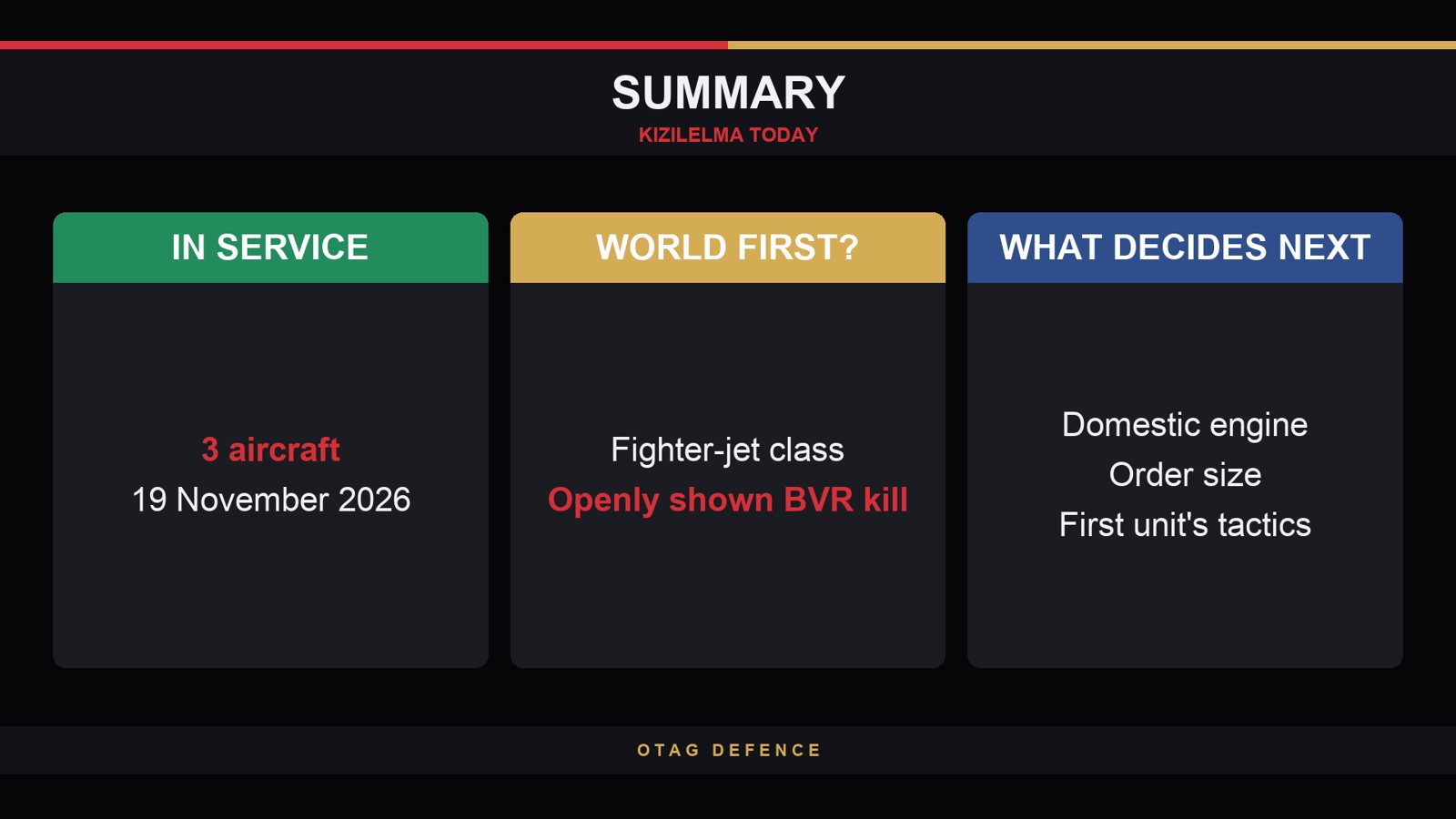
Some important information is still not public. Where the delivered aircraft will be based, which sensors they carry and the total number ordered have not been announced. It also remains to be seen how much of Baykar's goal of having more than 10 KIZILELMAs in the air in 2026 will be reflected in the inventory.
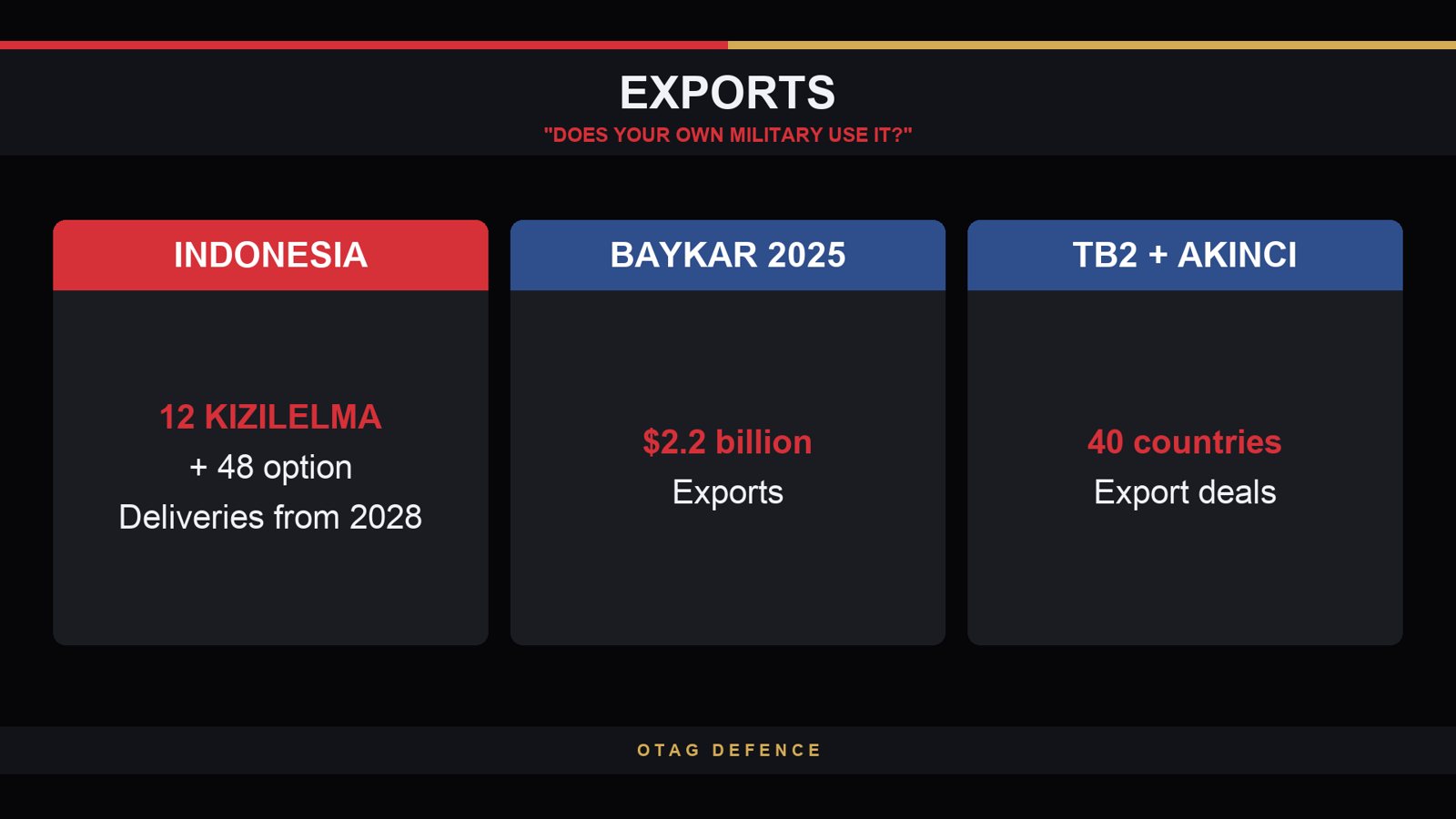
The impact of the delivery goes beyond Türkiye. One of the first questions any buyer asks is: does your own military use this system? KIZILELMA can now say yes.
This matters because the export table is already set. In May, at the SAHA defence exhibition in Istanbul, Indonesia signed for 12 KIZILELMAs. Deliveries are planned to start in 2028, and the agreement includes an option for four more squadrons totalling 48 aircraft.
Baykar also has a strong export record behind it. In 2025 the company set a new company record with 2.2 billion dollars of exports, and it has export agreements with a total of 40 countries for the TB2 and AKINCI.
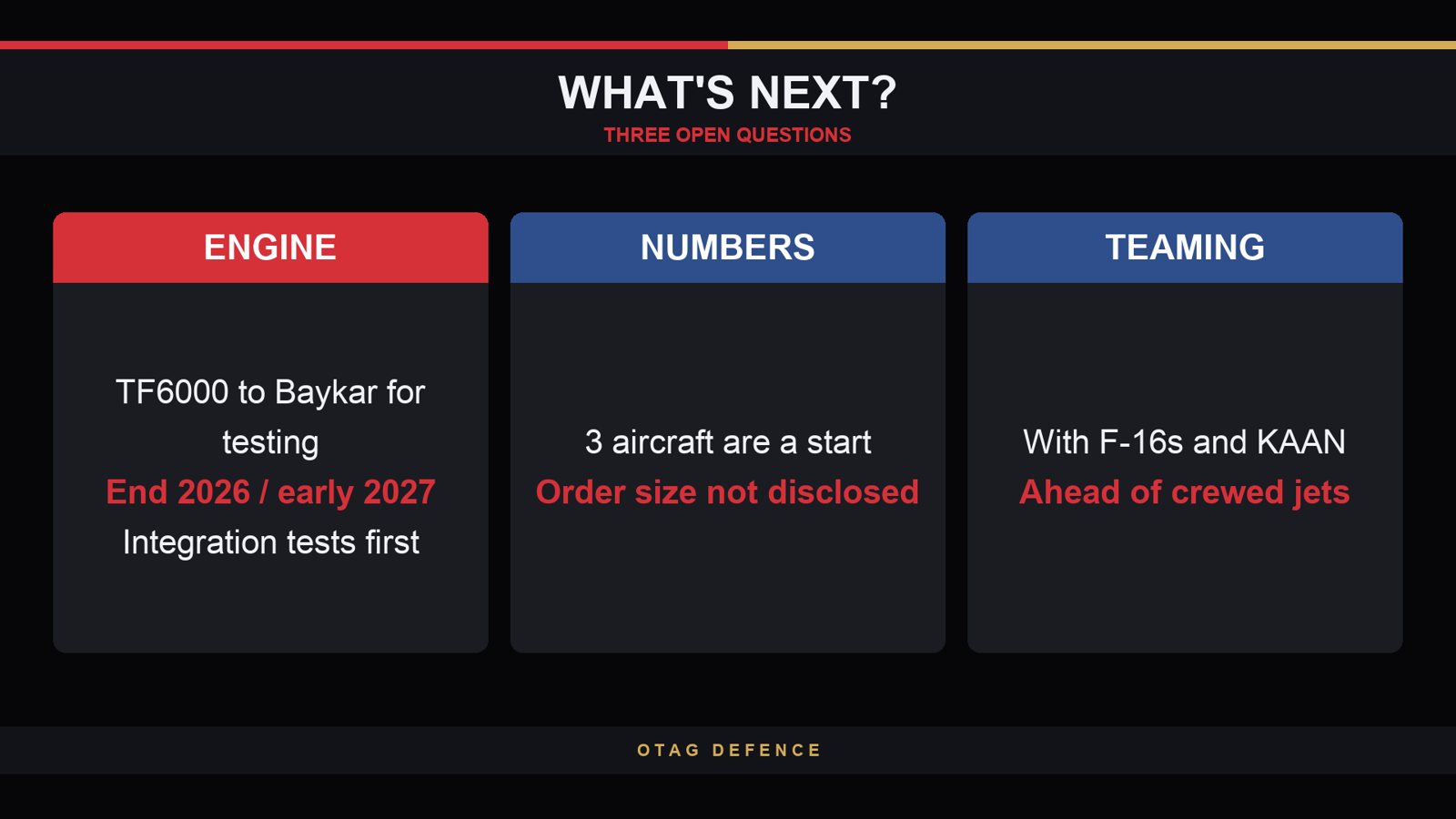
What comes next? The first item is the engine. Today KIZILELMA flies with a Ukrainian engine. Mahmut Faruk Akşit, General Manager of Turkish engine maker TEI, said in October that, barring any setback, they plan to deliver the TF6000 engine to Baykar for testing at the end of the year or in early 2027. This does not mean the engine will be fitted to serial aircraft right away; integration tests come first.
The second item is numbers. The first three aircraft are a start. Whether KIZILELMA becomes a real fleet in the Air Force depends on the contracted quantity and the production rate.
The third item is teaming. In the long run, KIZILELMA is planned to fly alongside KAAN, Türkiye's national fighter jet, and the F-16s, ahead of or beside the crewed aircraft. The M-346 test showed the first steps of this model; now those steps will be taken with Air Force pilots.
In short: the "world first" title has a strong basis in the fighter class and in openly demonstrated air-to-air capability. The period ahead will be shaped by the domestic engine, the size of the order and the tactics the first unit writes in the field.
Do you think KIZILELMA deserves the "world first" title? Share your views in the comments, and don't forget to follow Otag Defence.
Shorts on this topic
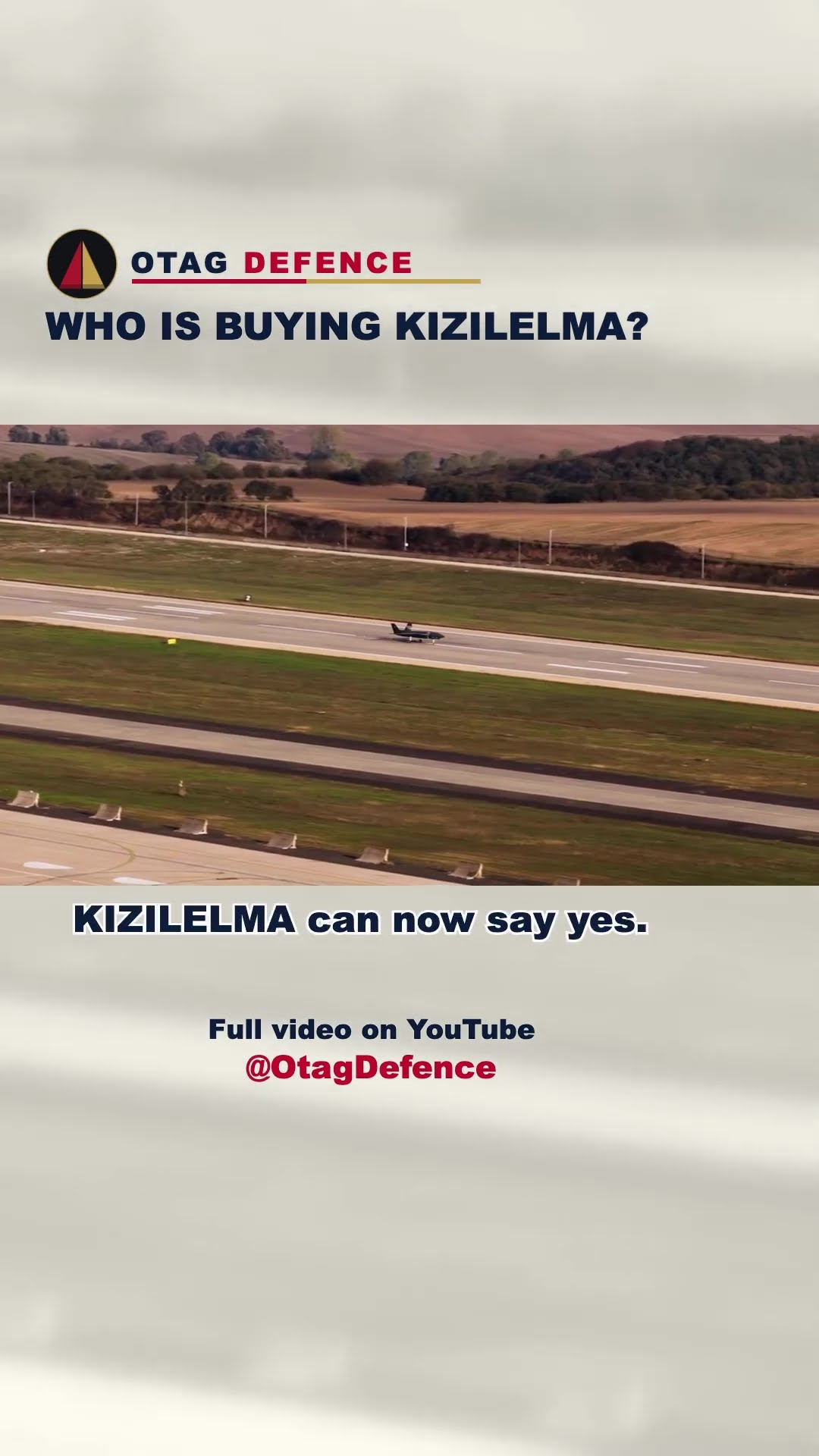
Why "in service" matters: who is buying Türkiye's unmanned fighter?

How does an unmanned fighter compare with the F-16 and F-35?

Is Türkiye's KIZILELMA really the world's first unmanned fighter in service?
Share your view in the comments under the video.
Comment on YouTubeSources
- Anadolu Agency – Türkiye's first unmanned fighter jet Kizilelma enters inventory (in Turkish)
- Yeni Safak English – Baykar delivers first 3 Kizilelma unmanned fighter jets to security forces
- Baykar – Beyond-visual-range kill with GOKDOGAN (Nov 2025) (in Turkish)
- Baykar – Formation flight using smart fleet autonomy
- Baykar – First firing tests from the internal weapons bay
- Air & Space Forces Magazine – US Air Force CCA production contracts
- US Air Force – Experimental Operations Unit
- Military Times – General Atomics delivers FQ-42 Vengeance to Nevada air base
- Australian Minister for Defence – MQ-28 Ghost Bat funding
- US Air Force – F-16 fact sheet
- US Air Force – F-35A fact sheet
Footage: Baykar, TEI, General Atomics, Australian Department of Defence.
More analysis
 10:25
How Will KIZILELMA Enter Service?
The wait for KIZILELMA, Türkiye's unmanned fighter jet built by Baykar, the company behind the Bayraktar TB2 drone, is almost over. According to information Otag Defence obtained from first-hand sources, the first delivery is expected at the end of 2026 or in early 2027. A ceremony is also planned for the first delivery.
 13:54
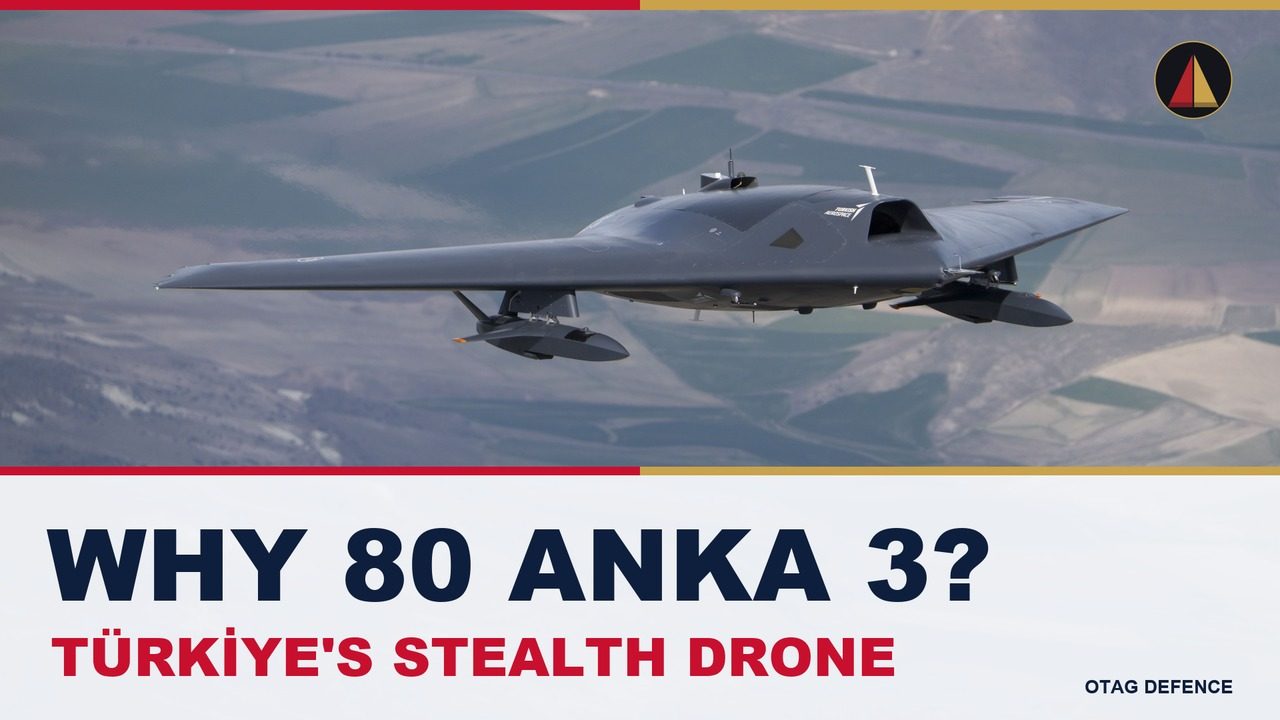
Why Does Türkiye Want 80 ANKA 3 Stealth Drones?
Why exactly 80 ANKA 3? What is Türkiye aiming for? What power will ANKA 3 add?
 15:37
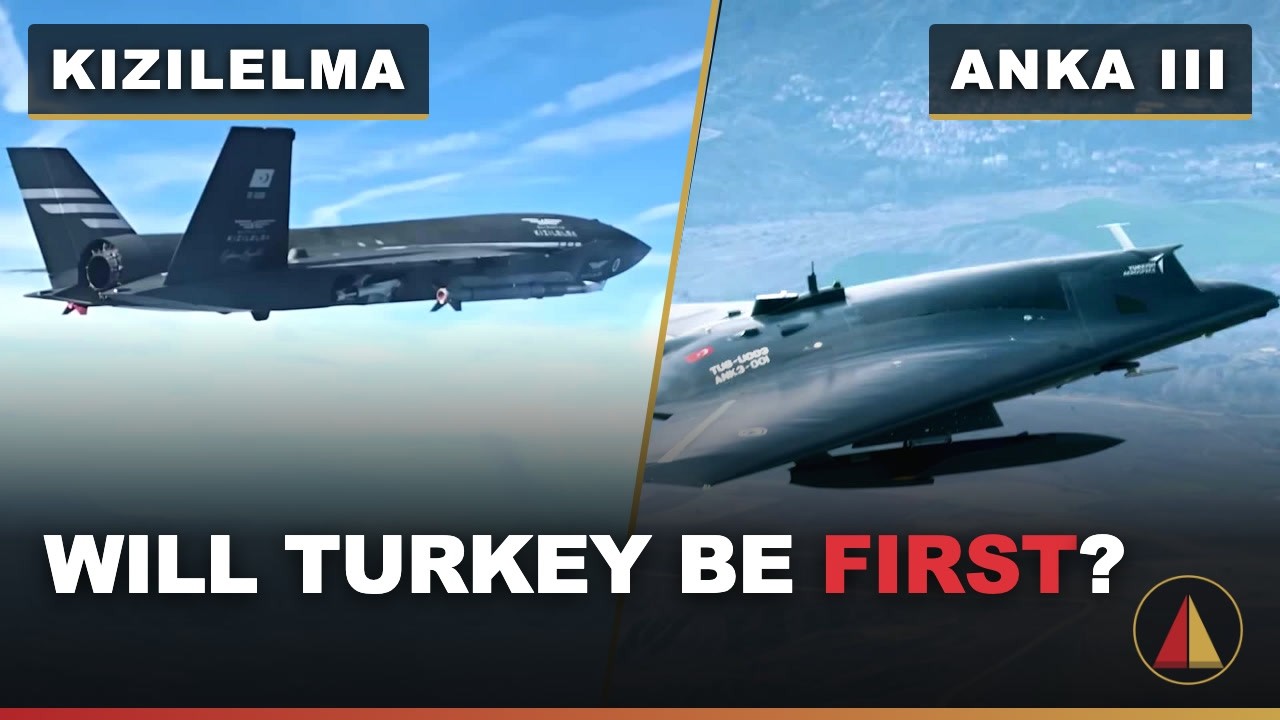
KIZILELMA and ANKA 3: Turkey on the Verge of a World First!
One country is preparing to put unmanned fighter jets alongside its piloted fighters. And we are not talking about a single prototype, but about a serial production model, weapons tests and a schedule for entering service.