Why Does Türkiye Want 80 ANKA 3 Stealth Drones?
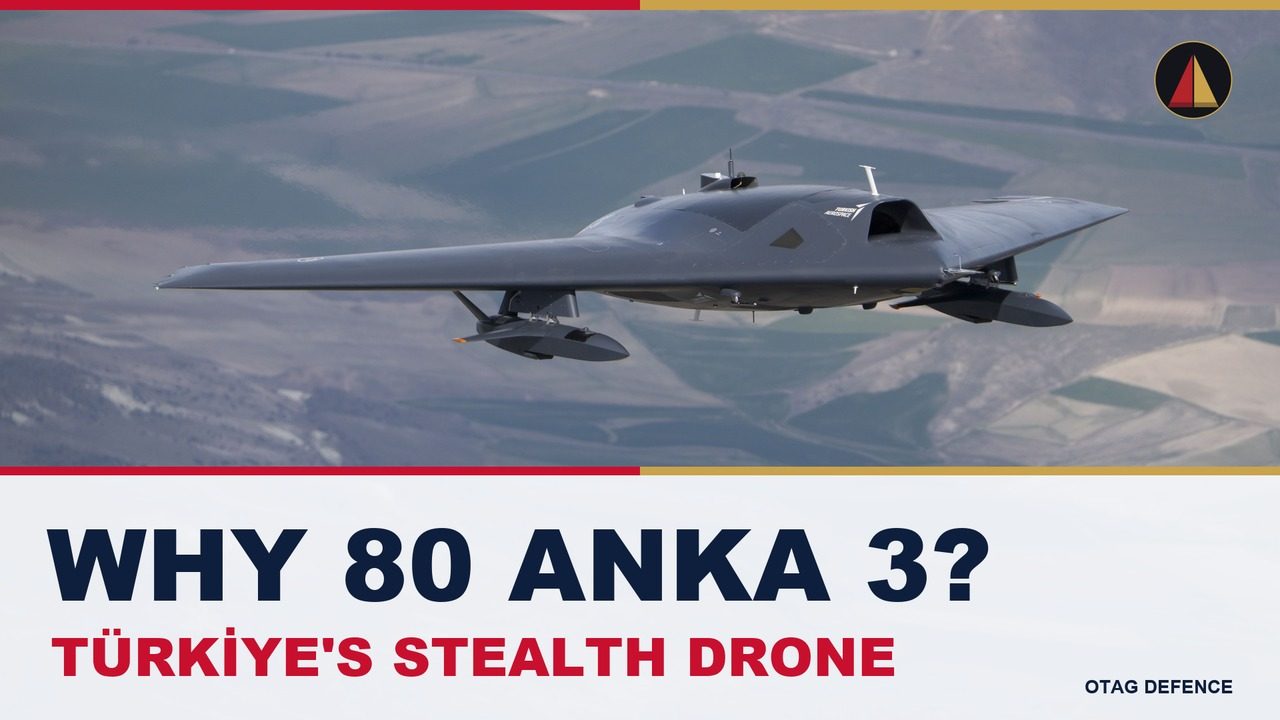
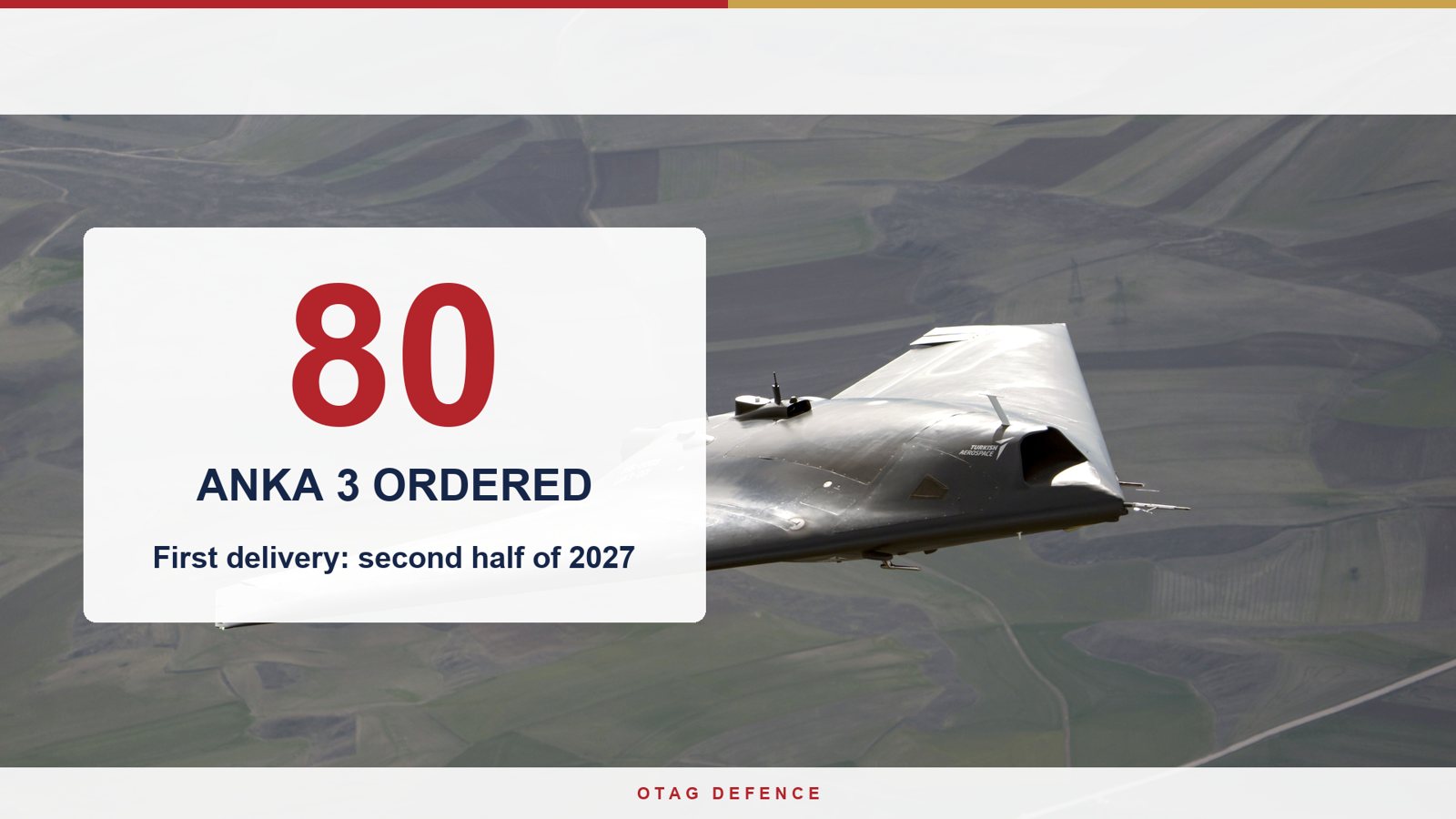
The Turkish Armed Forces have ordered 80 ANKA 3 unmanned combat aircraft. The first delivery is expected in the second half of 2027. No pilot, no tail, hard to see on radar, and it carries its bombs inside its body.
Why exactly 80 ANKA 3? What is Türkiye aiming for? What power will ANKA 3 add?
No pilot. No tail. Hard to see on radar. It carries its bombs inside its body. And the Turkish Air Force wants exactly 80 of them.
Türkiye has gained a great deal of experience with its propeller-driven drones: Baykar's TB2 and AKINCI and Turkish Aerospace's ANKA and AKSUNGUR. Now it is moving on to jet-powered, low-observable unmanned combat aircraft. ANKA 3, built by Turkish Aerospace (TUSAŞ), the state-backed company that is also developing the KAAN fighter, is at the centre of this shift. Its tailless flying-wing design aims to reduce its radar signature, and its jet engine gives it a speed and mission profile different from turboprop drones.
What does an order for 80 ANKA 3 mean?
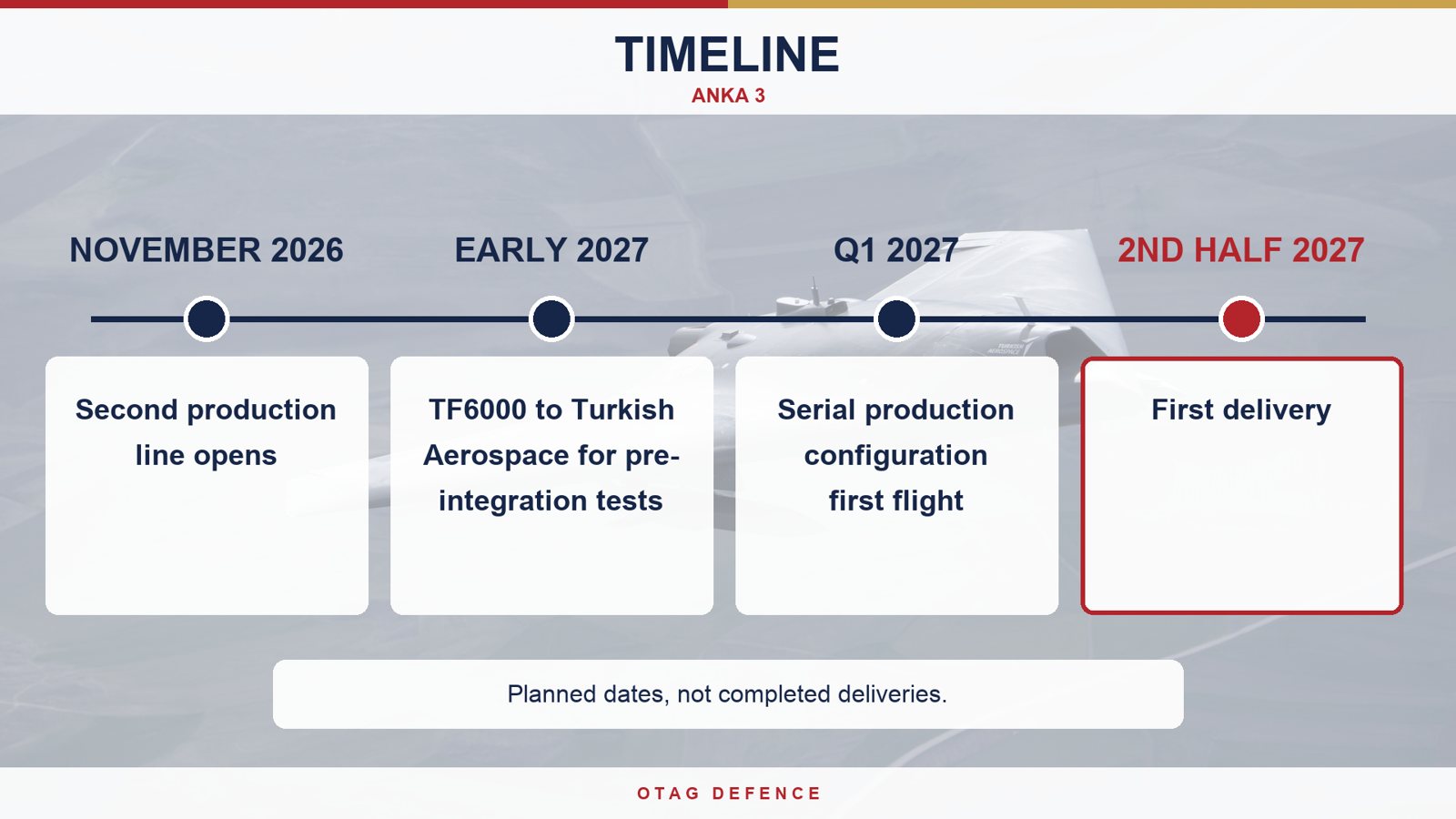
According to Turkish Aerospace officials, the second production line that will build the new variant has been completed and is planned to open in November. The first delivery is in the second half of 2027; the delivery schedule for all 80 aircraft has not been announced.
The size of the order also stands out. At the start of the year, an order of more than 50 was expected; 80 is clearly above that expectation.
80 aircraft means a force the size of several squadrons. This number shows that Türkiye is planning ANKA 3 not as a test platform of a few aircraft but as a fleet for regular use.
Note: squadron and basing information has not been announced; this part is analysis.
What are the features of the new ANKA 3?
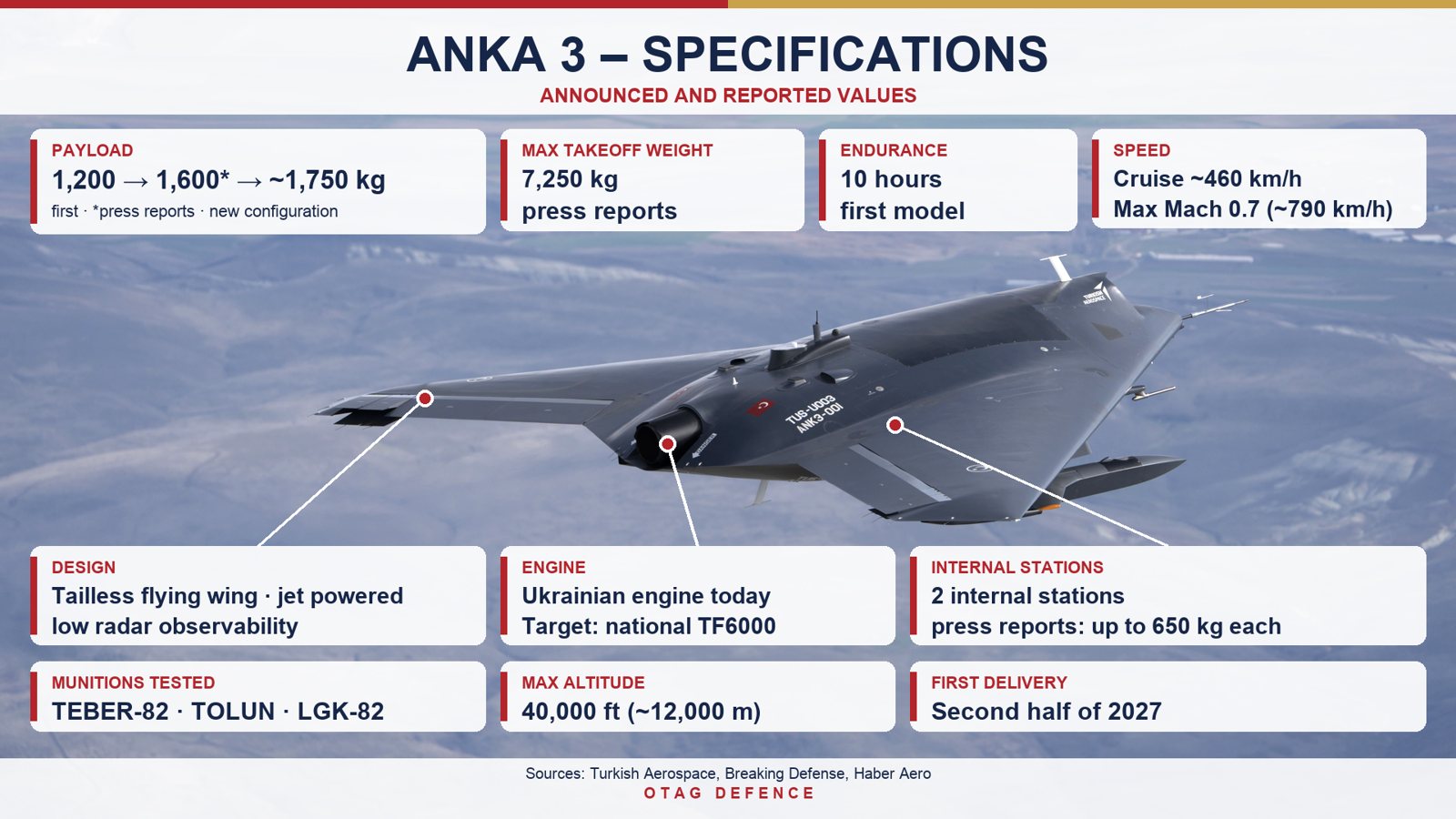
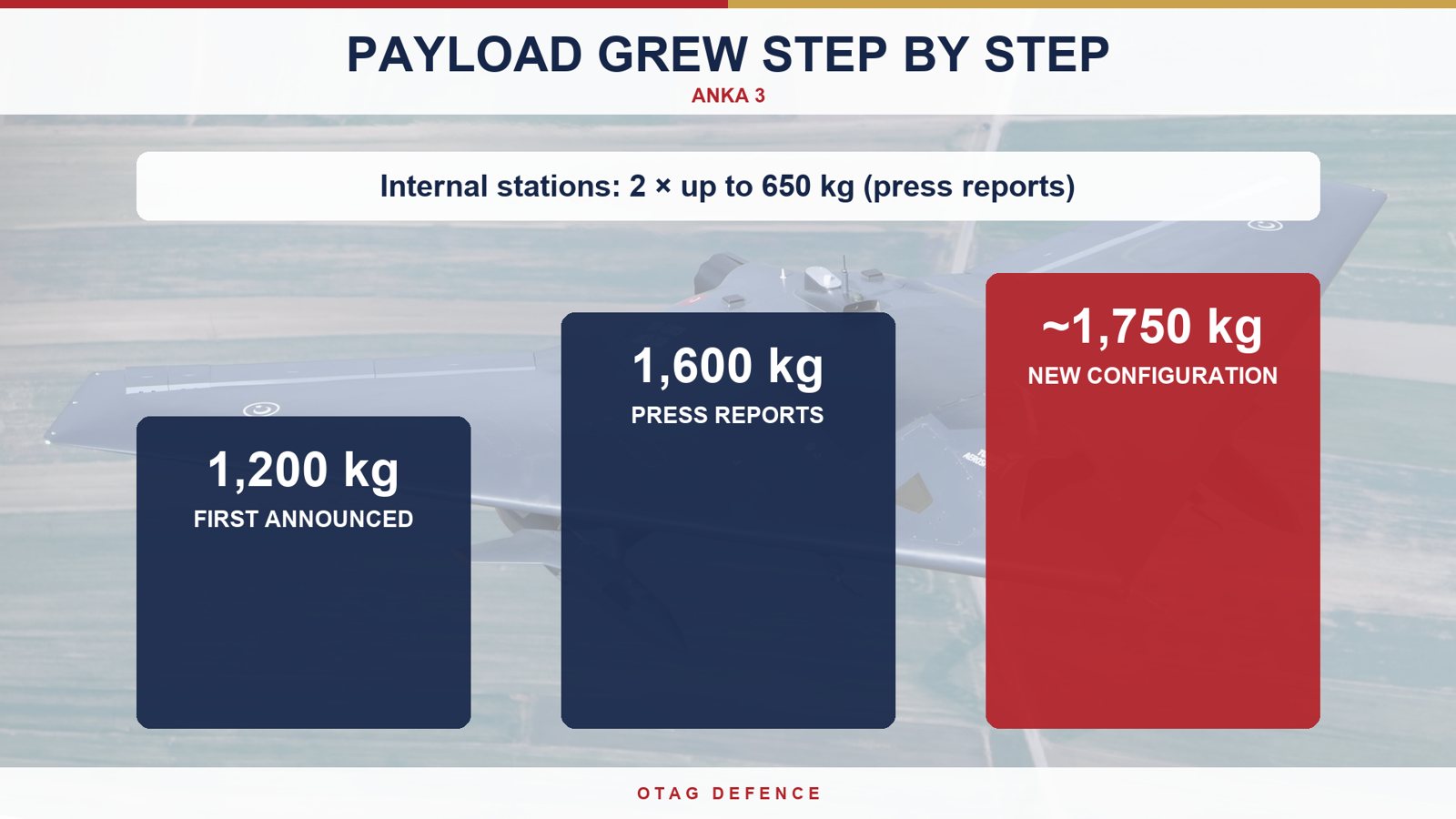
Payload. The aircraft has grown step by step since it was unveiled: the first payload announced was 1,200 kilograms, then, according to figures reported in the press, it rose to 1,600 kilograms. In the new configuration, about 1,750 kilograms is expected.
Internal stations. What really matters is how much of the load is carried inside the fuselage, because weapons under the wings largely cancel out the low-observability advantage. According to figures reported in the press, each of the two internal stations can take up to 650 kilograms. But this value is the maximum weight a station can carry; how much ammunition fits inside the fuselage depends on the volume of the bays and the size of the weapons. In other words, not all of the 1,750-kilogram payload is carried internally; part of it goes on stations under the wings and fuselage. The load distribution by station in the new configuration has not yet been announced.
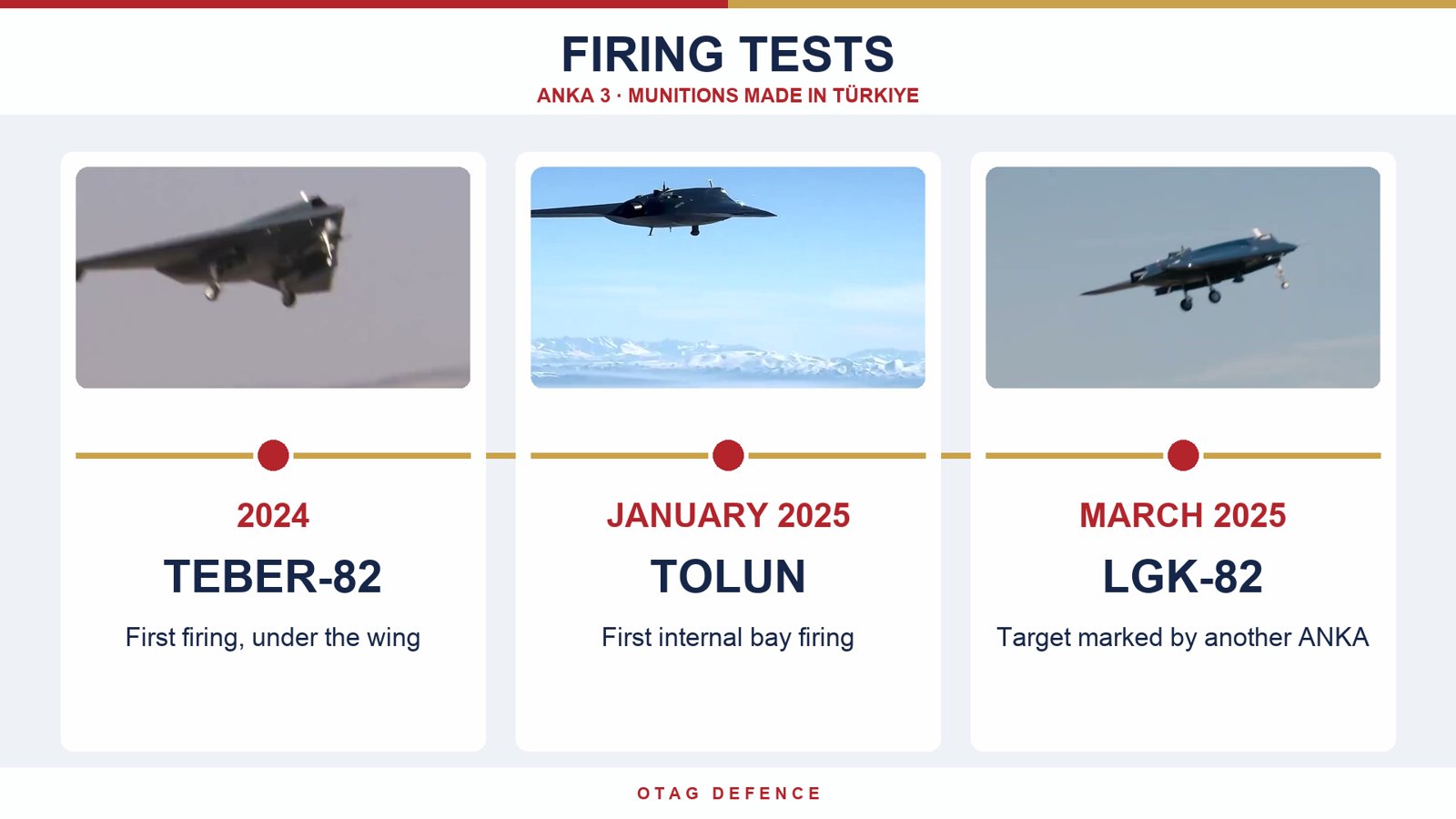
Firing tests. The first firing was made in 2024 from under the wing with the TEBER-82, a Turkish laser-guided kit that turns a standard 500-pound bomb into a precision weapon. In January 2025 came the first firing from inside the fuselage, with TOLUN, a Turkish precision-guided glide munition. In the LGK-82 laser-guided bomb firing in March 2025, a separate ANKA drone marked the target: a small but meaningful example of two unmanned platforms complementing each other on the same mission.
Low observability. With a new fuselage, materials and coatings, the radar signature will be reduced further. But ANKA 3 is not invisible; it reduces the chance and the distance at which it can be detected.
Engine. The prototypes fly with an engine from the Ukrainian-designed AI-322 family. The goal is the domestic TF6000. TEI, Türkiye's aircraft engine maker, plans to deliver the engine to Turkish Aerospace in early 2027 for pre-integration tests; the date for operational use is not known.
How many hours will ANKA 3 stay in the air?
The endurance announced for the first model is 10 hours. An increase is targeted for the new configuration, but no figure has been announced. With a larger fuselage and more fuel, 11 to 12 hours can be considered a measured scenario. But such values are usually achieved in a light-load configuration; with maximum weapons, endurance is shorter. (This is an analysis scenario, not a Turkish Aerospace target.)
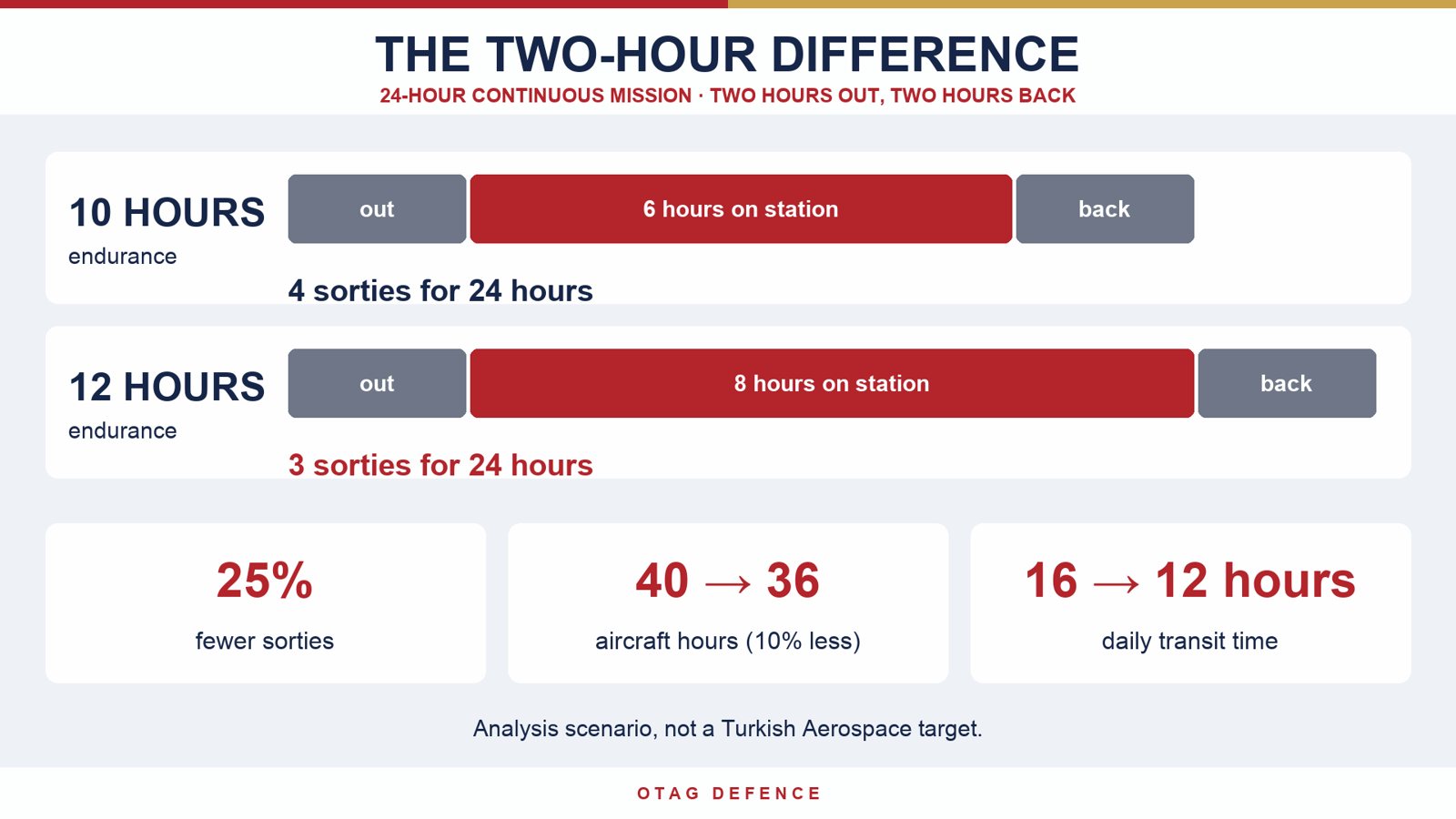
Why does a two-hour difference matter? Imagine an area where a mission must be kept up without a break for 24 hours, and where flying there and back takes two hours each way.
| Endurance | On station | Sorties needed for 24 hours |
|---|---|---|
| 10 hours | 6 hours | 4 |
| 12 hours | 8 hours | 3 |
What power can ANKA 3 add to the Turkish Armed Forces?
Let us first correct a misunderstanding: 80 ANKA 3 are not equivalent to 80 crewed fighters. ANKA 3 does not replace the F-16. It adds a new layer to the existing strength of the Turkish Armed Forces. Basing and squadron information has not been announced; but the design and the published mission list show what this layer can do.
1. An unmanned aircraft that can enter defended airspace
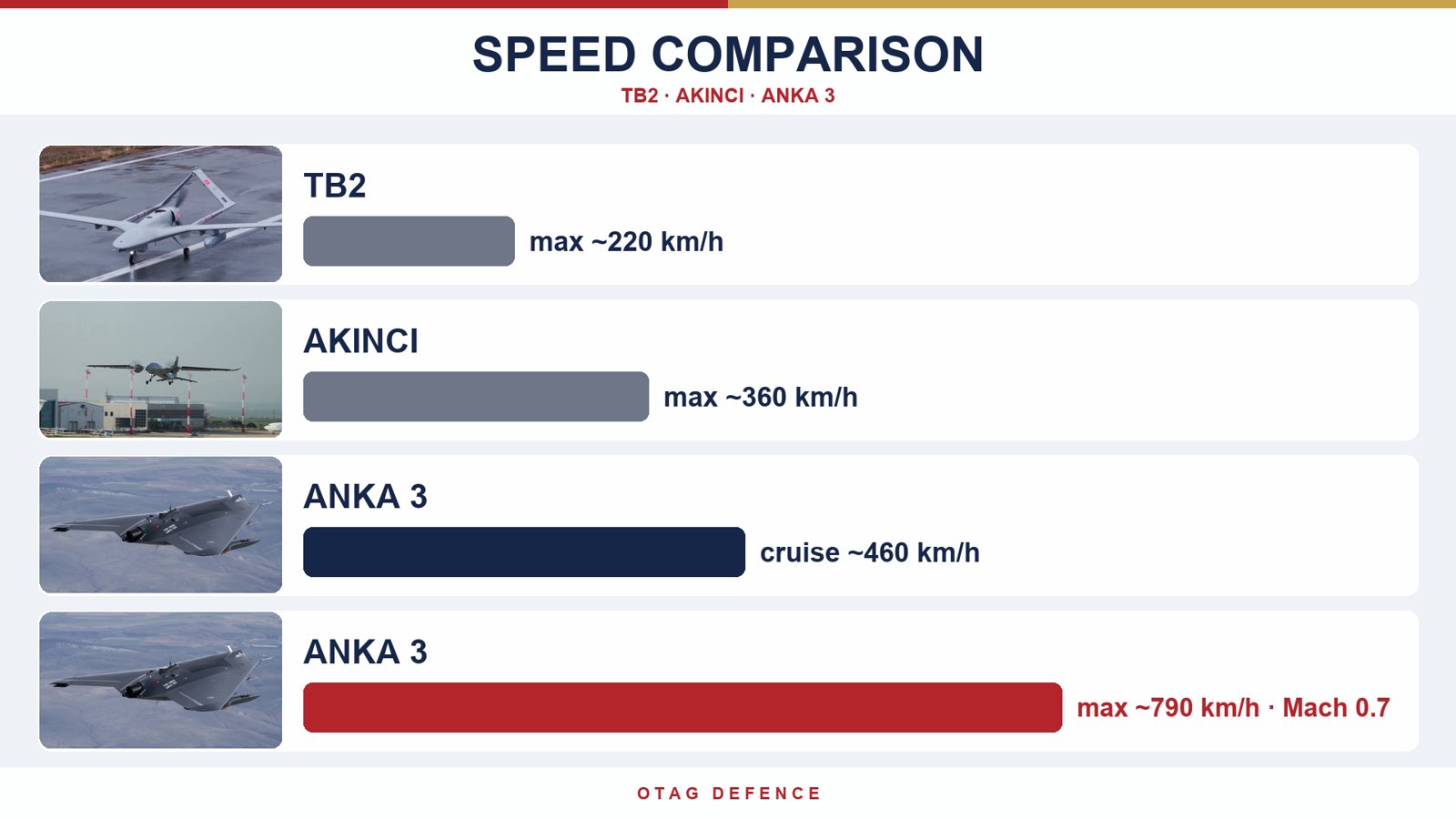
The TB2, AKINCI and AKSUNGUR have given the Turkish Armed Forces a great deal of experience. But these aircraft are slow and have large radar signatures. The TB2's top speed is about 220 km/h, and the AKINCI's about 360 km/h. In an area with advanced air defences, they would struggle to survive.
ANKA 3 aims to fill this gap. It has a cruising speed of about 460 km/h, and its top speed reaches Mach 0.7, or about 790 km/h. When jet speed, low observability and internal weapons come together, the chance of carrying out reconnaissance and precision strike in areas that conventional drones would struggle to enter increases significantly.
2. No pilot on the riskiest mission
In the first hours of a conflict, the most dangerous job is finding the enemy's air defences and striking first. Giving these missions to an unmanned aircraft removes the risk of losing a pilot.
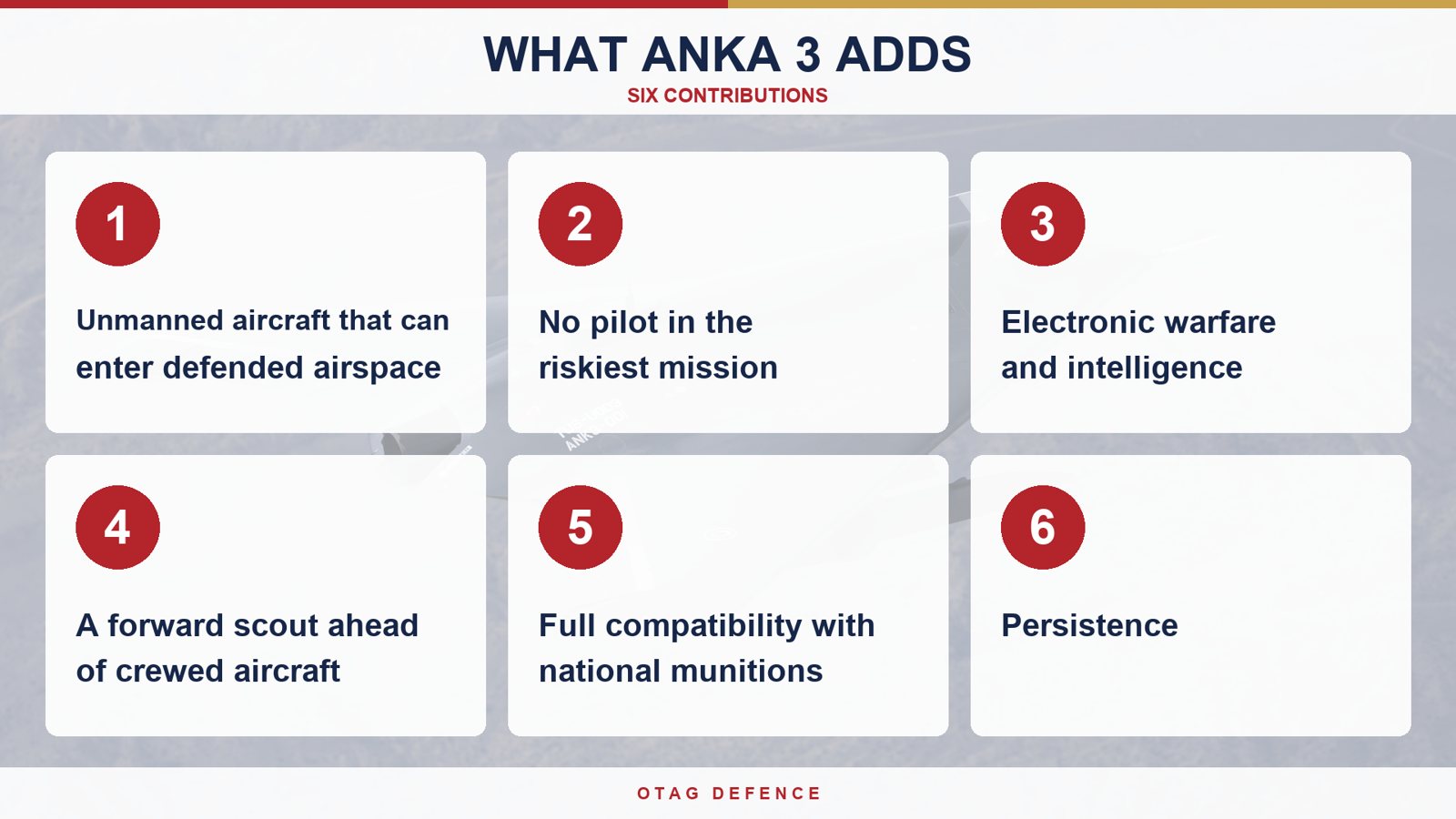
This matters because training a fighter pilot takes years. The risk of losing aircraft and weapons, of course, remains.
3. Electronic warfare and intelligence
ANKA 3's mission list includes electronic intelligence, electronic support and electronic attack. With suitable mission systems, it can map the other side's radar and communications network and open a path for crewed aircraft. Integration of the MURAD AESA radar, built by Turkish defence electronics company ASELSAN, on ANKA 3 is also on the agenda.
4. A scout ahead of crewed aircraft
Today the F-16s, tomorrow KAAN, Türkiye's own fifth-generation fighter. ANKA 3 can work as a scout carrying sensors and weapons ahead of these aircraft. It has also released a SÜPER ŞİMŞEK, a Turkish jet-powered target and loitering drone, in flight, and later flew with two SÜPER ŞİMŞEKs under its wings. This allows a single aircraft to engage more than one target at the same time. The ability to carry different unmanned systems could also open the way for ANKA 3 to be used in future as a carrier and coordination element in multi-platform missions.
However, how far it can work in an integrated way with the F-16 and KAAN will become clear through integration tests.
5. Full compatibility with domestic weapons
The TEBER-82, TOLUN and LGK-82 tested by ANKA 3 are all Turkish. Integrating domestic weapons on foreign-made aircraft is often difficult and expensive. A domestic platform makes it easier to use these weapons without depending on foreign approval.
6. Persistence
When an 80-aircraft fleet is combined with long endurance, a continuous presence over more than one area at the same time becomes possible. That is the real meaning of the sortie calculation in the previous section.
What will determine its power
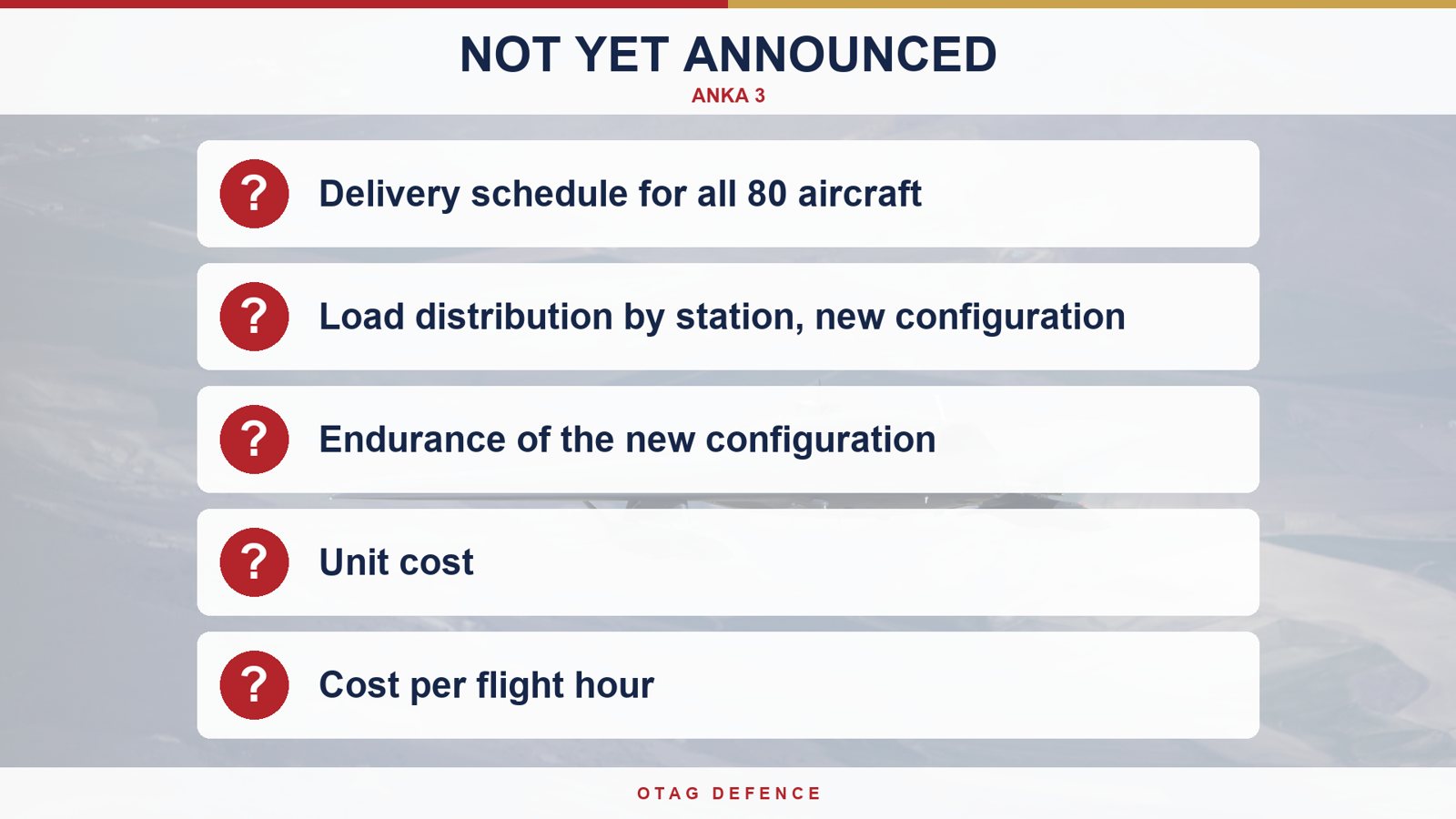
But what decides it is not the number but the readiness rate. How many aircraft can be kept ready to fly at the same time will be determined by maintenance, spare parts, engine life and the reliability of data links. The unit cost and the cost per flight hour have not yet been announced either.
Which countries is ANKA 3 racing against?
Few countries are developing low-observable unmanned combat aircraft. Even fewer are preparing to operate them as fleets.
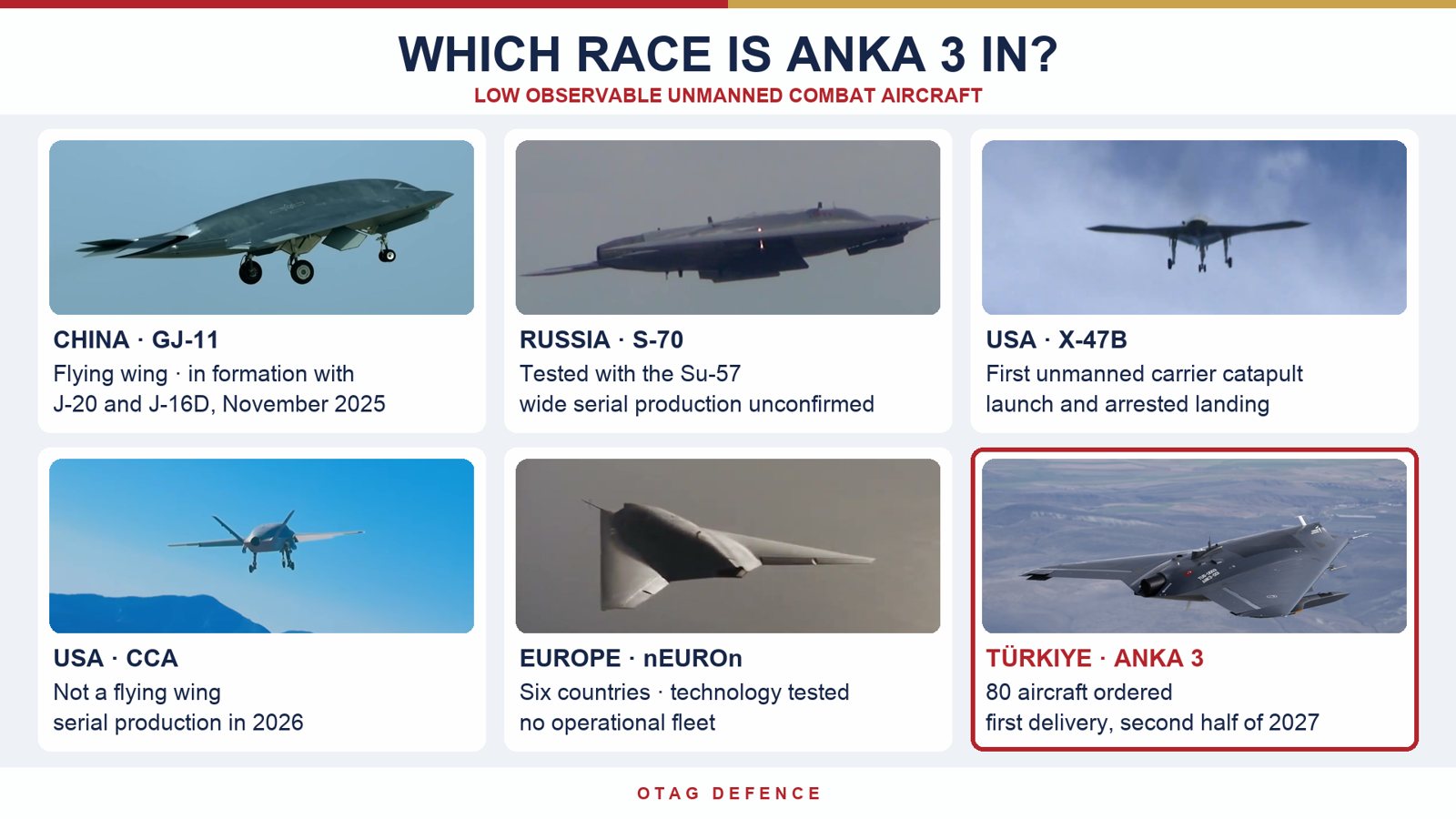
China, GJ-11: like ANKA 3, it has a flying-wing design. In an official video released in November 2025, the Chinese Air Force showed the GJ-11 flying in formation with J-20 and J-16D fighters. Beijing has not openly announced that it has entered service; but the aircraft is assessed to be in service in practice. How many exist is not known.
Russia, S-70 Okhotnik: a flying wing with a larger body. It has been tested together with the Su-57. Dates for serial production have been given many times, but it has not been confirmed that it has entered large-scale serial production.
United States, X-47B: it became the first unmanned aircraft to take off from an aircraft carrier by catapult and land on the ship with a tailhook. But it remained a technology demonstration program and was never mass-produced. The United States now follows a different path: its Collaborative Combat Aircraft (CCA), which fly alongside crewed jets and do not use a flying-wing design, entered serial production in 2026. Türkiye's Bayraktar TB3, built by Baykar, became the first unmanned combat aircraft to take off from a ship with a short flight deck and land back on the same ship.
Europe, nEUROn: a program led by France with six participating countries, it successfully tested low-observable unmanned combat technologies. But it did not turn into an operational fleet.
In this picture, an order for 80 aircraft puts Türkiye among the small number of countries, such as China and the United States, that are planning unmanned combat aircraft at fleet scale.
The tests ahead of ANKA 3
Schedule. The first flight of the serial production configuration is planned for the first quarter of 2027. The first delivery is in the second half of 2027. Fitting testing, certification and delivery into the same year is an ambitious target. However, Turkish Aerospace's experience in developing and mass-producing drones makes this target achievable.
Engine. The prototypes fly with a Ukrainian-designed engine, and the war has made this supply fragile. For an 80-aircraft fleet, this is the program's most critical point and the one to watch most closely. That is why the progress of the TF6000 developed by TEI is strategic.
Mission systems. Target detection with an electro-optical sensor, internal and under-wing weapons firings, and hitting a target marked by another platform have been shown successfully in test flights. With the serial configuration, integration of radar and electronic warfare systems will be built on this foundation.
Conclusion
With an order for 80 aircraft, Türkiye aims to move its low-observable unmanned combat aircraft from the prototype stage to the fleet stage.
The new ANKA 3 is a larger aircraft that carries more and is expected to fly longer. It will add to the Turkish Armed Forces a new layer that works ahead of crewed aircraft and can carry out reconnaissance, electronic warfare and precision strike in airspace that today's drones struggle to enter.
But the real force multiplier will not be the number of aircraft delivered; it will be how long these aircraft can stay in the air, which missions they can perform and how well they can work with crewed aircraft.
ANKA 3's real test is no longer developing an aircraft. It is turning an order for 80 aircraft into sustainable air power.
Shorts on this topic

Who is ANKA 3 racing against?

Why does ANKA 3 carry its bombs inside?

Why exactly 80 ANKA 3?
Share your view in the comments under the video.
Comment on YouTubeSources
- Breaking Defense – Turkish Aerospace expands Anka 3 production with new line for upgraded drone (October 2026)
- Haber Aero – The new version of ANKA-3 enters the production line (in Turkish)
- Haber Aero – Flight and delivery dates announced for the new version of ANKA-III (July 2026) (in Turkish)
- DHA – ANKA 3 successfully fired munitions from inside its fuselage (January 2025) (in Turkish)
- CNN Türk – ANKA-3 fired an LGK-82 and hit the target (March 2025) (in Turkish)
- NTV – ANKA 3 hit the target with full accuracy (March 2025) (in Turkish)
- Haber Aero – ANKA III released a SÜPER ŞİMŞEK in flight (April 2025) (in Turkish)
- CNN Türk – A national engine for KIZILELMA and ANKA (in Turkish)
- Military Times – US Air Force awards first CCA production contracts to General Atomics, Anduril (June 2026)
More analysis
 8:32
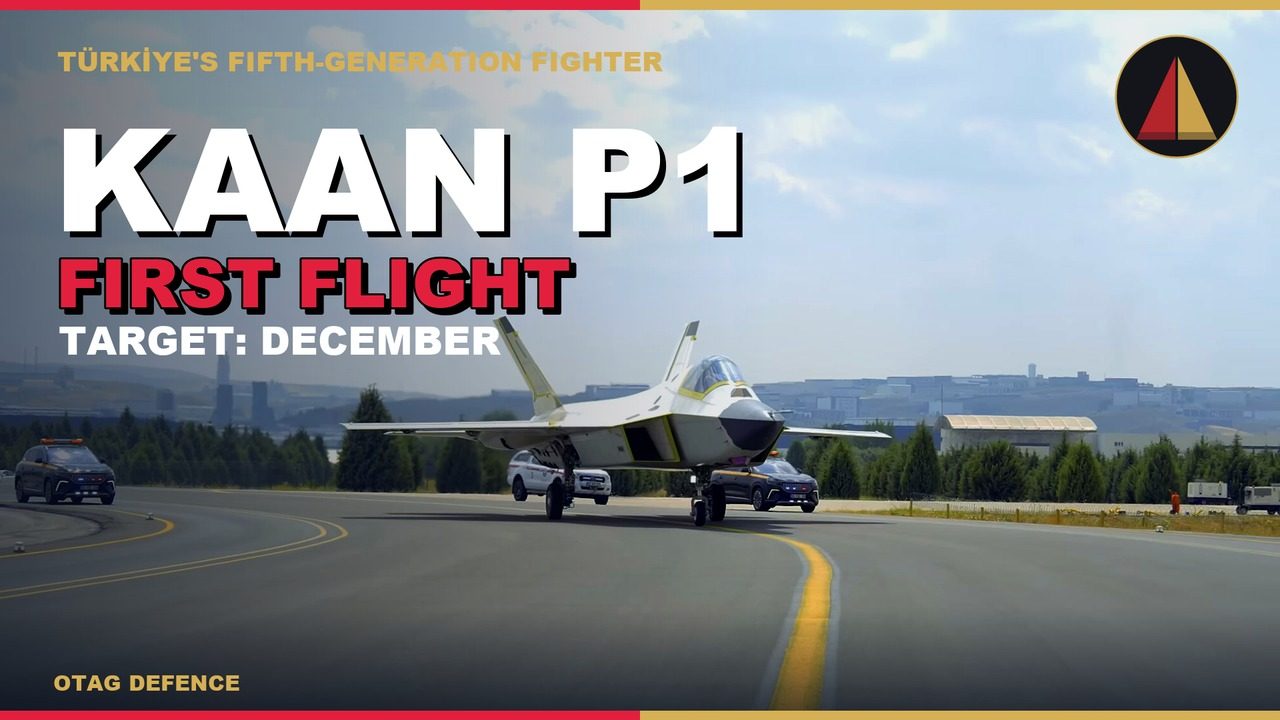
Türkiye's KAAN Stealth Fighter: Second Prototype Targets December First Flight
Otag Defence assessment“For KAAN, the question for 2026 is no longer "will it fly?" It is "how fast will the prototypes multiply?"”
 7:29
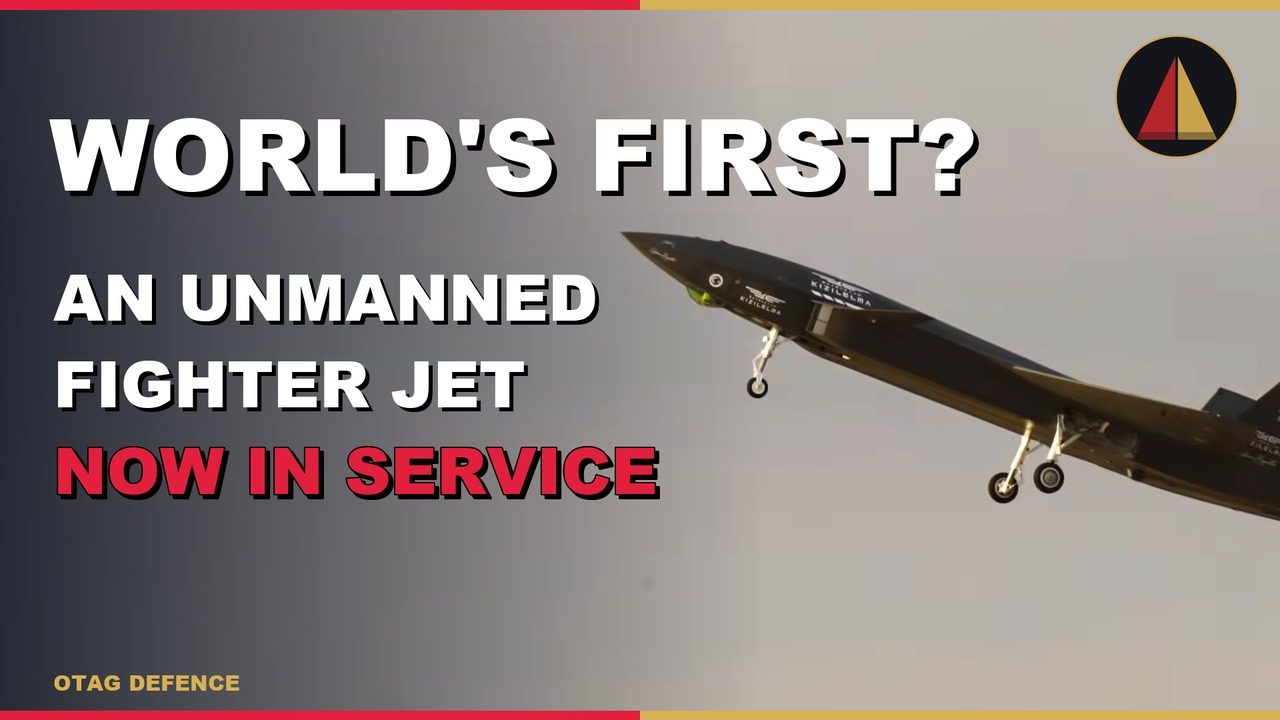
Türkiye's Kizilelma: The World's First Unmanned Fighter Jet in Service?
Is KIZILELMA really the world's first unmanned fighter in service? What does entering service actually mean? And what will Türkiye do with three aircraft?
 7:54
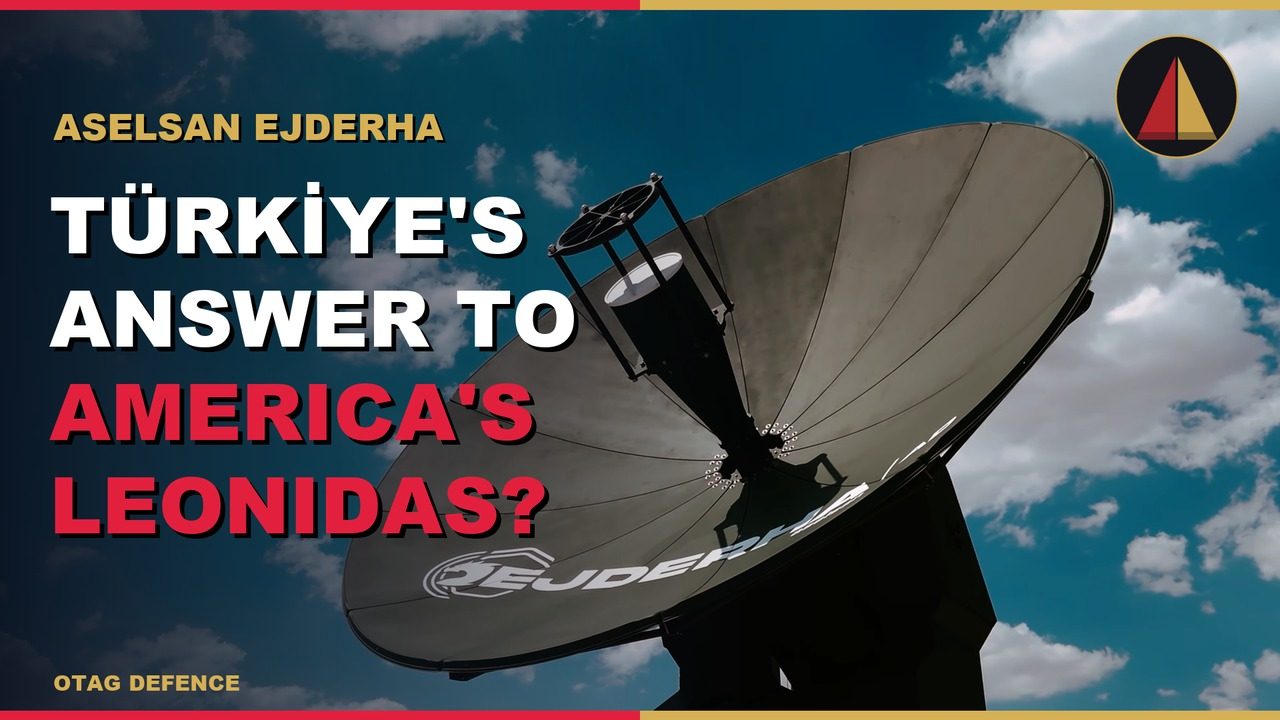
Türkiye's Answer to America's Leonidas? ASELSAN EJDERHA Explained
ASELSAN, Türkiye's largest defence electronics company, marked its 51st anniversary with a two-stage demonstration at its Gölbek Firing and Test Center near Ankara. According to the company's statement on 15 November, in the first stage EJDERHA disabled two different fibre-optic drones from about 1,000 metres. In the second stage, 51 drones launched at the same time were stopped within seconds with a single command. No missiles or bullets were used.