How Will KIZILELMA Enter Service?
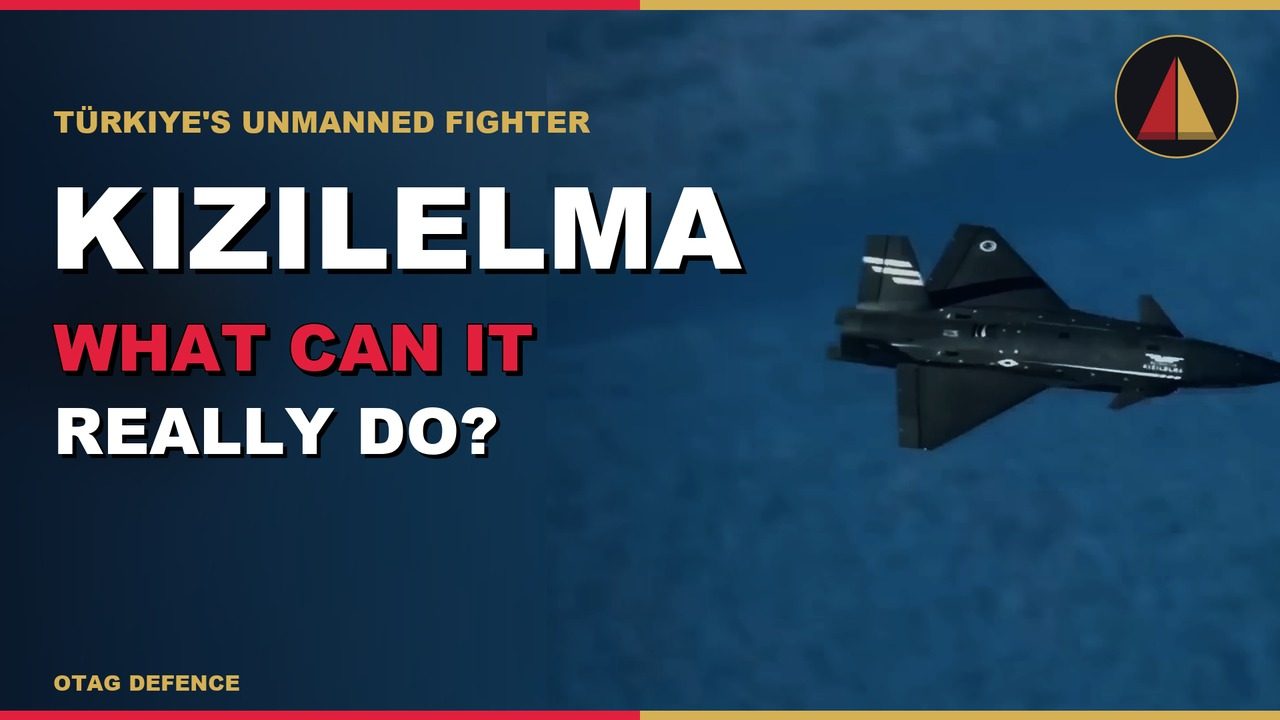
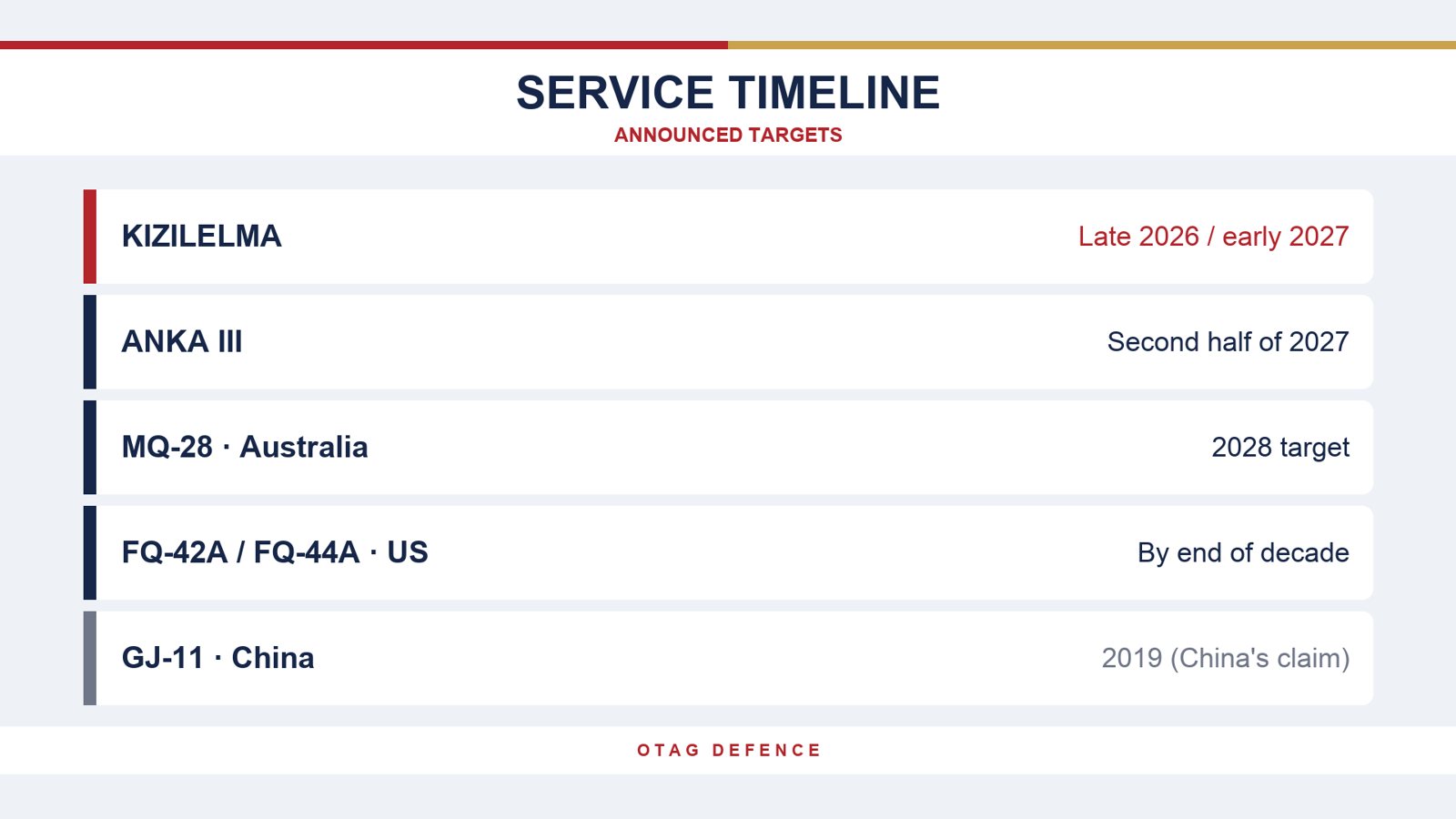
When will Türkiye's unmanned fighter jet enter service? According to first-hand sources speaking to Otag Defence, the first KIZILELMA deliveries are expected in late 2026 or early 2027, and a handover ceremony is being planned.
The wait for KIZILELMA, Türkiye's unmanned fighter jet built by Baykar, the company behind the Bayraktar TB2 drone, is almost over. According to information Otag Defence obtained from first-hand sources, the first delivery is expected at the end of 2026 or in early 2027. A ceremony is also planned for the first delivery.
Today we answer the most frequently asked questions about KIZILELMA one by one.
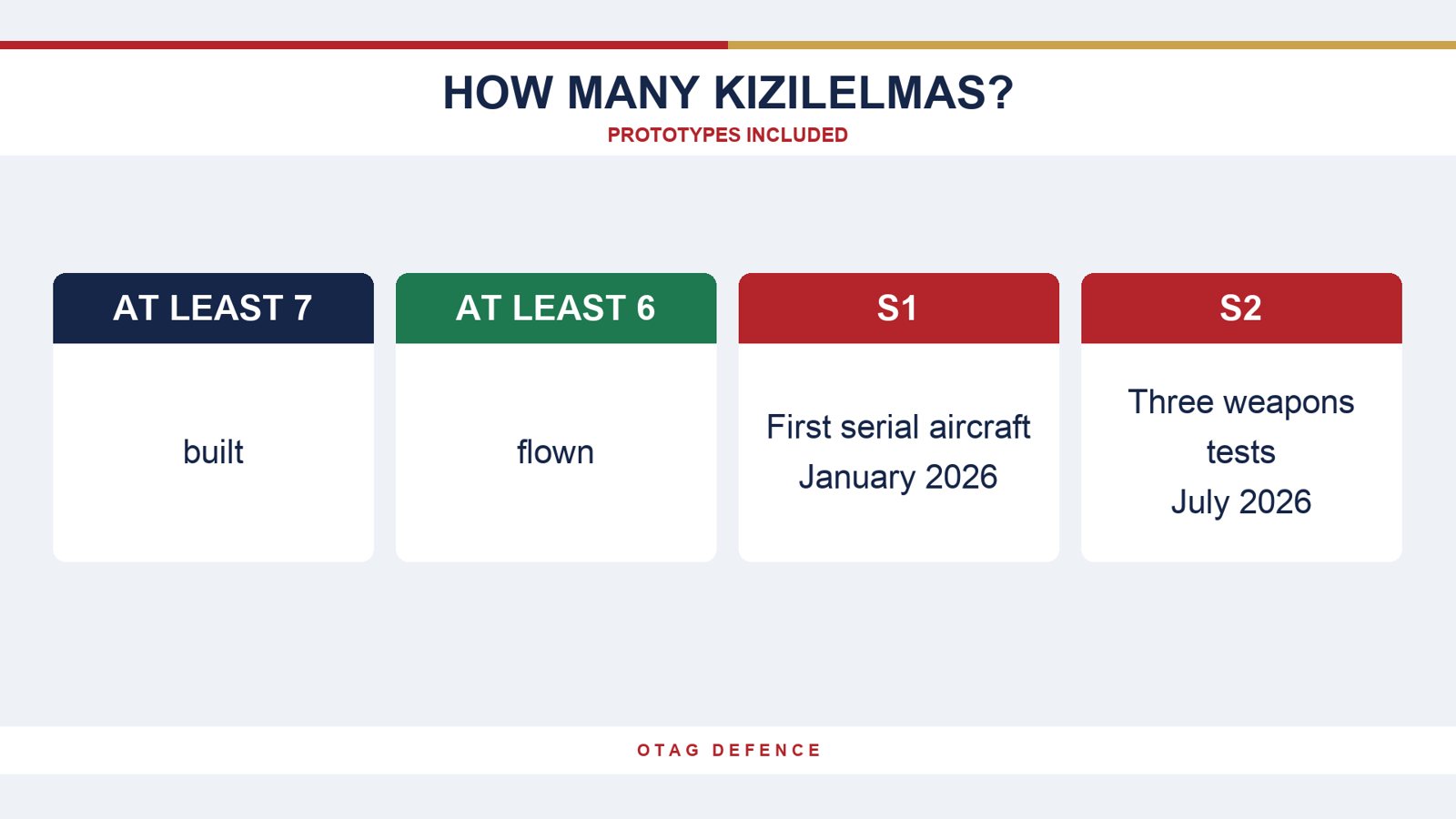
At least seven KIZILELMAs have been built, including prototypes, and at least six of them have flown. S1, the first serial production aircraft, took to the air at the end of January 2026. In July, S2 carried out three separate weapons firings.
So who will buy KIZILELMA? Baykar says the first serial deliveries will go to Türkiye. At the end of September, Baykar chairman Selçuk Bayraktar said the aircraft would enter the inventory of the Turkish Armed Forces very soon. According to Haber Aero, the aircraft will join the Turkish Air Force. The Turkish Navy, meanwhile, speaks of a separate model planned for its own use.
How many? Baykar's goal is to have more than 10 KIZILELMAs in the air in 2026. How many aircraft each service will receive will be set by contract. To see the scale around the world, let us look at similar programs.
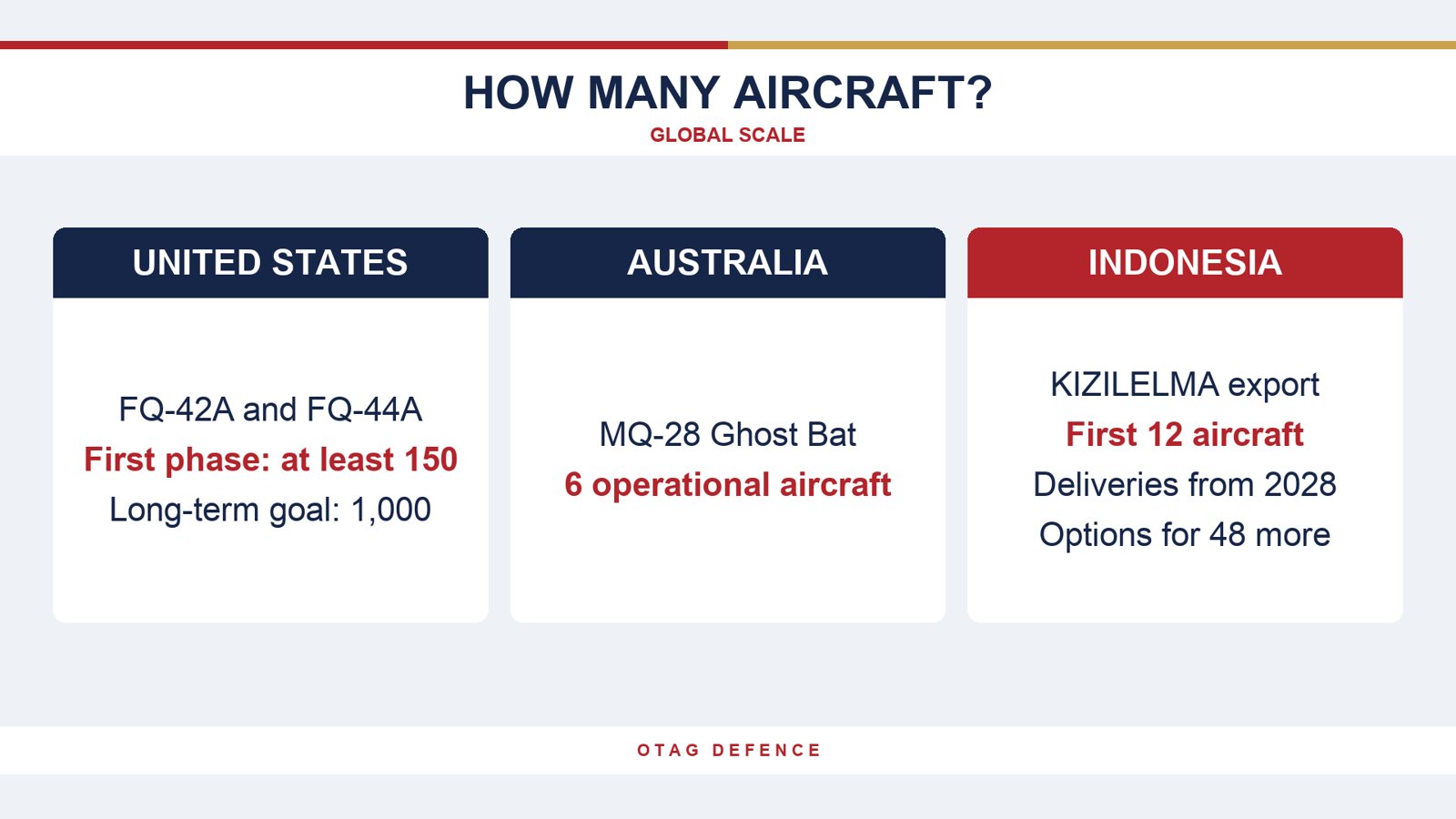
In its first phase, the United States is buying at least 150 unmanned combat aircraft in total from two companies; its long-term goal is 1,000 aircraft. Australia started smaller: it has ordered six operational MQ-28s. Indonesia, KIZILELMA's first export customer, has signed for 12 aircraft in the first phase. Deliveries are planned to begin in 2028, and the agreement includes an option for four more squadrons totalling 48 aircraft.
When the timelines are compared, KIZILELMA stands out. For ANKA III, Turkish Aerospace's flying-wing unmanned combat aircraft, the first delivery is planned for the second half of 2027. Australia's MQ-28 aims for operational capability in 2028. For the American aircraft, the goal is at least 150 aircraft by the end of this decade. The only exception is China: the Chinese Ministry of Defence announced in 2019 that it had put the GJ-11 into service, but the aircraft's mission capabilities have not been verified in open sources.
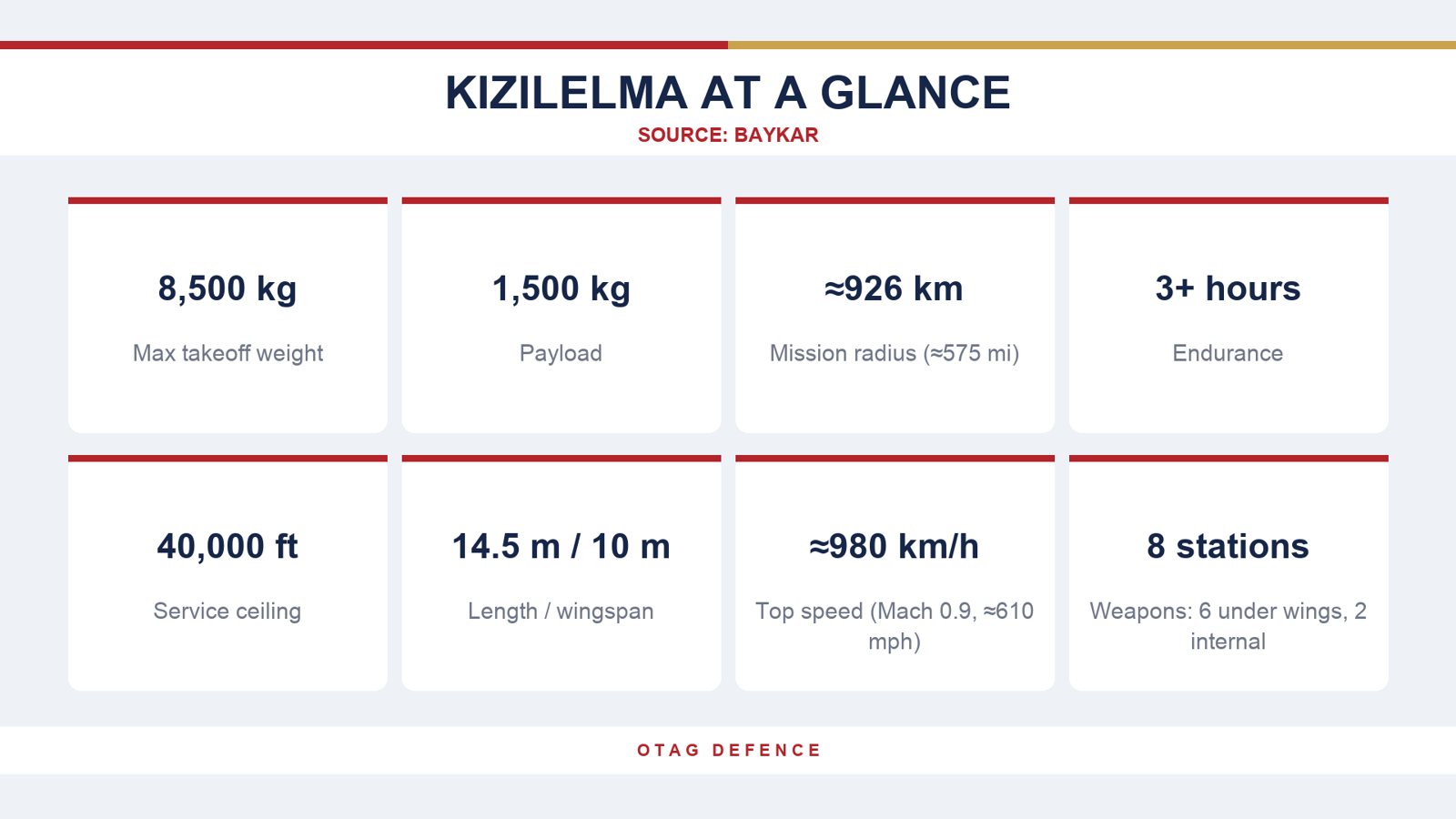
According to Baykar's official data, KIZILELMA is an 8.5-tonne aircraft. It carries 1.5 tonnes of payload. Its mission radius is about 926 kilometres. It can stay in the air for more than three hours and reach a service ceiling of 40,000 feet, or about 12,000 metres.
It has eight weapon stations in total: six under the wings and two inside the fuselage. The canard surfaces at the front and the vertical tails are designed to let the aircraft manoeuvre as aggressively as crewed fighters.
Is it supersonic? No. The maximum speed Baykar has announced is Mach 0.9, or about 980 km/h. The test value announced so far is Mach 0.8, about 870 km/h.
Where some headlines say "supersonic", the word refers not to the aircraft but to the missile it fires.
What really matters is not the numbers but what has been shown in the sky.
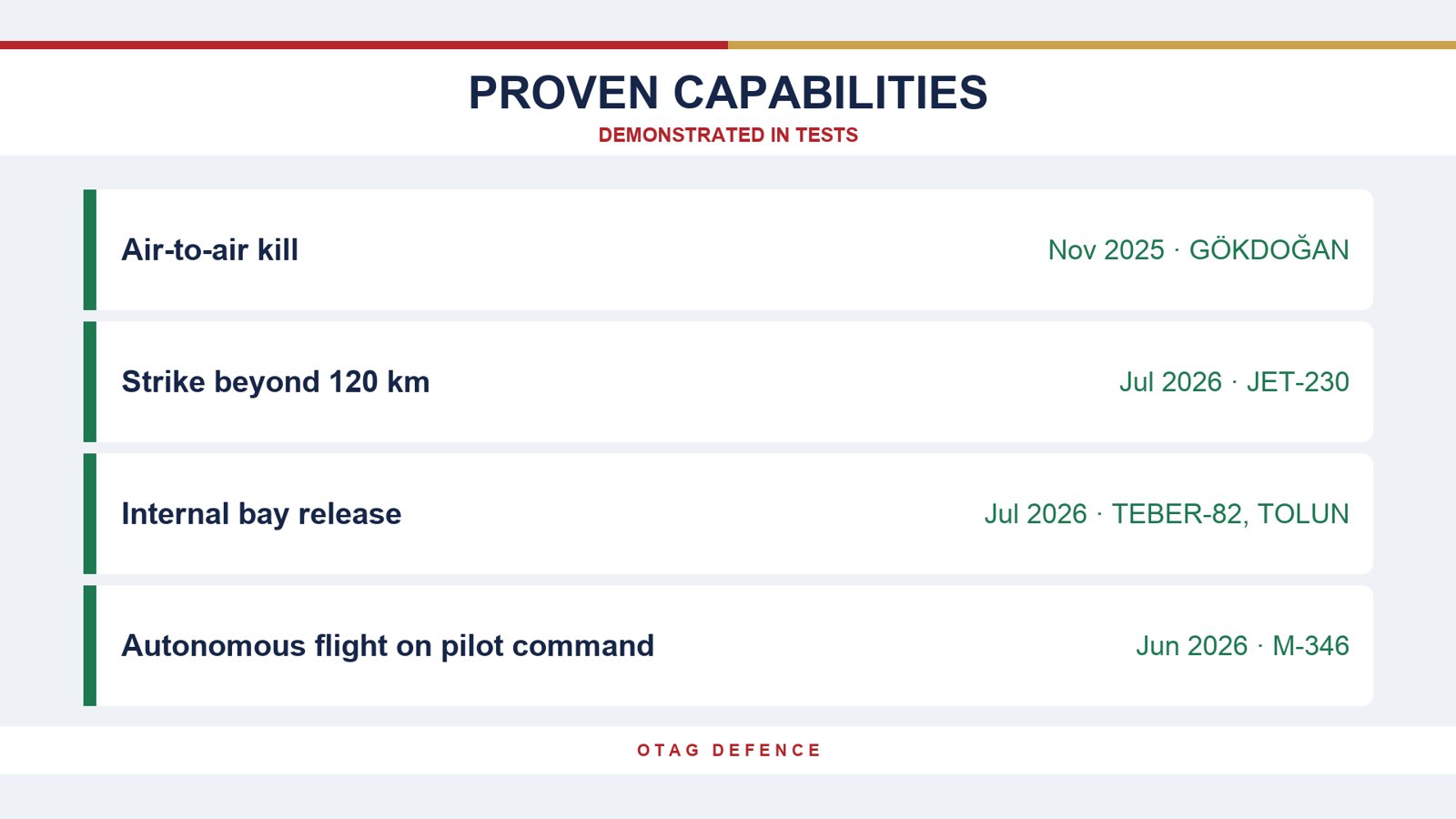
In November 2025, off Sinop on Türkiye's Black Sea coast, KIZILELMA found a jet-powered target with its own radar and hit it with a GÖKDOĞAN air-to-air missile.
In July 2026, the serial production aircraft S2 hit a target more than 120 kilometres away with the supersonic JET-230 missile. In the same month, it fired TEBER-82 and TOLUN munitions from inside its fuselage for the first time.
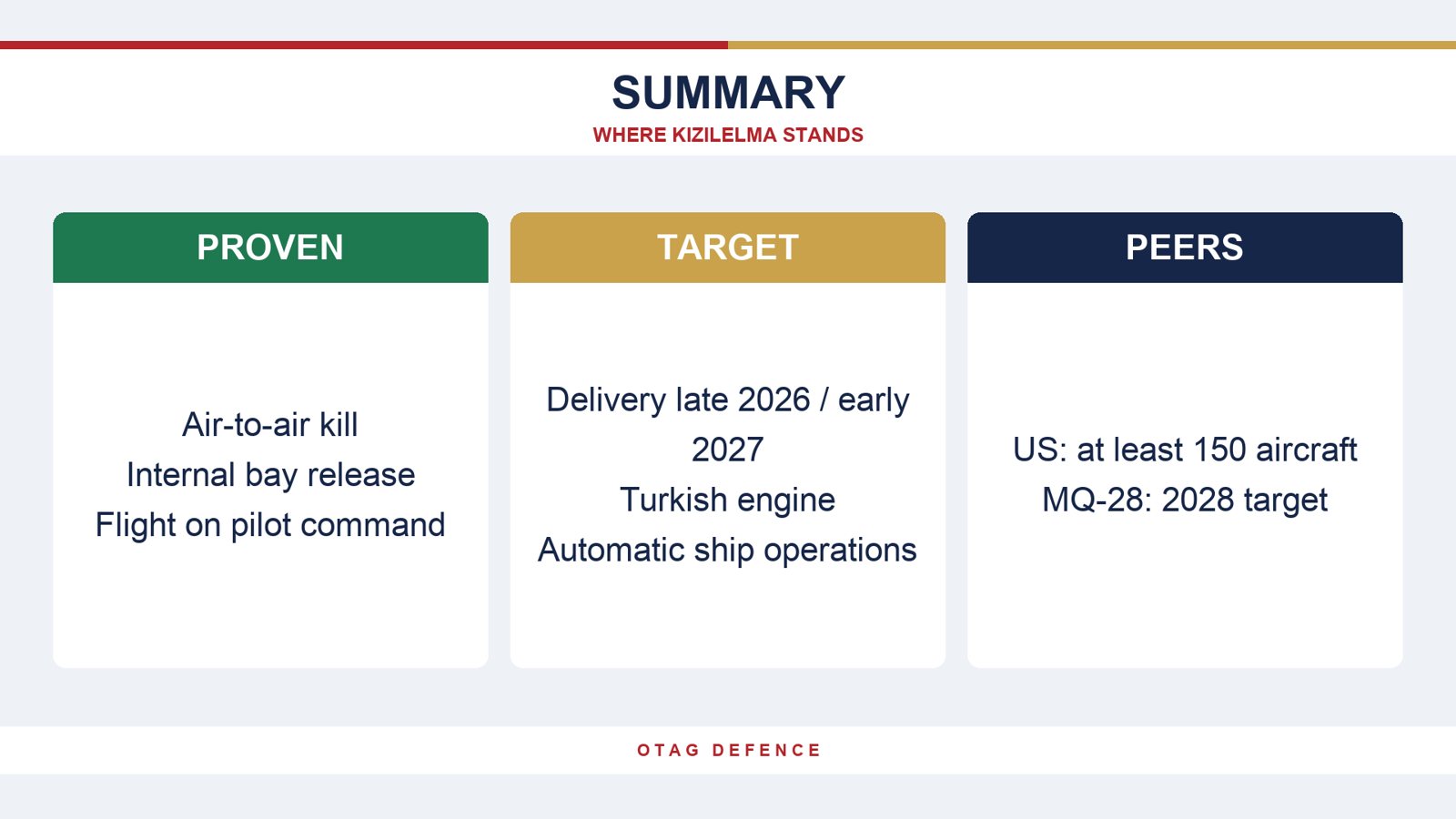
In June came perhaps the most critical test. Pilots in an Italian M-346 jet trainer gave commands; KIZILELMA carried them out autonomously, changing formation, breaking away and rejoining. Before that, two KIZILELMAs had flown an autonomous formation, closing to about 15 metres of each other.
Did it shoot down an F-16? No. This is a common mistake. KIZILELMA detected and locked onto an F-16 30 miles away with its radar; but the shot was electronic and simulated. The real missile firing was a separate test off Sinop.
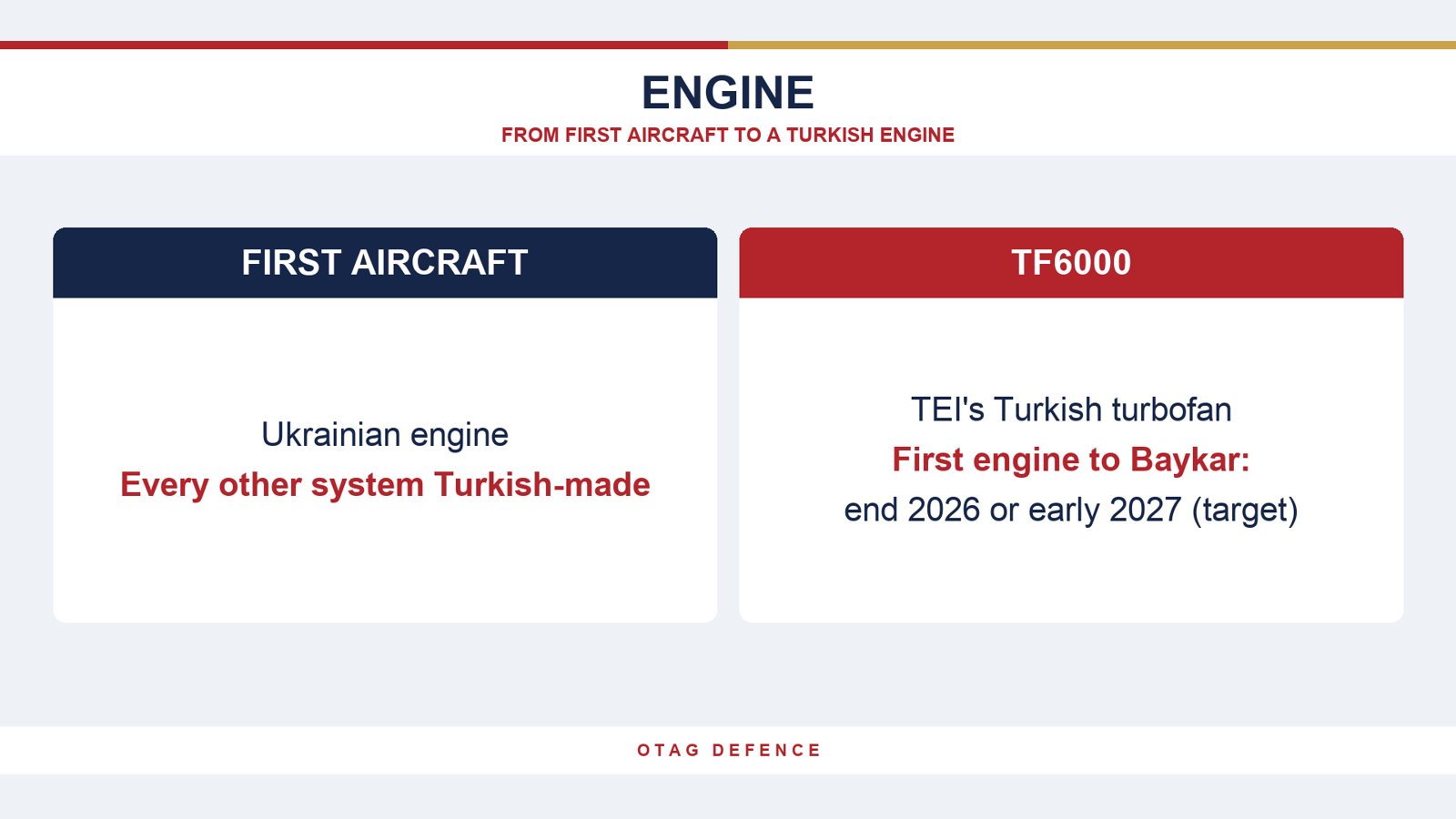
Whose engine does it use? Baykar CEO Haluk Bayraktar answered this question clearly: apart from its engine, all of the aircraft's systems are domestic.
At the start of the project Baykar signed an engine agreement with the Ukrainian company Ivchenko-Progress, and the aircraft is in serial production with a Ukrainian engine.
When will the domestic engine come? Mahmut Faruk Akşit, General Manager of Turkish engine maker TEI, said they plan to deliver the first TF6000 engine to Baykar at the end of the year or early next year, barring any setback.
So the first KIZILELMAs to be delivered are not expected to have a domestic engine. This is not a shortcoming but a stage. The engine is the hardest part of a combat aircraft; once the domestic engine is fitted, KIZILELMA's biggest foreign dependency will also be gone.
Is it invisible to radar? It would not be accurate to call it fully stealthy. Baykar describes the aircraft as having a low radar cross-section. Radar cross-section is a value kept secret for combat aircraft.
The design serves that goal. Munitions are carried inside the fuselage. The TOYGUN targeting system is also hidden inside the fuselage rather than in an external pod. It also performs AI-supported target tracking and automatic target classification.
The aircraft does not rely on hiding alone. ASELSAN's FEWS-U system detects radar threats aimed at it through 360 degrees and applies countermeasures.
What will the first aircraft carry? ASELSAN's MURAD radar, the KARAT infrared search and track system and TOYGUN have been tested on the aircraft. The first aircraft do not necessarily have to carry all of them at once.
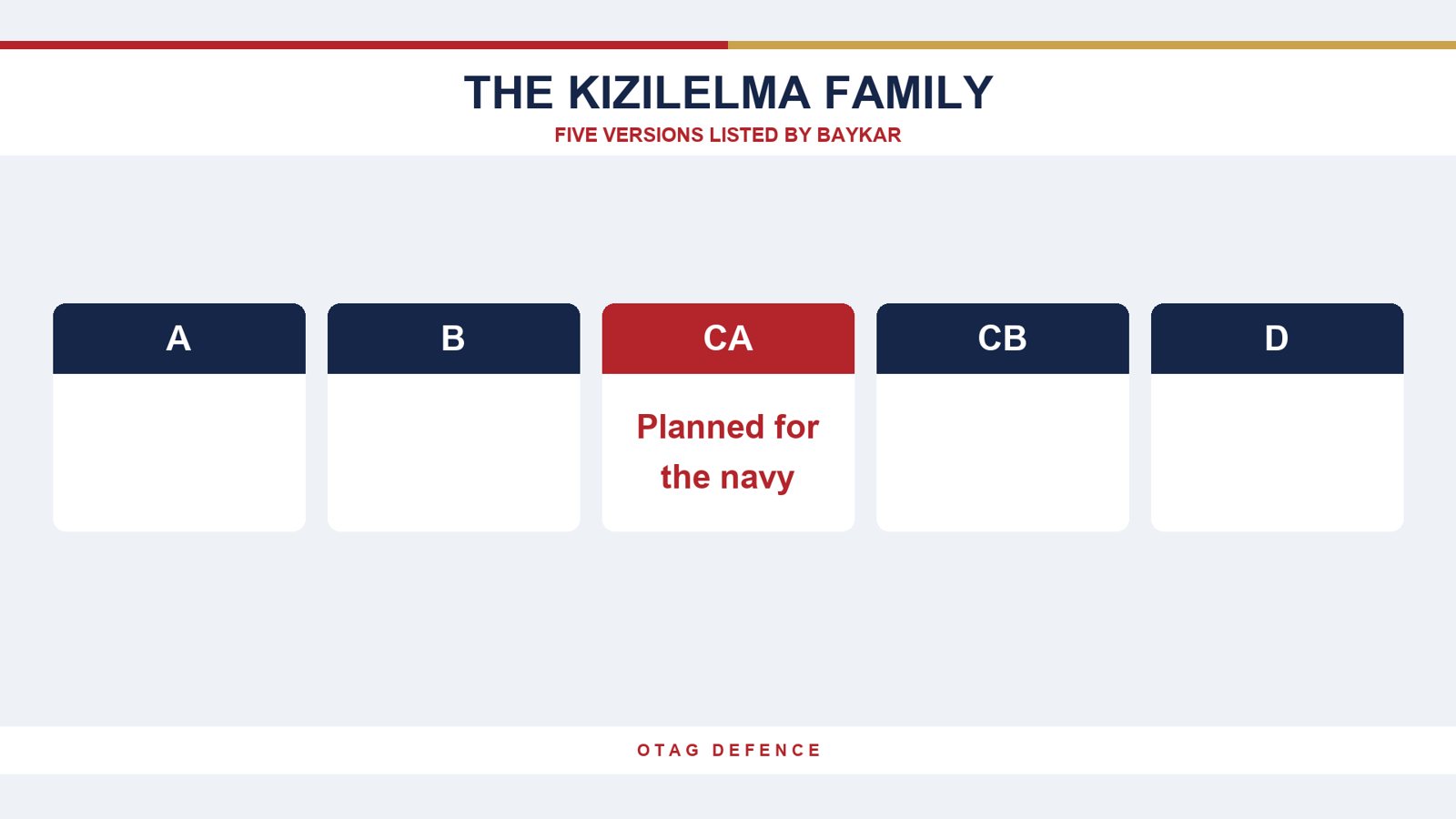
KIZILELMA is not a single aircraft but a family. Baykar lists five versions: A, B, CA, CB and D. Of these, CA is the model planned for naval use. Selçuk Bayraktar has also said that a version able to fly faster than sound will come in the future.
So the picture is clear: the KIZILELMA entering service is a beginning, a platform that will keep developing.
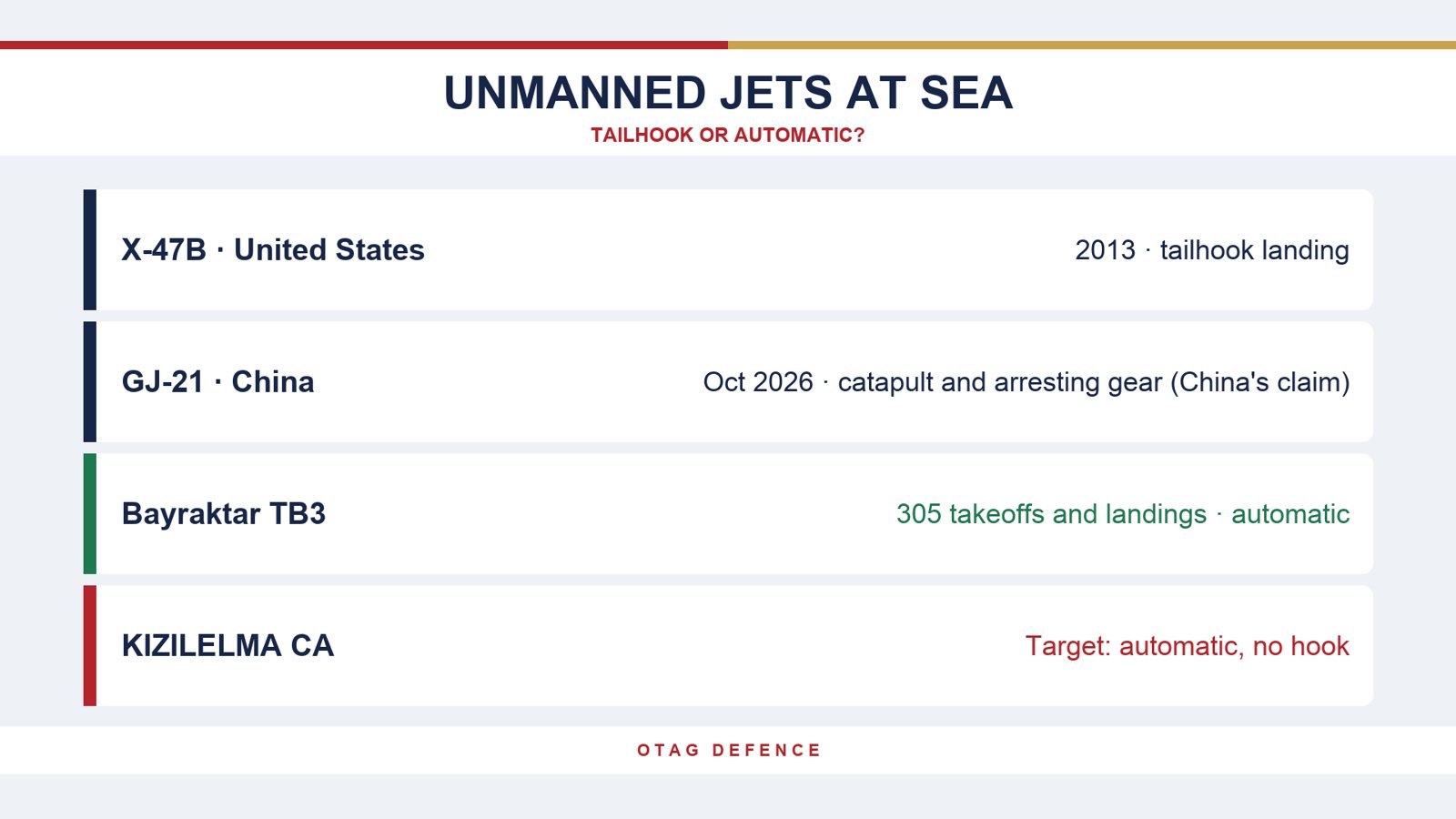
Will it operate from a ship? Yes, that is the goal, and the method is known. Like the Bayraktar TB3, KIZILELMA will take off from and land on a ship automatically, without using a tailhook.
The TB3 opened the way. It became the first armed unmanned aircraft to take off from and land on a ship with a short flight deck, without landing support equipment, using a fully automatic AI-supported system. According to information given by commanders, it has made 305 take-offs and landings from TCG ANADOLU, the Turkish Navy's amphibious assault ship.
This is what will set KIZILELMA apart from other examples around the world. In 2013 the American X-47B became the first unmanned aircraft to land on an aircraft carrier using a tailhook. Last month China announced that the GJ-21 had made its first take-off and landing from the Sichuan, a ship with a catapult and arresting system; it did not release any footage. KIZILELMA will have no tailhook.
Will it replace the pilot? The M-346 test shows the opposite. KIZILELMA stands out less as a replacement for the pilot than as a team member flying under the pilot's command. It can enter a dangerous area first, while the crewed aircraft stays behind.
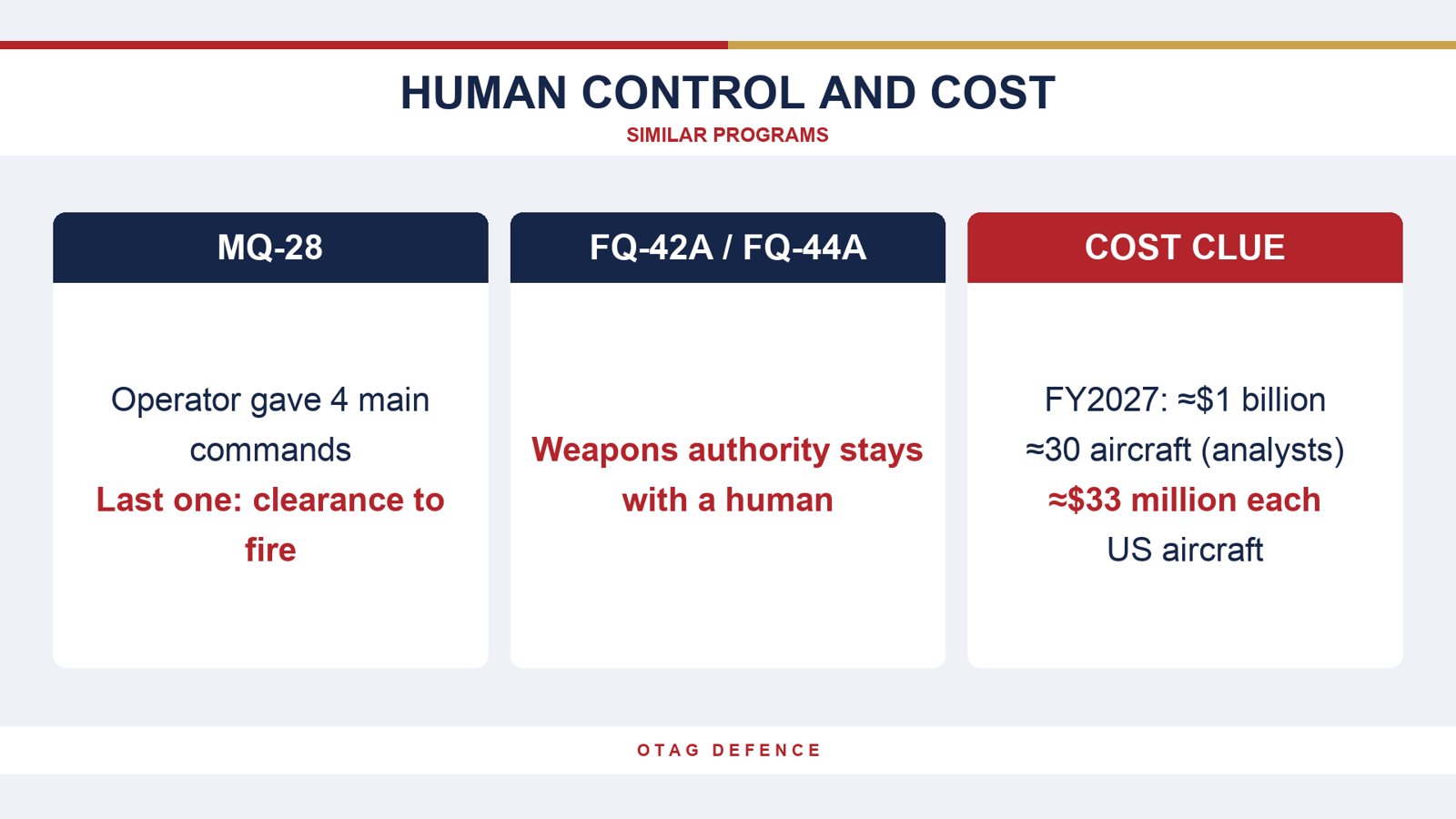
Who makes the decision to fire? There is an example. When Australia's MQ-28 fired a live missile in December 2025, the operator gave the aircraft only four main commands; the last of them was permission to fire. The U.S. Air Force also says the authority to use weapons stays with a human. The model KIZILELMA showed in the M-346 test is also one in which the pilot is in command.
What if the link is lost? Baykar says KIZILELMA is autonomous in take-off, landing, taxiing and cruise, and can also communicate beyond line of sight.
How much does it cost? The most concrete clue comes from the United States. In its fiscal 2027 budget, the U.S. Air Force requested about one billion dollars for the first production lot; analysts estimate this corresponds to roughly 30 aircraft. That means about 33 million dollars per aircraft.
In short: delivery is close, and the capabilities have been shown in tests. Moving along the same path as its counterparts around the world, KIZILELMA now faces the domestic engine, the decision on numbers and new versions.
Shorts on this topic

An unmanned fighter that lands on a ship with no tailhook?

What has Türkiye's unmanned fighter proven in the air?

Is Türkiye's KIZILELMA supersonic?
Share your view in the comments under the video.
Comment on YouTubeSources
- Baykar – TCG Anadolu and automatic takeoff/landing (in Turkish)
- Baykar – TB3 completes 100 sorties at sea (in Turkish)
- Milliyet – TB3's first shipboard takeoff and landing (in Turkish)
- Baykar – formation flight with AKINCI (in Turkish)
- Baykar – canards and maneuverability (in Turkish)
- AA – FEWS-U self-protection (in Turkish)
- Haber Aero – serial production with Ukrainian engine (in Turkish)
- Haber Aero – Indonesia order and options (in Turkish)
- Baykar – KIZILELMA specifications (in Turkish)
- Baykar – eight weapon stations (in Turkish)
- AA – Haluk Bayraktar, 9 May 2026 (in Turkish)
- Milliyet – Selçuk Bayraktar, 30 Sep 2026 (in Turkish)
- TRT Haber – more than ten aircraft in 2026 (in Turkish)
- Haber Aero – S1 and the Turkish Air Force (in Turkish)
- Haber Aero – TF6000 engine (in Turkish)
- AA – engine agreement (in Turkish)
- AA – F-16 test (in Turkish)
- Sabah – GÖKDOĞAN live firing (in Turkish)
- NTV – autonomous formation flight (in Turkish)
- Haber Aero – Mach 0.8
- Milliyet – M-346 test (in Turkish)
- AA – JET-230 firing (in Turkish)
- AA – internal weapons bay firing (in Turkish)
- AA – TOYGUN (in Turkish)
- Sabah – KARAT and TOYGUN (in Turkish)
- TRT Haber – supersonic version (in Turkish)
- CNN Türk – CA model and TB3 (in Turkish)
- Milliyet – Indonesia (in Turkish)
- US Air Force – CCA contracts
- US Air Force – weapons authority
- Australian Minister for Defence – MQ-28 order
- Australian Department of Defence – MQ-28 live firing
- Haber Aero – ANKA III delivery timeline (in Turkish)
- Boeing – MQ-28 2028 target
- US Navy – X-47B
More analysis
 8:32
Türkiye's KAAN Stealth Fighter: Second Prototype Targets December First Flight
Otag Defence assessment“For KAAN, the question for 2026 is no longer "will it fly?" It is "how fast will the prototypes multiply?"”
 7:29
Türkiye's Kizilelma: The World's First Unmanned Fighter Jet in Service?
Is KIZILELMA really the world's first unmanned fighter in service? What does entering service actually mean? And what will Türkiye do with three aircraft?
 7:54
Türkiye's Answer to America's Leonidas? ASELSAN EJDERHA Explained
ASELSAN, Türkiye's largest defence electronics company, marked its 51st anniversary with a two-stage demonstration at its Gölbek Firing and Test Center near Ankara. According to the company's statement on 15 November, in the first stage EJDERHA disabled two different fibre-optic drones from about 1,000 metres. In the second stage, 51 drones launched at the same time were stopped within seconds with a single command. No missiles or bullets were used.