KIZILELMA and ANKA 3: Turkey on the Verge of a World First!
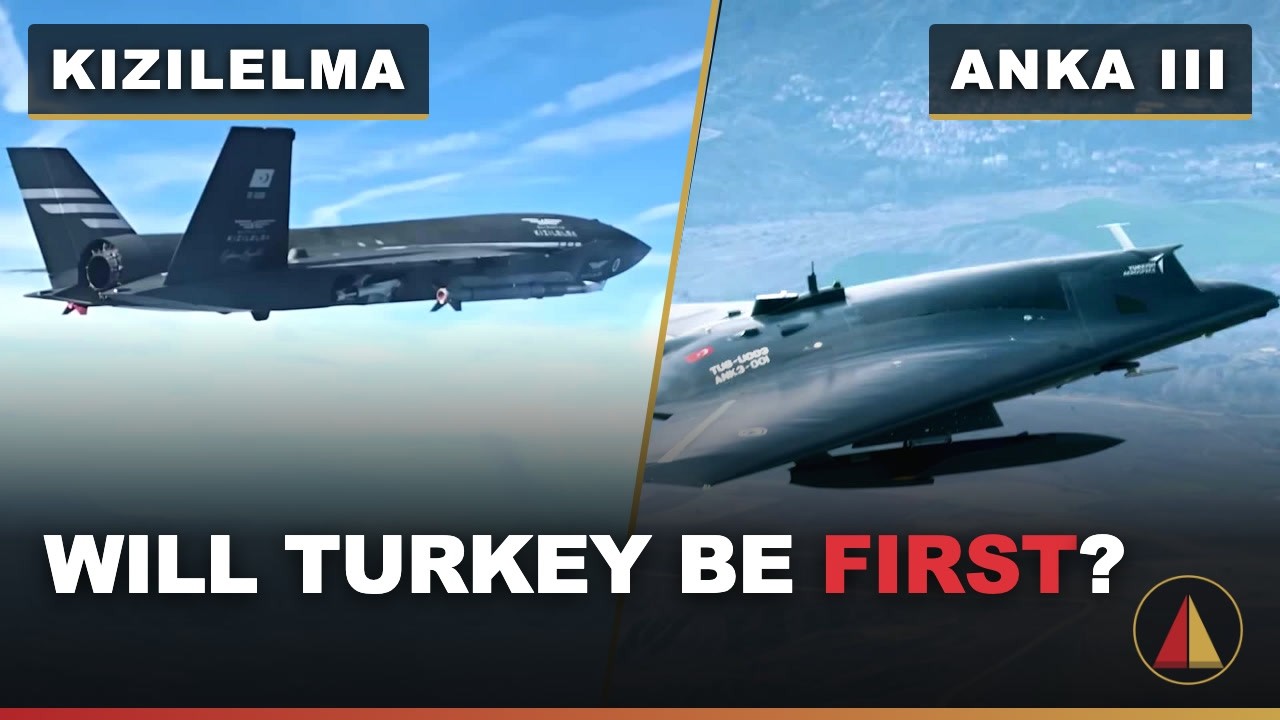
KIZILELMA, ANKA III, MQ-28A Ghost Bat, YFQ-42A, YFQ-44A and the Rafale F5 unmanned combat aircraft compared: serial production, schedules and inventory dates.
One country is preparing to put unmanned fighter jets alongside its piloted fighters. And we are not talking about a single prototype, but about a serial production model, weapons tests and a schedule for entering service.
That country is Türkiye.
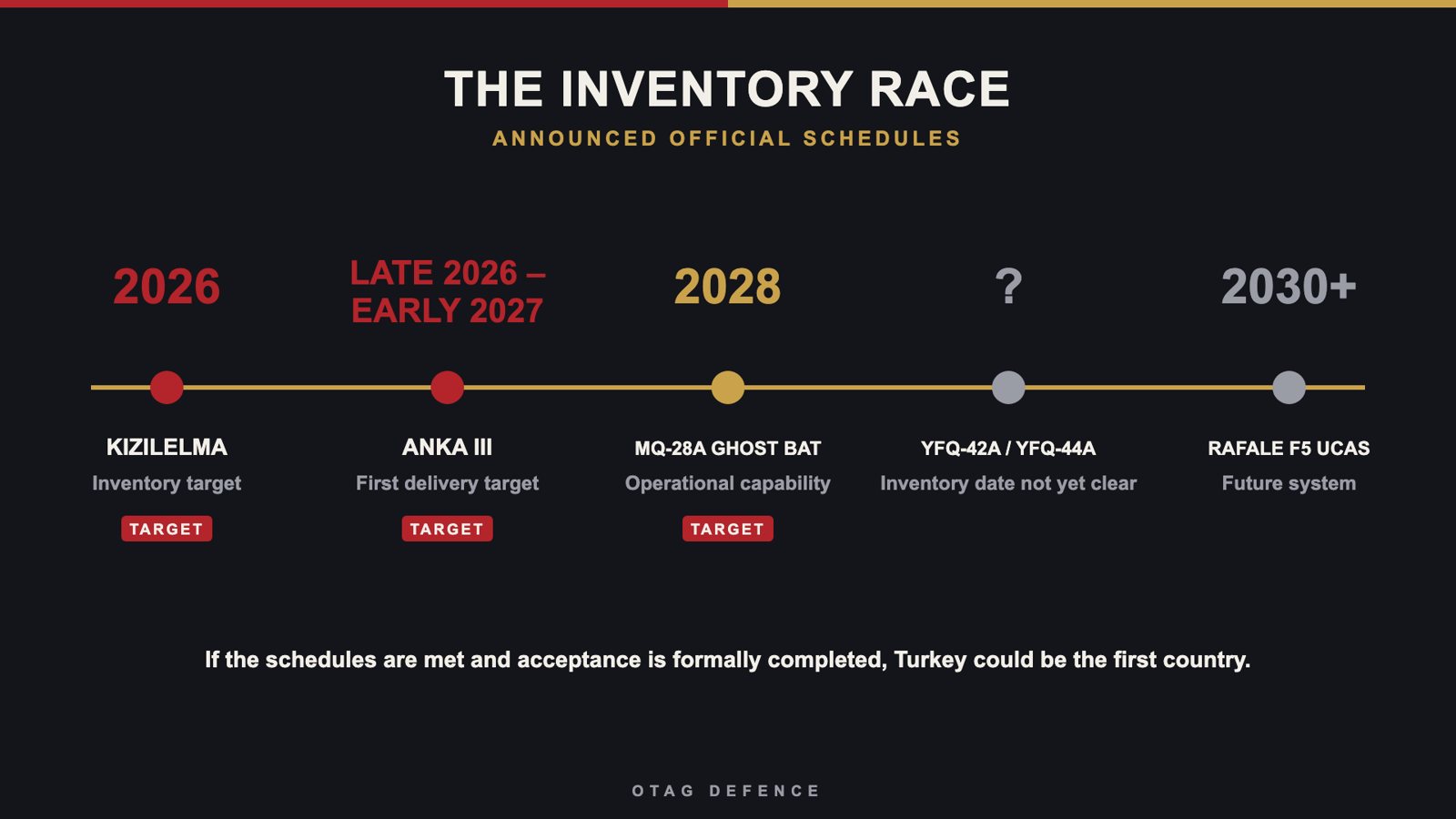
Baykar's Bayraktar KIZILELMA, a jet-powered unmanned fighter from the company behind the Bayraktar TB2 drone, is targeted to enter service in 2026. The schedule Turkish Aerospace (TUSAŞ), Türkiye's state-backed aircraft maker, has announced for ANKA III, a flying-wing unmanned combat aircraft, points to a first delivery at the end of 2026 or early 2027 and to the aircraft being in service from 2027.
If these schedules are met and acceptance is officially completed, Türkiye could become the first country in the world to put the unmanned fighter class into its inventory.
So what are the official grounds for this claim? What stage are KIZILELMA and ANKA III at? And why do rivals in the United States and Australia not yet appear to be ahead of Türkiye? That is what we examine in this analysis.
The official schedule for KIZILELMA
Baykar's official statement said that serial production of KIZILELMA had started while flight and system tests continued, and that the platform was targeted to enter service in 2026.
This statement matters, because it describes not an aircraft that "will be developed in the future" but a program that has announced a serial production and service-entry target together.
In 2026, Baykar announced firing tests of the TEBER-82 and TOLUN munitions from the internal weapons bay of S2, a serial production KIZILELMA. It had earlier been announced that a jet-powered air target marked by the MURAD AESA radar, built by Turkish defence electronics company ASELSAN, was hit with a GÖKDOĞAN air-to-air missile.
These developments show that KIZILELMA has been tested not just in flight but also for radar, air-to-air missiles, internal weapons and air-to-ground missions.
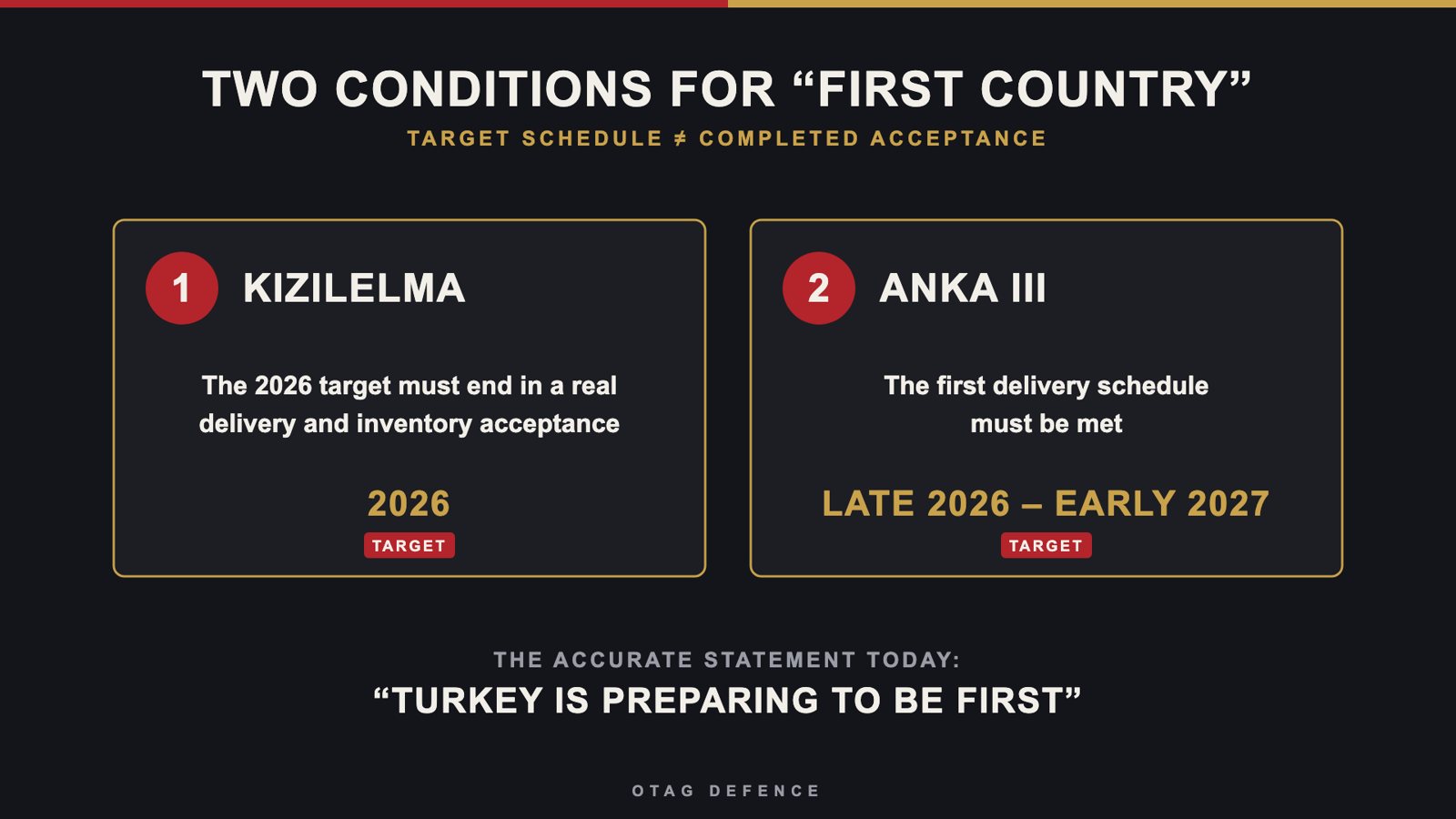
But the critical distinction is this: a serial production model flying does not automatically mean it has been accepted into the Air Force's inventory. What will settle the service claim is an official acceptance and delivery announcement.
The announced schedule for ANKA III
ANKA III is also progressing notably. Turkish Aerospace carried out the platform's first flight on 28 December 2023. This was followed by flights with weapons, TOLUN and TEBER-82 tests, and work with the internal weapons bay and different mission payloads.
According to Turkish Aerospace General Manager Mehmet Demiroğlu, ANKA III is planned to move into serial production in 2026. The first delivery is targeted for the end of 2026 or early 2027, with the aircraft in service from 2027.
Another statement said that the first flight of the final configuration that will enter service was planned within 2026, and that a new configuration with lower observability was targeted to fly at the end of 2026.
This picture shows that ANKA III is still in the transition from prototype to operational product. But Türkiye advancing two different unmanned fighter programs through flight, weapons, serial production and delivery steps at the same time is quite unusual in world defence aviation.
How should the "first country" claim be read?
Here we are not saying "the world's first unmanned fighter". There have been unmanned combat aircraft in the world before that flew, carried weapons and performed technology demonstrations.
What we are talking about is different: a country officially accepting jet-powered, combat-class unmanned fighters into its military inventory.
If the official schedules are met, Türkiye could be the first country in the world in this respect. But this sentence has two conditions.
First, KIZILELMA's 2026 target must result in a real delivery and acceptance into service. Second, the end-2026 to early-2027 delivery schedule announced for ANKA III must be met.
That is why today the most accurate phrase is not "Türkiye will be first" but "Türkiye is preparing to be first". The headline will become certain when acceptance ceremonies and official inventory records are published.
Australia's MQ-28A Ghost Bat program
One of the closest foreign comparison points for Türkiye is Australia's MQ-28A Ghost Bat program.
Boeing and the Royal Australian Air Force have carried out important demonstrations such as autonomous mission behaviour, multi-aircraft operations, teaming flights with the E-7A Wedgetail airborne early warning aircraft, data sharing and deployment to an operational base. The MQ-28 was also used in an engagement test with an air-to-air weapon.
Boeing says Block 2 aircraft are in production and that the foundation for the RAAF's initial operational capability has been laid. However, Australia's target for full operational capability is given as 2028.
So the Ghost Bat is a very mature and strong rival. But according to the current official schedules, the 2026–2027 deliveries targeted for KIZILELMA and ANKA III could put Türkiye ahead.
The United States' YFQ-42A and YFQ-44A
In the United States, General Atomics' YFQ-42A and Anduril's YFQ-44A are the two main candidates of the Collaborative Combat Aircraft (CCA) program, which develops unmanned jets to fly alongside crewed fighters.
Both models have moved into flight testing. In 2026 the U.S. Air Force announced engineering, manufacturing development and production contracts. A separate development line was also set up for mission autonomy software.
But here too there is a distinction to keep in mind: awarding a production contract does not mean the aircraft has entered the operational inventory. Although the American CCA program is a real military procurement program, there is not yet a publicly available firm date for acceptance into service for the YFQ-42A and YFQ-44A.
So the American models are very strong rivals in terms of technology and production scale; but in terms of an announced service schedule, they do not appear to be ahead of Türkiye.
France's Rafale F5 UCAS program
The fourth important rival Türkiye should take into account is the unmanned combat air vehicle that will accompany France's Rafale F5 standard.
According to the program announced by Dassault Aviation and France's defence procurement agency DGA, this UCAS is being developed as a low-observable combat system that will work together with the Rafale F5. The program's operational timeframe extends beyond 2030.
Unlike KIZILELMA and ANKA III, France's approach builds a crewed-uncrewed teaming architecture centred directly on the Rafale F5. So the French platform is not a rival in flight testing today; but it is one of the serious European rivals of the 2030s.
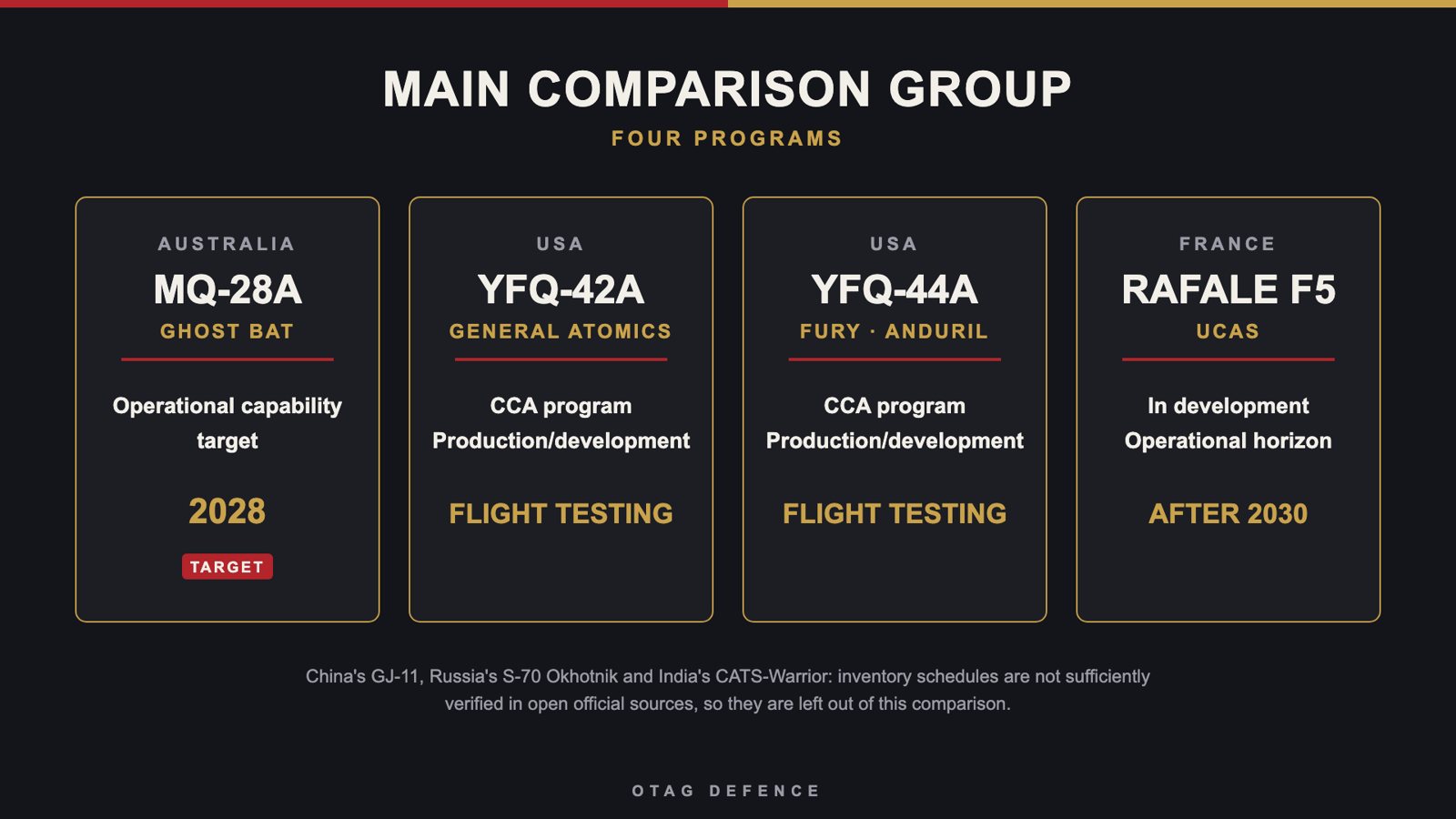
In this analysis, the main comparison group is made up of four programs:
1. Australia's MQ-28A Ghost Bat: operational capability target 2028.
2. United States' YFQ-42A: in flight testing and on the CCA production and development track.
3. United States' YFQ-44A Fury: in flight testing and on the CCA production and development track.
4. France's Rafale F5 UCAS: a future system being developed for after 2030.
China's GJ-11, Russia's S-70 Okhotnik and India's CATS Warrior have been left out of this main comparison because their service-entry schedules have not been sufficiently verified in open official sources.
What sets Türkiye apart?
What sets Türkiye apart is not having a single prototype. It is developing two jet-powered unmanned fighters with two different mission philosophies at the same time.
KIZILELMA stands out for air-to-air combat, high manoeuvrability, and radar and missile integration. ANKA III stands out for its flying-wing structure, low observability, internal weapons and air-to-ground missions.
These two platforms approaching service at the same time will not just give Türkiye two new aircraft. They will also take unmanned aircraft beyond reconnaissance and strike missions to the level of air combat, electronic warfare, crewed-uncrewed teaming and force multiplication.
Where does it take Türkiye in its region?
KIZILELMA and ANKA III entering service could change Türkiye's regional air power in three ways.
First, it could reduce the danger crewed aircraft face on risky missions. Unmanned platforms could be used ahead of or alongside them for reconnaissance, electronic support, target detection, suppression of air defences and limited strike missions.
Second, it could increase Türkiye's capacity to add more mission aircraft to its air power. Unmanned systems, which do not require training, operation and maintenance on the same scale as a crewed fighter, can be used in larger numbers, with different mission payloads and with lower risk to personnel. This alone does not mean "a cheap aircraft"; sensors, satellite communications, weapons, ground control and maintenance infrastructure must be considered together.
Third, Türkiye's regional deterrence rests not only on the number of aircraft but on the mission network. KIZILELMA, with its air-to-air combat and high manoeuvrability, and ANKA III, with low observability, internal weapons and long air-to-ground missions, can complement each other. This pair could help Türkiye plan its air operations more flexibly around the Mediterranean, the Aegean, the Black Sea, the Caucasus and the Middle East.
But this effect does not come just from writing the aircraft into the inventory. Real regional superiority depends on radar and electro-optical sensors, electronic warfare, data links, satellite communications, weapons, command and control, and reliable teaming with crewed aircraft being proven together in the field.
How should the comparison of figures be read?
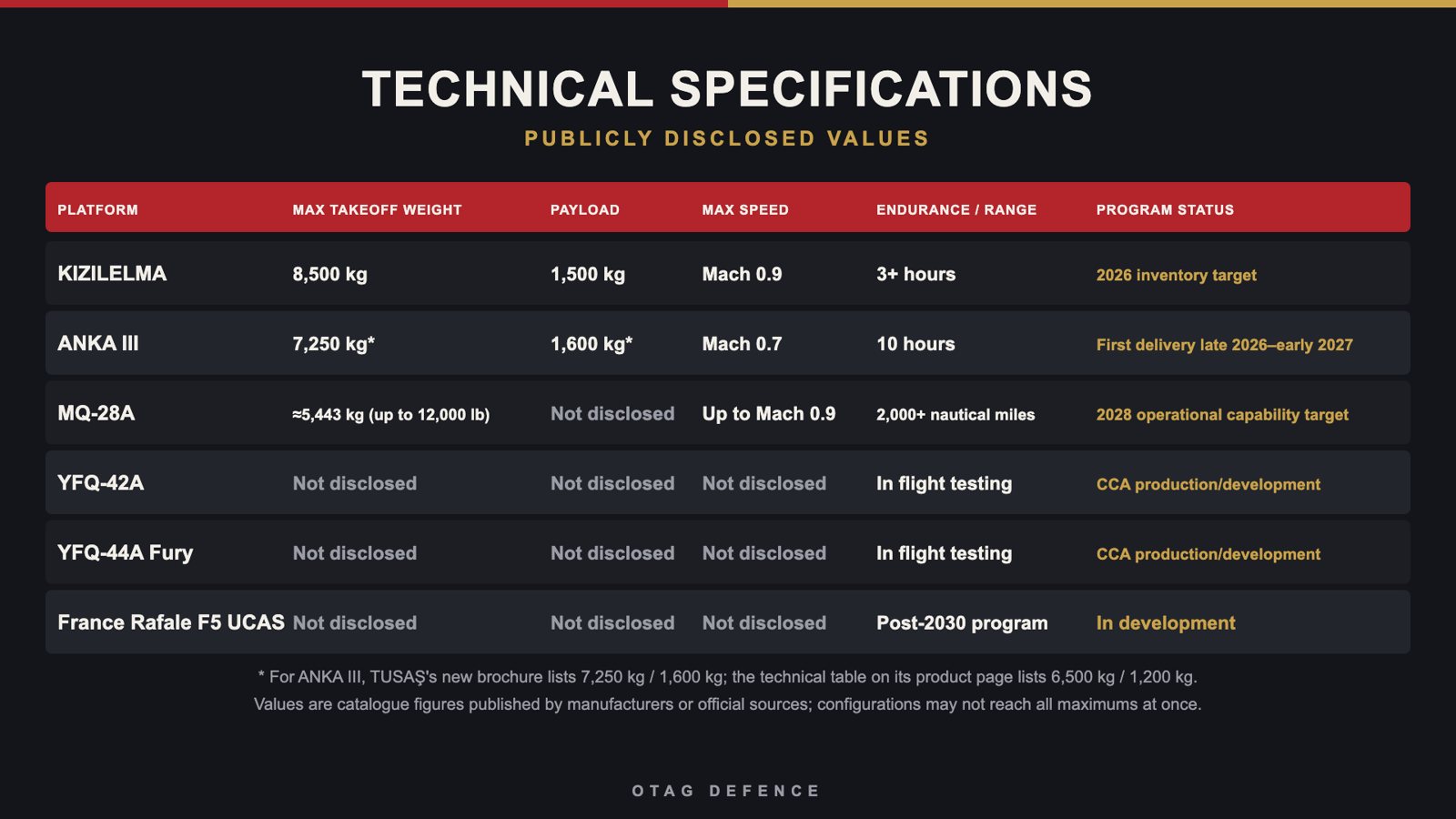
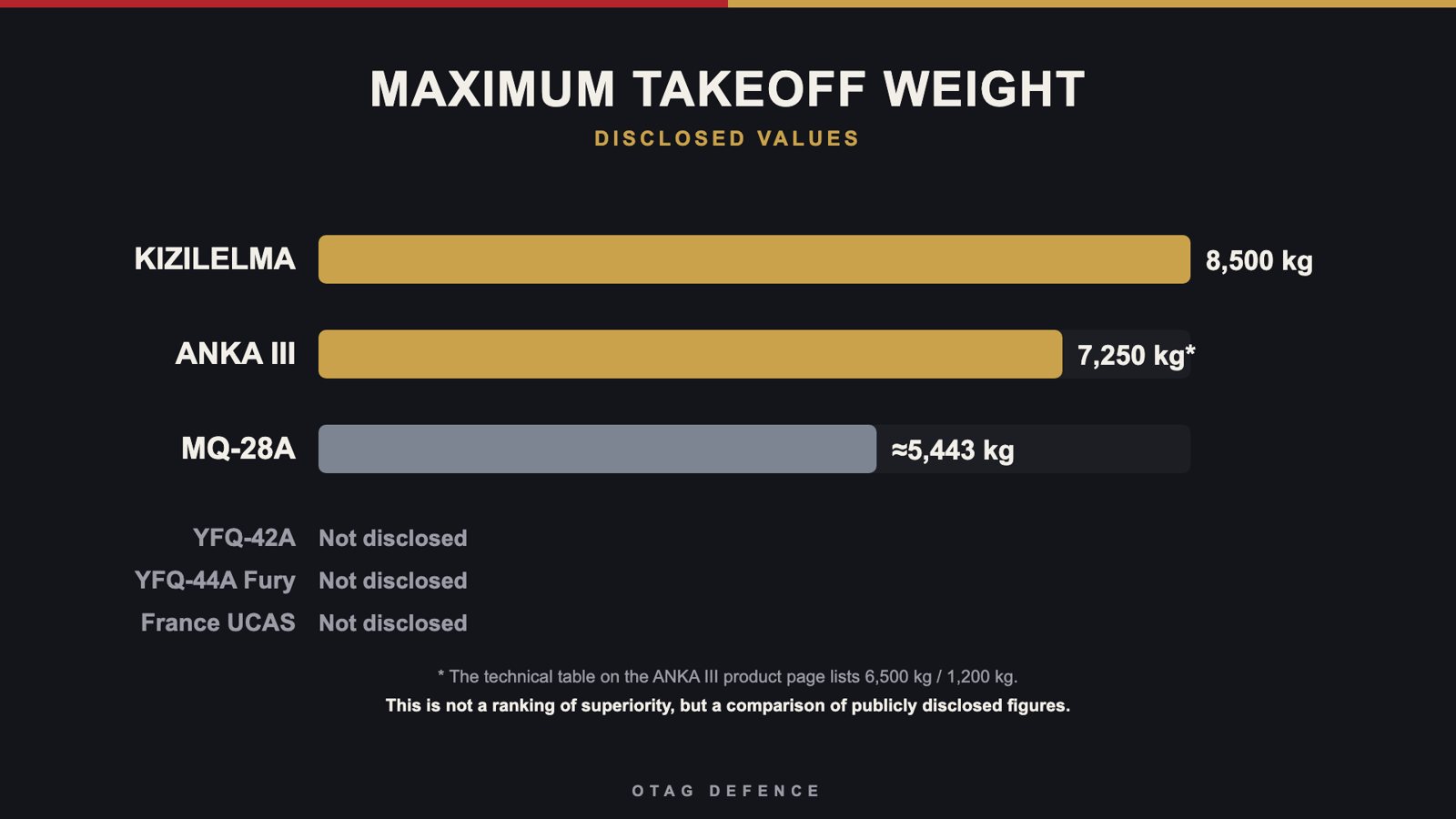
The technical comparison shows only the values announced by manufacturers or official sources. Baykar's current KIZILELMA product page gives a maximum take-off weight of 8,500 kilograms, a payload of 1,500 kilograms, a top speed of Mach 0.9 and an endurance of more than three hours. The early figure of 6 tonnes in older Baykar news should not be confused with the current serial production configuration.
Turkish Aerospace's current ANKA III brochure gives a maximum take-off weight of 7,250 kilograms and a payload of 1,600 kilograms, while the technical table on the Turkish Aerospace product page lists 6,500 kilograms and 1,200 kilograms. This difference should not be interpreted with a single definitive figure without noting that it may stem from the configuration or updated design values.
For the MQ-28A, Boeing announces a maximum take-off weight of up to 12,000 pounds, a speed of up to Mach 0.9 and a range of more than 2,000 nautical miles. For the YFQ-42A, YFQ-44A and France's future UCAS, verifiable official figures under the same headings are not publicly available. These fields should be left blank, not filled with estimates.
This comparison alone does not answer the question "which one is stronger?" Top speed, range or payload capacity make sense only together with sensors, software, electronic warfare, weapons, mission endurance and production scale.
The strong and weak sides of the claim
The strong side of the claim is this: Türkiye's official sources have announced serial production, delivery and service-entry targets for both platforms. The schedule given is 2026 for KIZILELMA and end-2026 to early-2027 for ANKA III.
The weak side is this: a target schedule is not completed acceptance into service. For an aircraft to enter the operational inventory, stages such as acceptance tests, delivery to the user, training, maintenance infrastructure, mission software and operational authorisation must be completed.
So the headline may be striking; but the distinction between "official target", "planned delivery" and "completed acceptance" must be kept throughout.
Conclusion
In conclusion, with KIZILELMA and ANKA III, Türkiye is not just one of the countries most likely to be the first to put the unmanned fighter class into service; according to the current official schedules, it is at the very front of this race.
The target for KIZILELMA is 2026. The first delivery target for ANKA III is the end of 2026 or early 2027. Australia's operational target for the MQ-28A is 2028. For the American YFQ-42A and YFQ-44A, a service-entry date has not yet been set.
If the announced schedules are met and acceptance is officially completed, Türkiye could become the first country in the world to bring unmanned fighters into its military inventory.
This would mark a historic threshold not only for the defence industry but also for the future of air power.
Will KIZILELMA or ANKA III enter service first? Do you think Türkiye can be first in the world in this field? Share your views in the comments, and don't forget to follow our channel.
Shorts on this topic

The inventory race: who leads?

ANKA III: from first flight to serial production

KIZILELMA: serial production and the 2026 target

Will Turkey be first?
Share your view in the comments under the video.
Comment on YouTubeSources
- Baykar – KIZILELMA's target of entering the inventory in 2026
- Baykar – Current KIZILELMA technical specifications
- Baykar – Internal weapons bay firing tests of the 2026 serial-production model (in Turkish)
- Presidency of Defence Industries (SSB) – Unmanned Combat Aircraft Project (in Turkish)
- Anadolu Agency – TUSAŞ General Manager on the late-2026/early-2027 first delivery target for ANKA III (in Turkish)
- Anadolu Agency – ANKA III serial production and final configuration plan for 2026 (in Turkish)
- Boeing – MQ-28 operational effectiveness demonstrations
- Boeing – MQ-28 Ghost Bat technical and programme information
- US Air Force – YFQ-42A and YFQ-44A CCA contracts
- Dassault Aviation – Rafale F5 UCAS programme (PDF)
- French Defence Procurement Agency (DGA) – Rafale F5 and unmanned combat aircraft development contracts (in French)
More analysis
 8:32
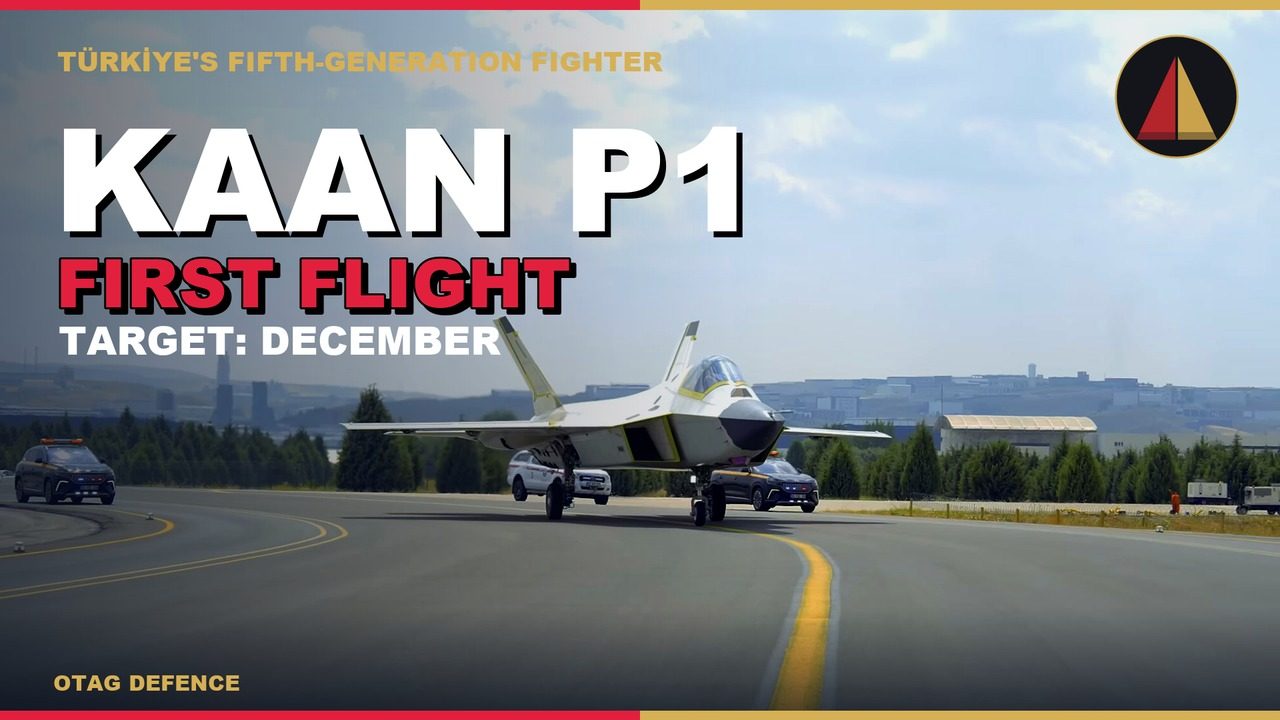
Türkiye's KAAN Stealth Fighter: Second Prototype Targets December First Flight
Otag Defence assessment“For KAAN, the question for 2026 is no longer "will it fly?" It is "how fast will the prototypes multiply?"”
 7:29
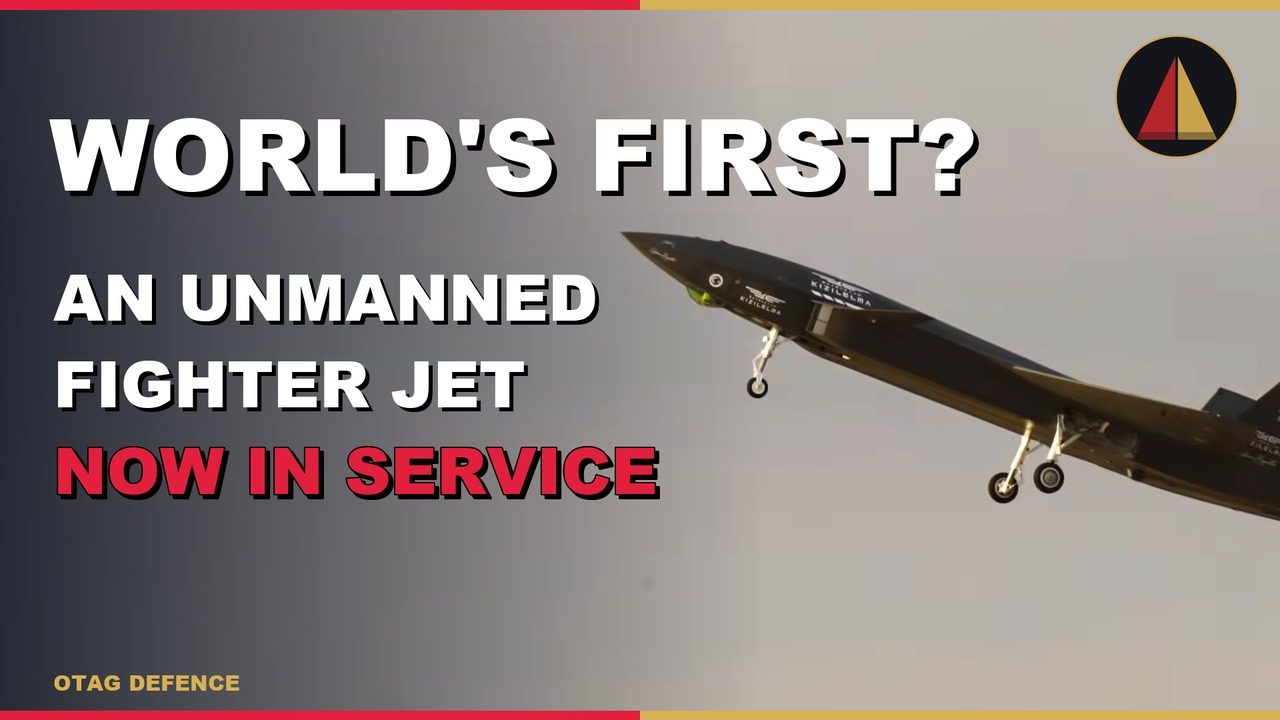
Türkiye's Kizilelma: The World's First Unmanned Fighter Jet in Service?
Is KIZILELMA really the world's first unmanned fighter in service? What does entering service actually mean? And what will Türkiye do with three aircraft?
 7:54
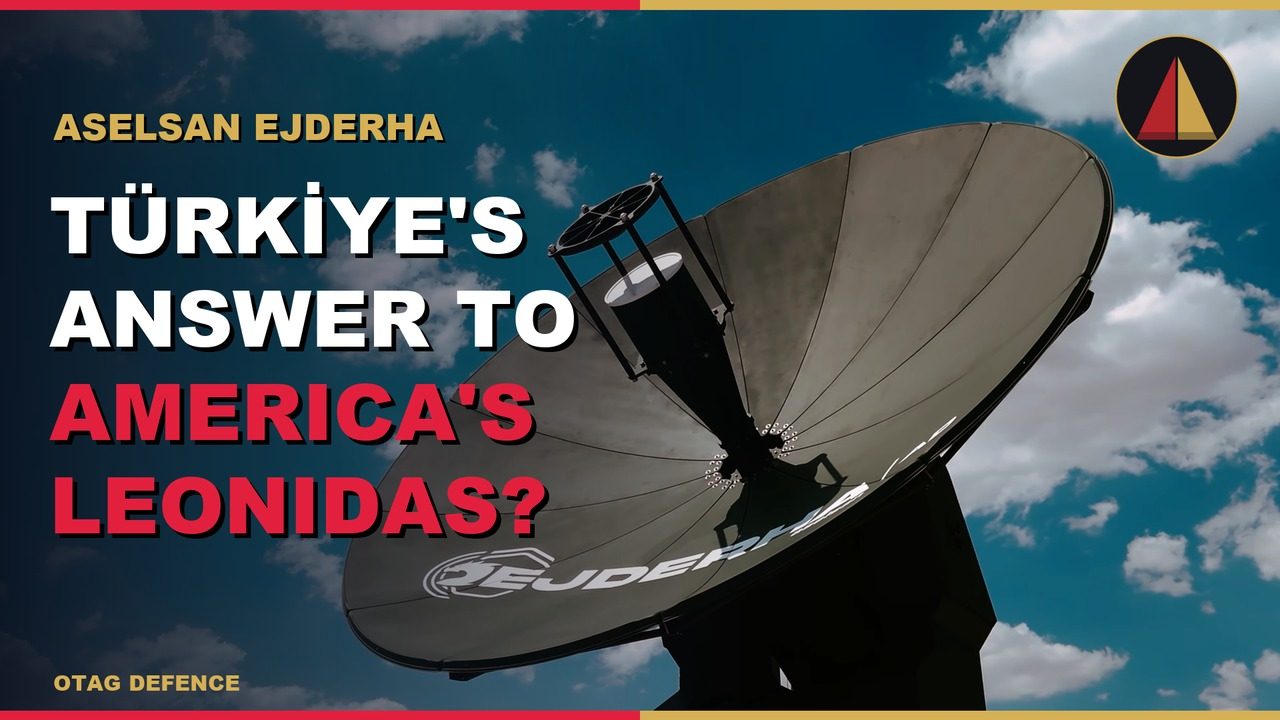
Türkiye's Answer to America's Leonidas? ASELSAN EJDERHA Explained
ASELSAN, Türkiye's largest defence electronics company, marked its 51st anniversary with a two-stage demonstration at its Gölbek Firing and Test Center near Ankara. According to the company's statement on 15 November, in the first stage EJDERHA disabled two different fibre-optic drones from about 1,000 metres. In the second stage, 51 drones launched at the same time were stopped within seconds with a single command. No missiles or bullets were used.