The Fastest Military Aircraft: Speed or Stealth?
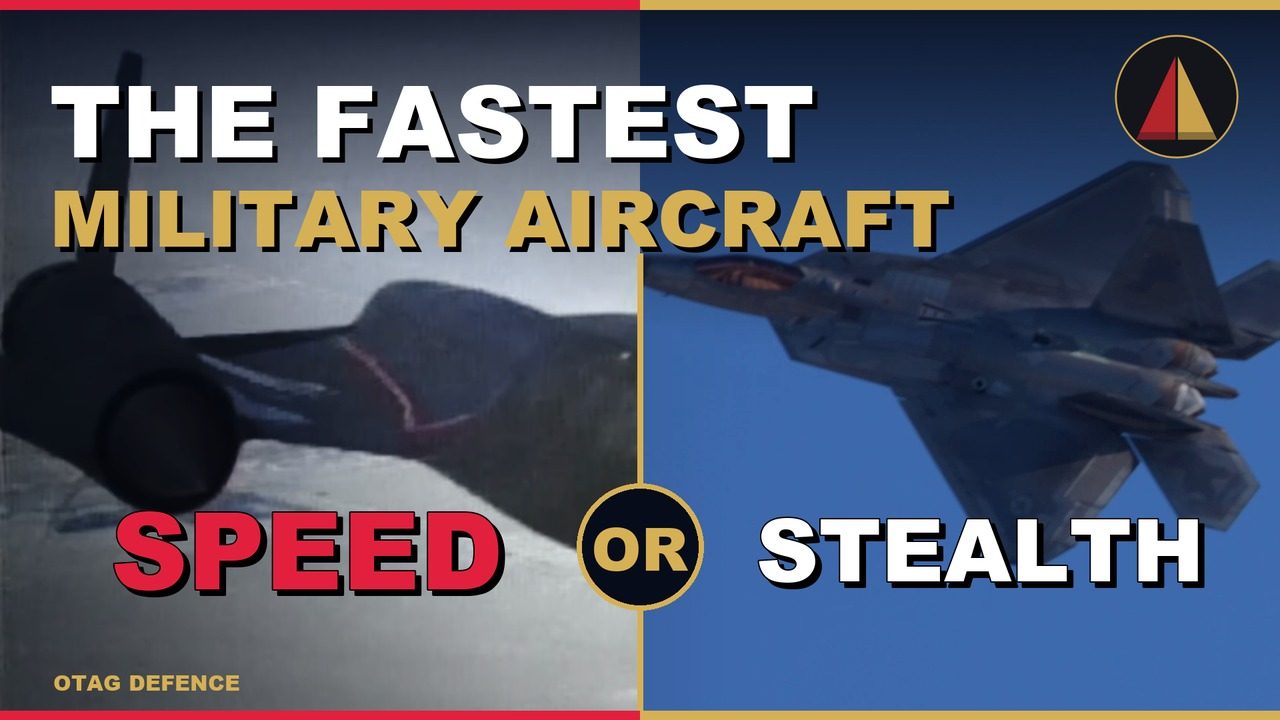
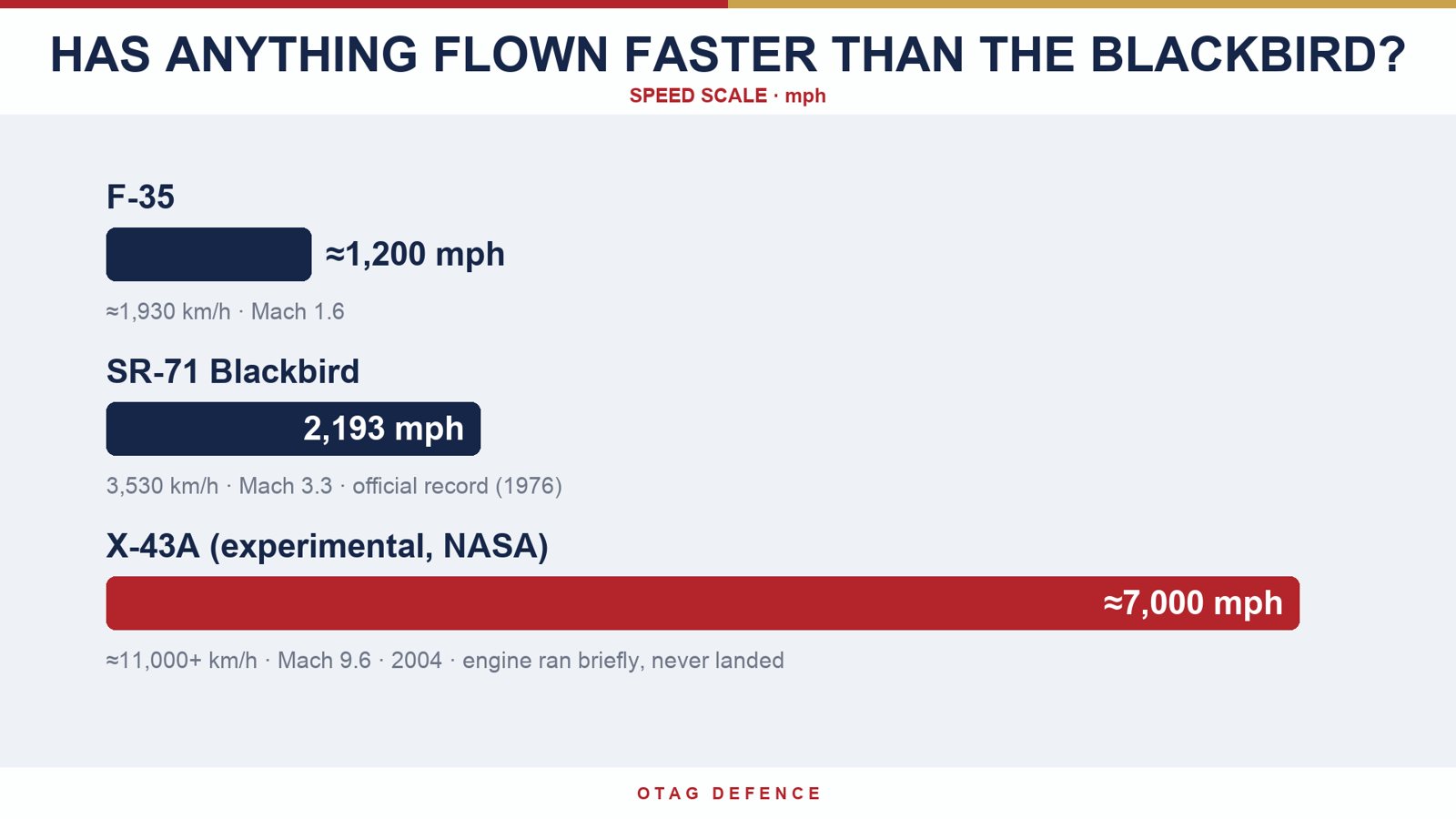
Over 2,000 miles per hour. The SR-71 Blackbird set the official world speed record in 1976, and fifty years later it still stands. Today's most advanced fighter, the F-35, tops out at Mach 1.6, about 1,200 mph. So did military aviation go backwards?
Why has a half-century-old speed record never been broken? Why are today's fighter jets slower? Speed or stealth?
3,500 kilometres per hour! The SR-71 Blackbird could reach these speeds half a century ago. Yet the top speed of the F-35, one of today's most advanced fighters, is Mach 1.6, or about 1,930 km/h.
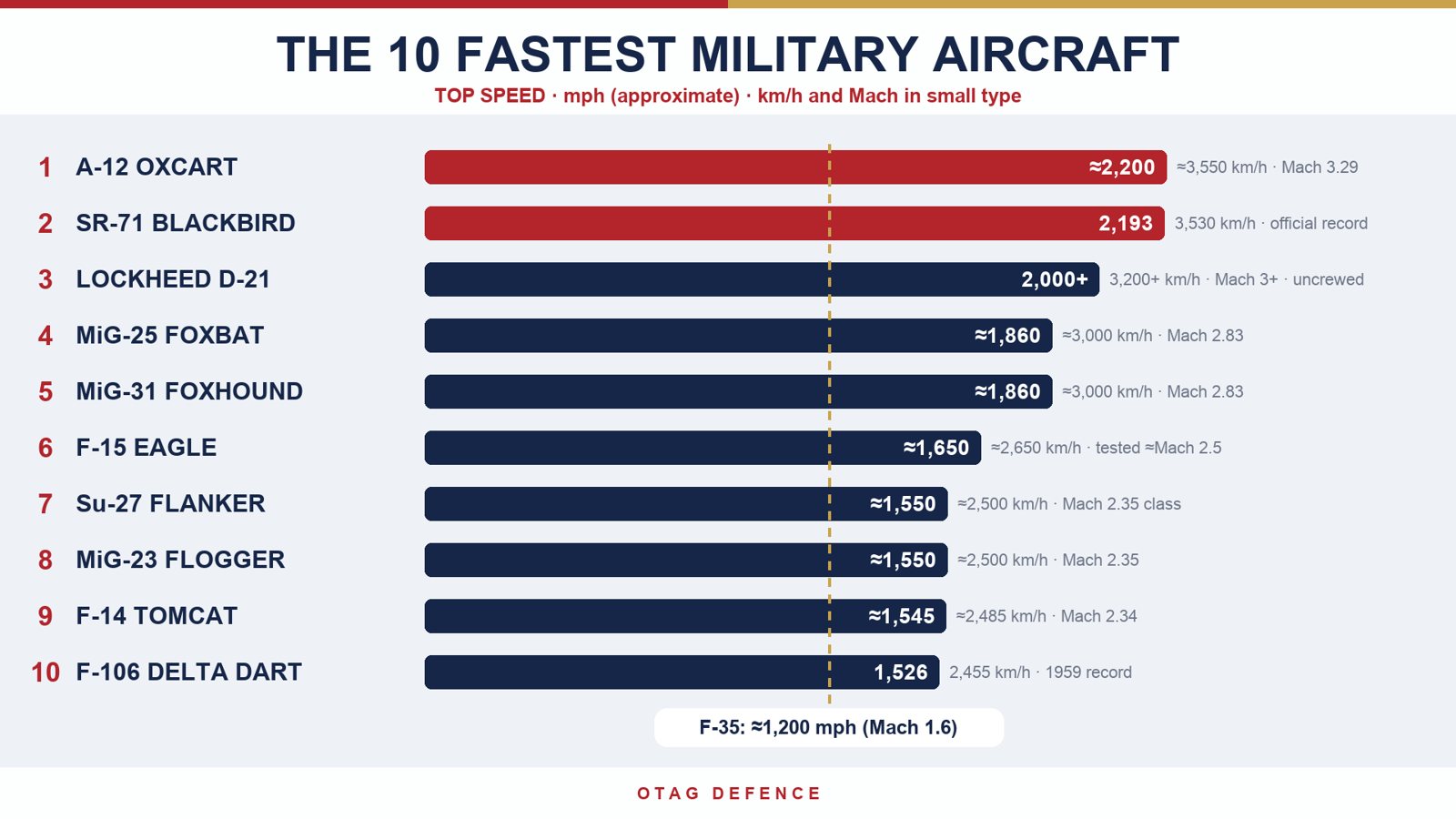
So has aviation gone backwards? Today we look at the 10 fastest military aircraft in history. One hint: the Blackbird is not number one.
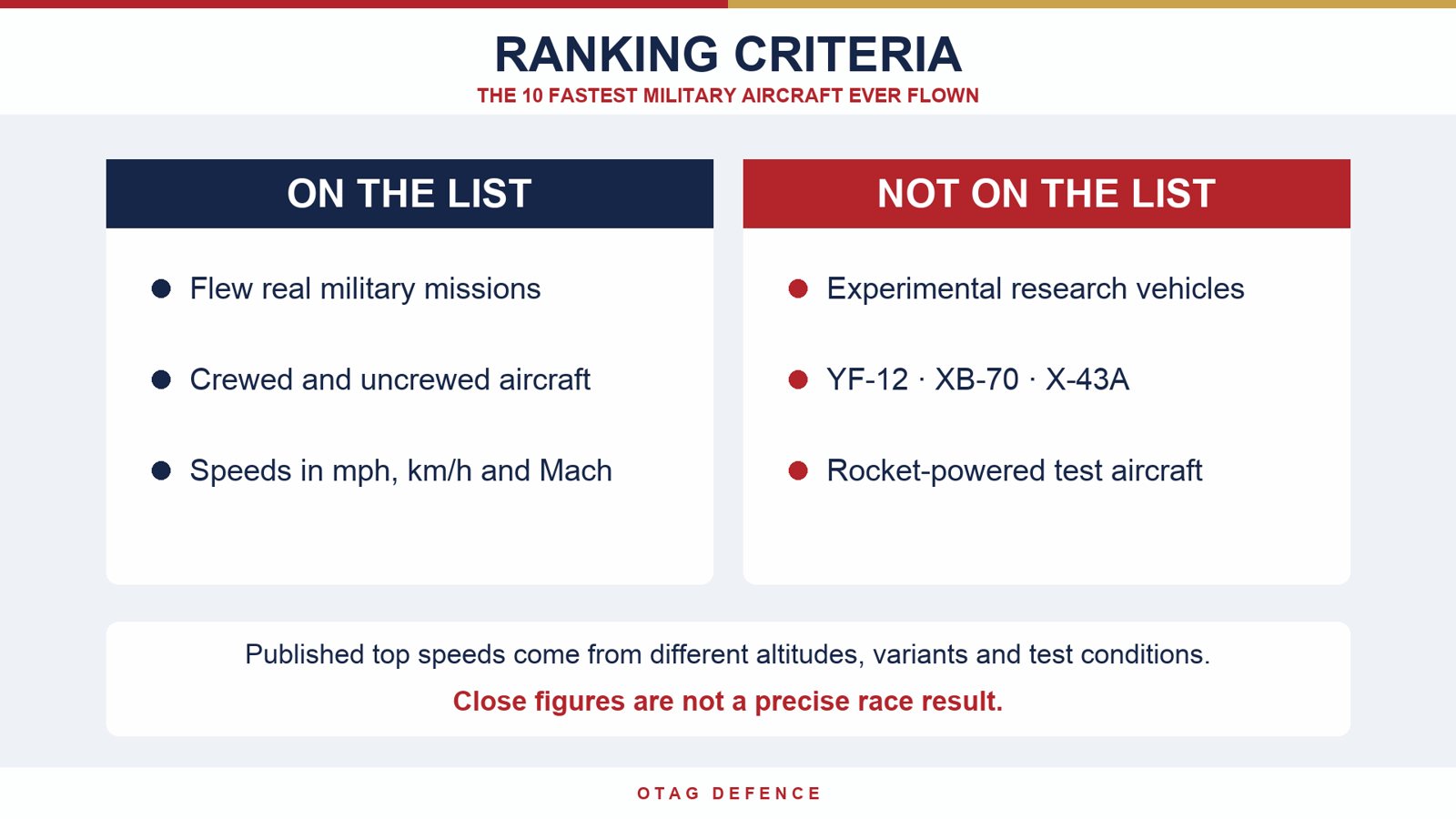
We included only platforms that were used on real military missions; experimental research vehicles are not on the list. Because the published speeds come from different altitudes and test conditions, values close to each other are not a definitive race result.
The countdown begins.
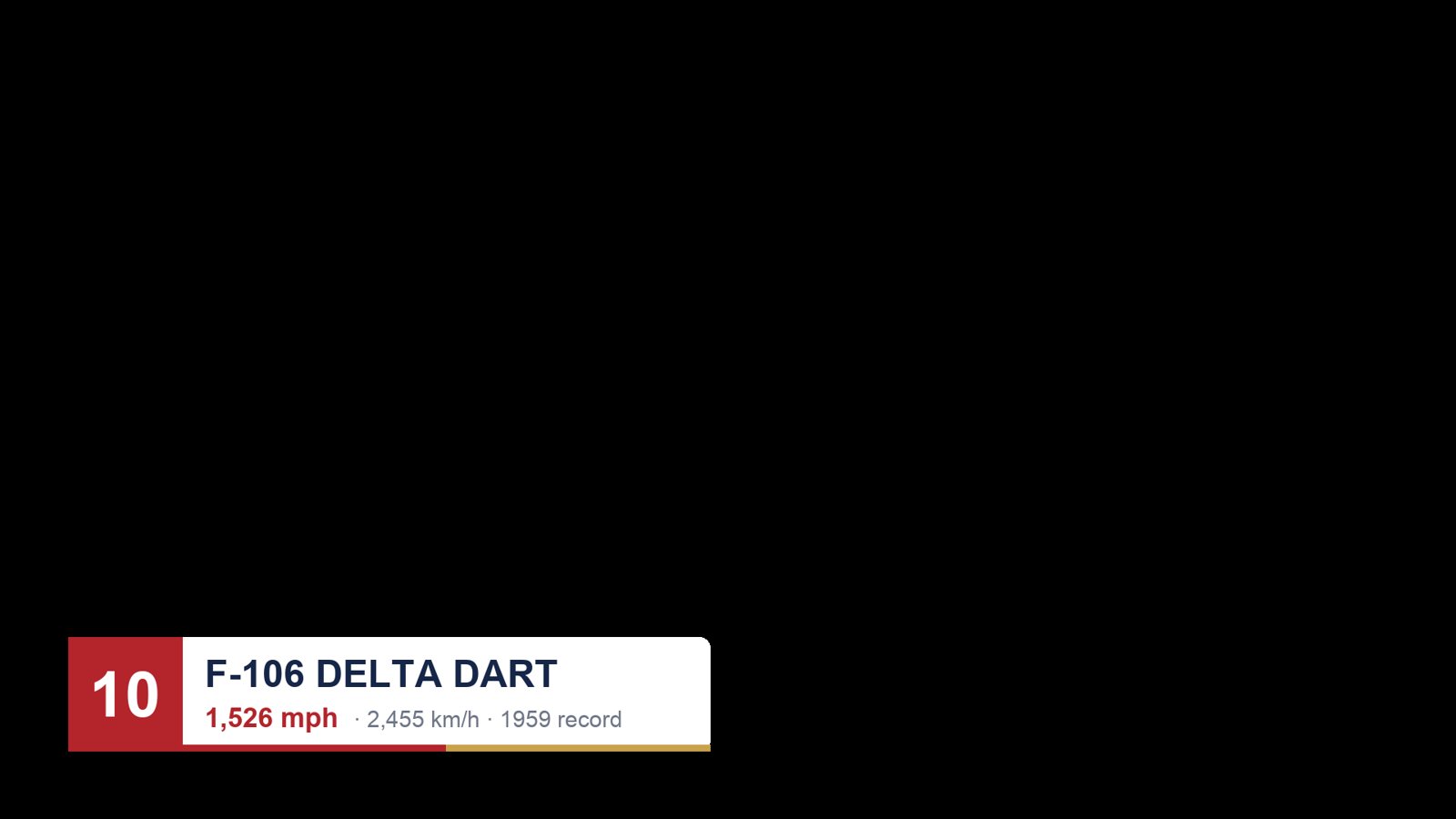
The list opens with the American F-106 Delta Dart. Developed to intercept Soviet bombers, this delta-wing interceptor set the official world speed record of its time at 2,455 km/h on 15 December 1959, and it did so not with an experimental aircraft but with a production fighter.
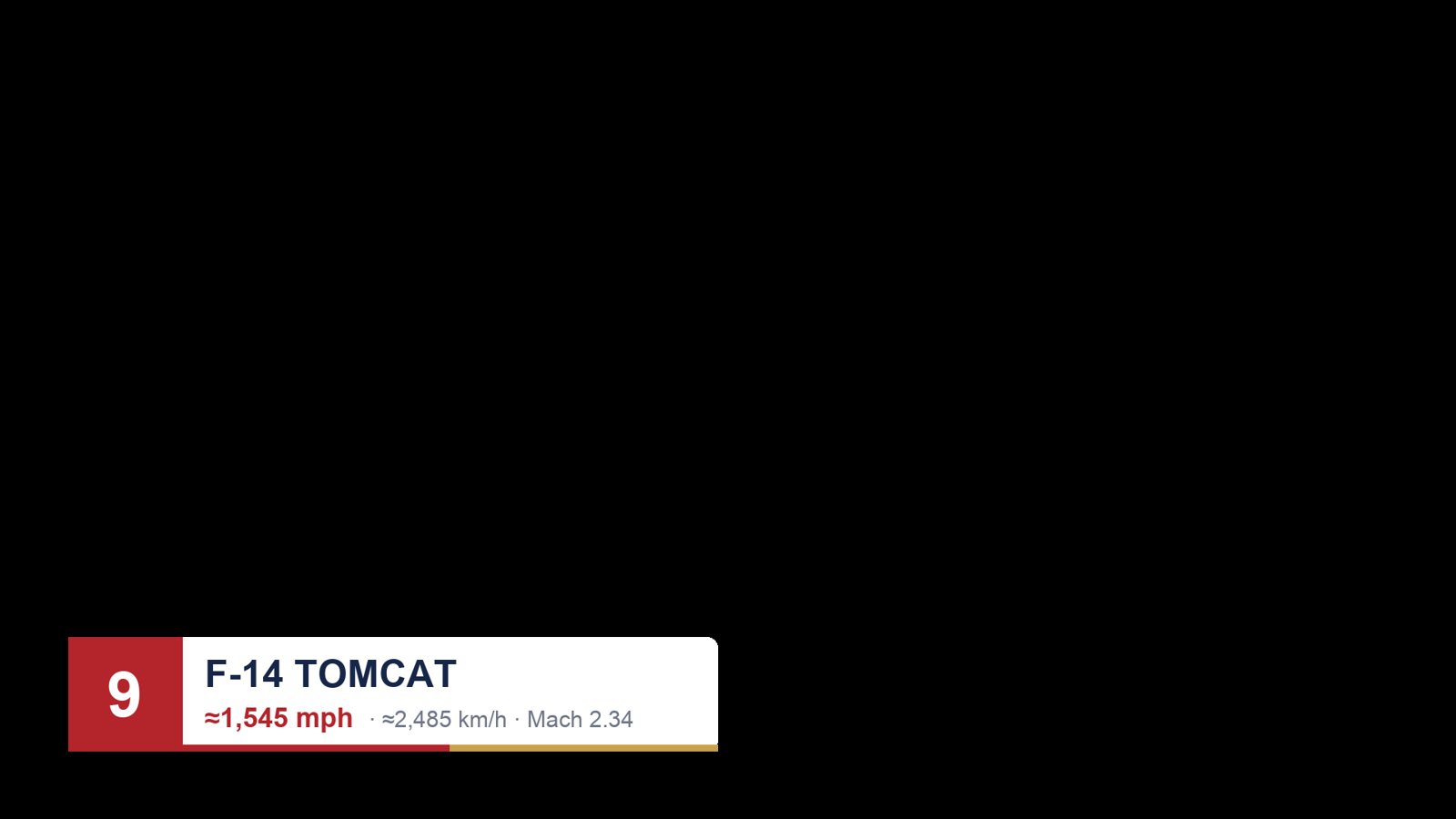
Many people know the F-14 Tomcat, in ninth place, from the film Top Gun. With a speed class of about 2,485 km/h, the Tomcat was developed to protect aircraft carriers. With its variable-geometry wings, powerful radar and Phoenix missiles, it could engage targets more than 140 kilometres away. The goal was to stop Soviet bombers before they got close to the fleet. The U.S. Navy retired its last Tomcats in 2006.
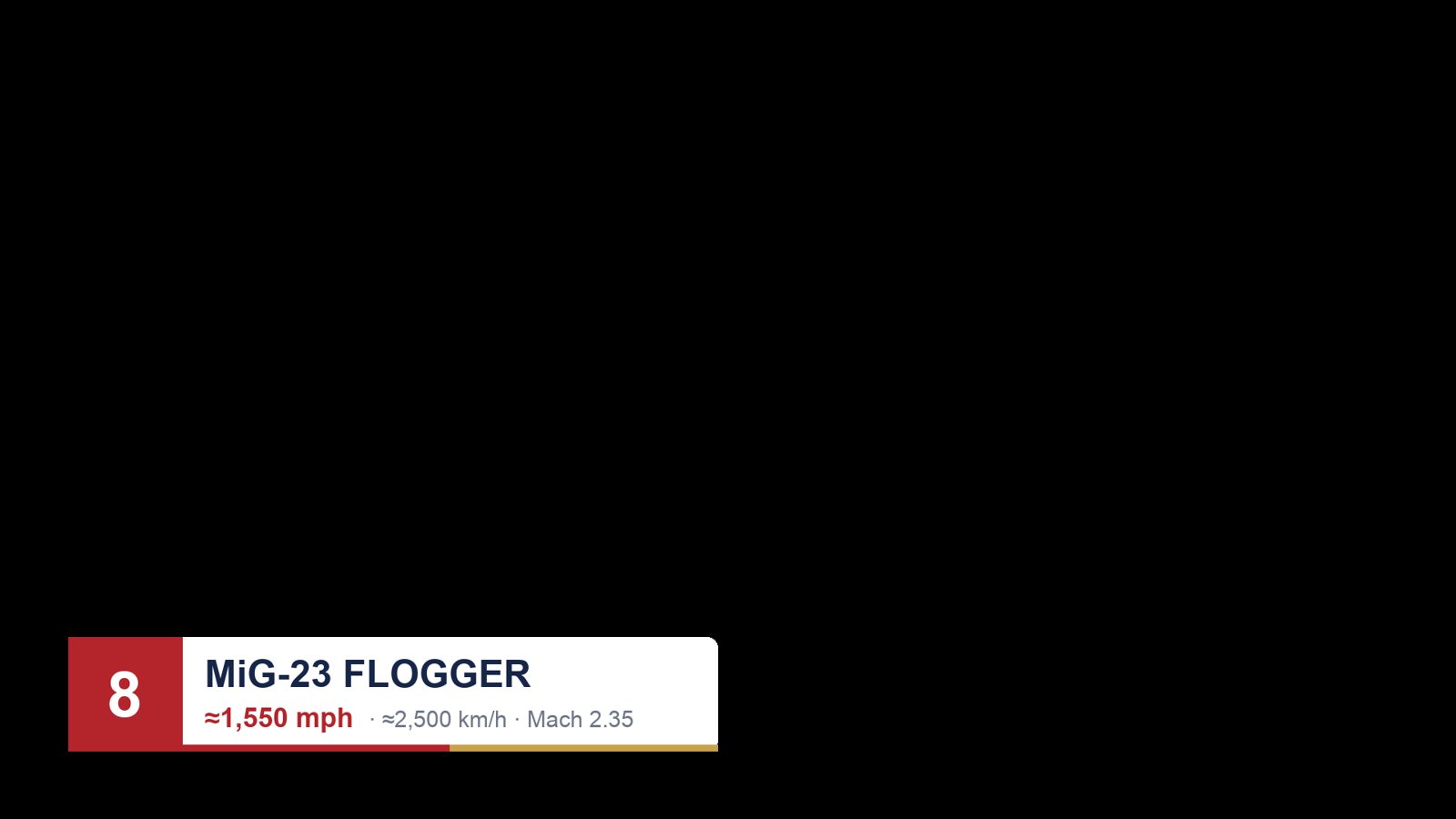
Eighth place goes to the most-produced variable-sweep-wing fighter in history: the Soviet MiG-23. More than 5,000 were built. By spreading its wings for take-off and sweeping them back at high speed, the MiG-23 reached a speed class of about 2,500 km/h. However, not all of its variants had the same top speed.
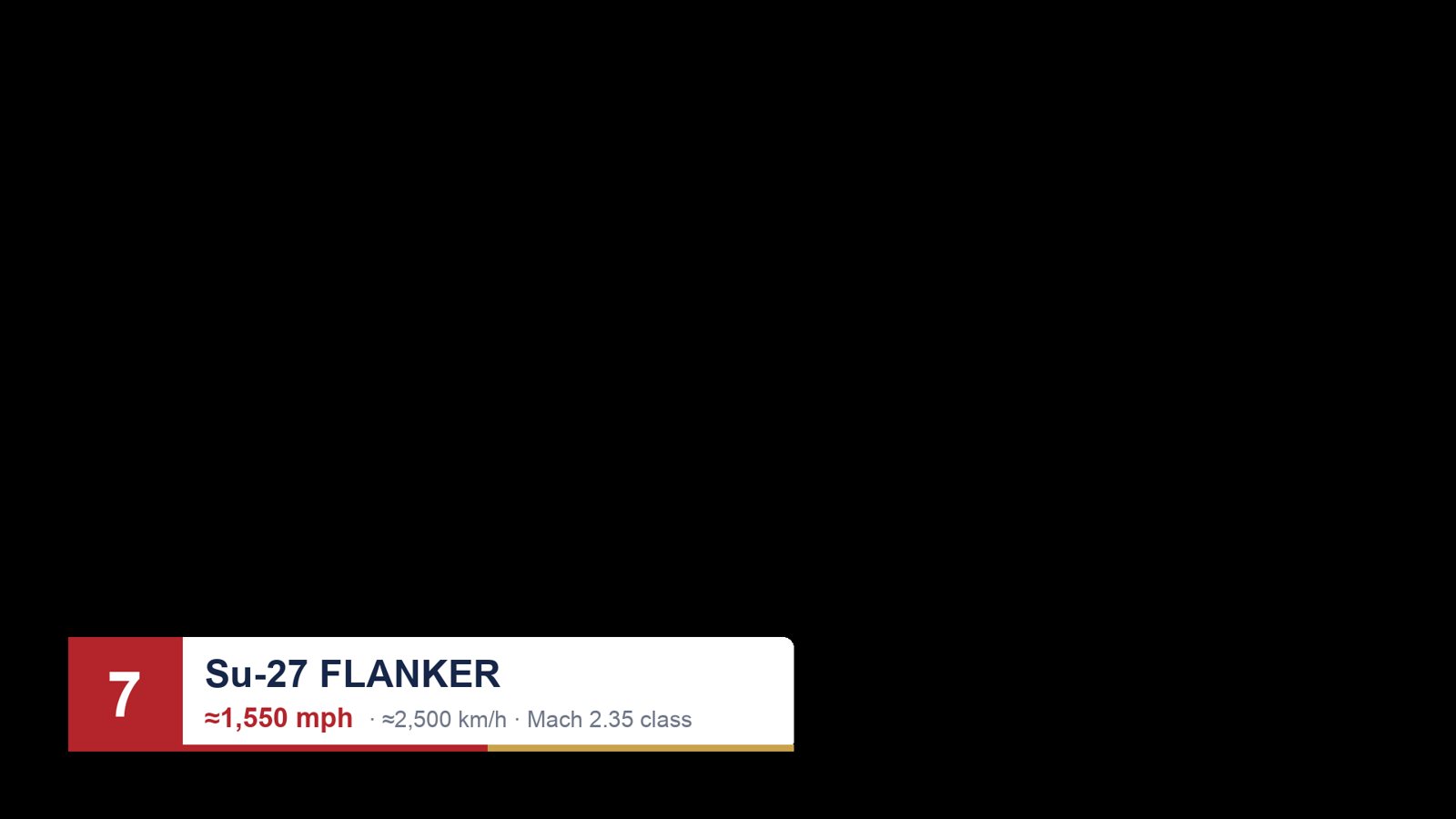
In seventh place, the Su-27 Flanker was the Soviet Union's answer to the American F-15, and it surprised the West at the 1989 Paris Air Show. Test pilot Viktor Pugachev pitched the aircraft up until it was almost vertical in the air and then returned it to level flight. This manoeuvre is known today as Pugachev's Cobra. Its speed class is about 2,500 km/h.
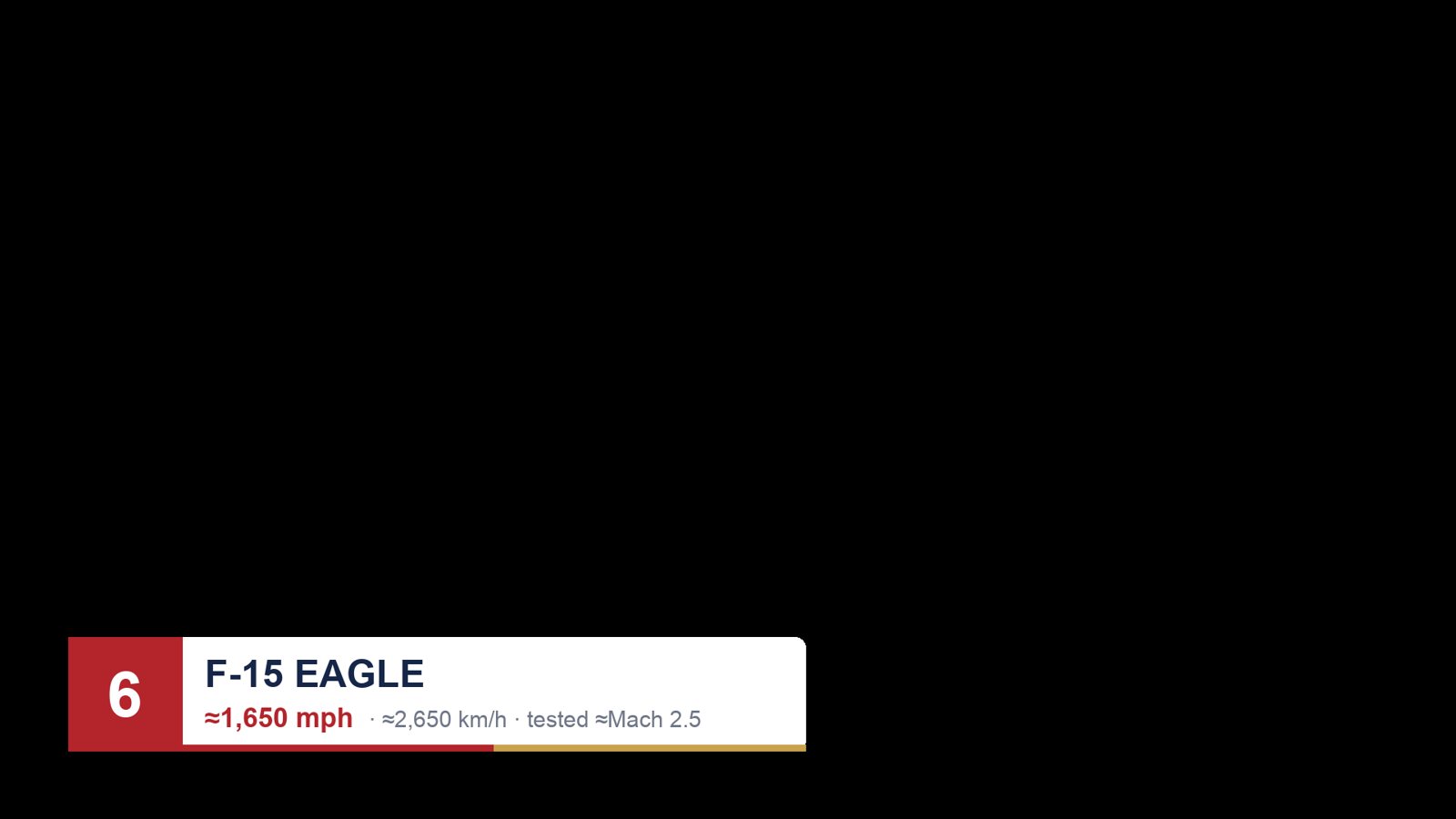
The Su-27's rival, the F-15 Eagle, is one step higher in sixth place. The U.S. Air Force describes the F-15 as a Mach 2-class aircraft; in tests it came close to Mach 2.5, which means about 2,650 km/h. Its real advantage, however, is its ability to keep its energy while accelerating, climbing and manoeuvring. Because in air combat the fastest aircraft is not always the one with the advantage.
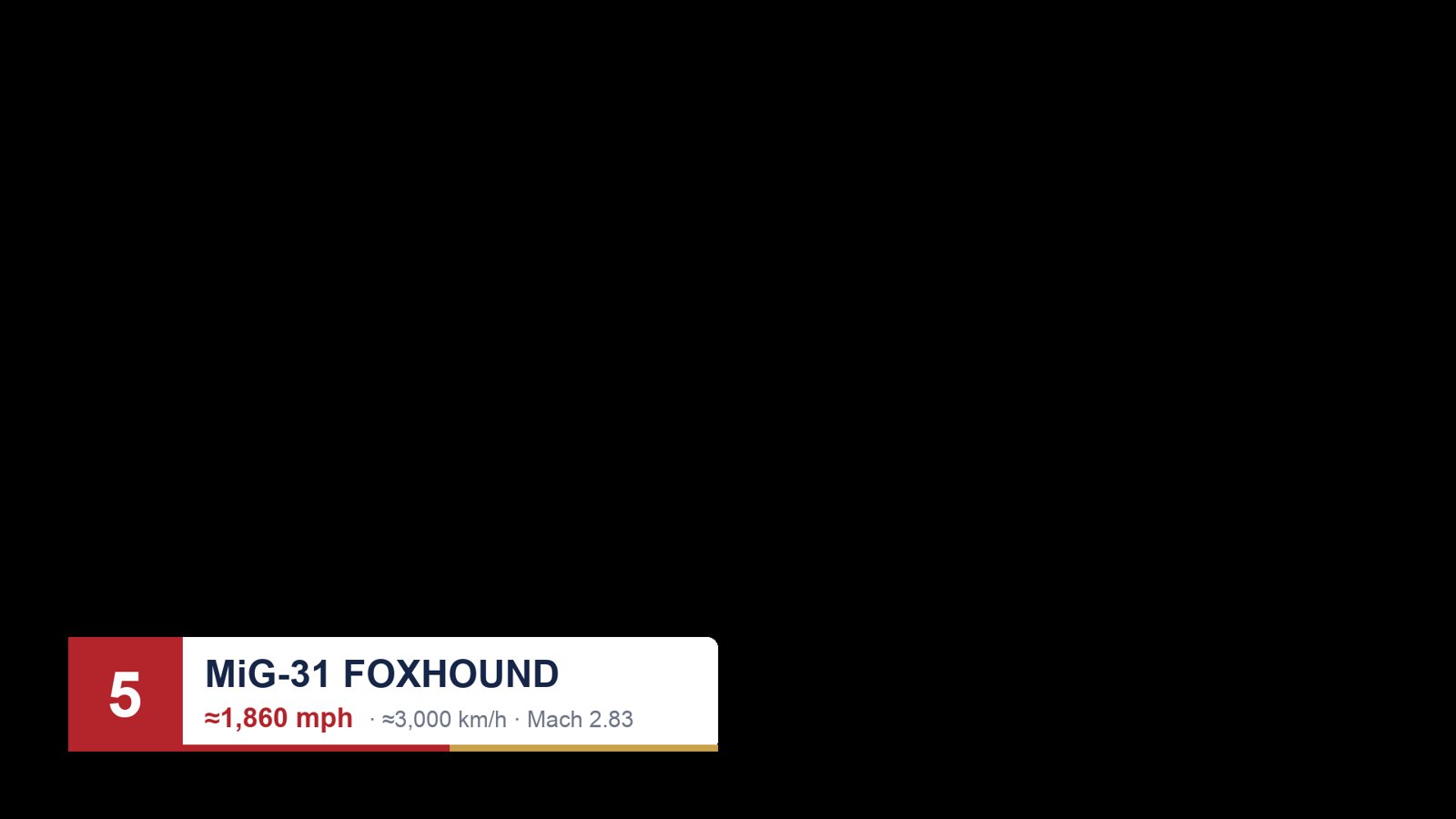
In fifth place, the MiG-31 Foxhound was developed to protect the Soviet Union's vast airspace and reaches a speed class of about 3,000 km/h. Its purpose is to reach distant threats as quickly as possible.
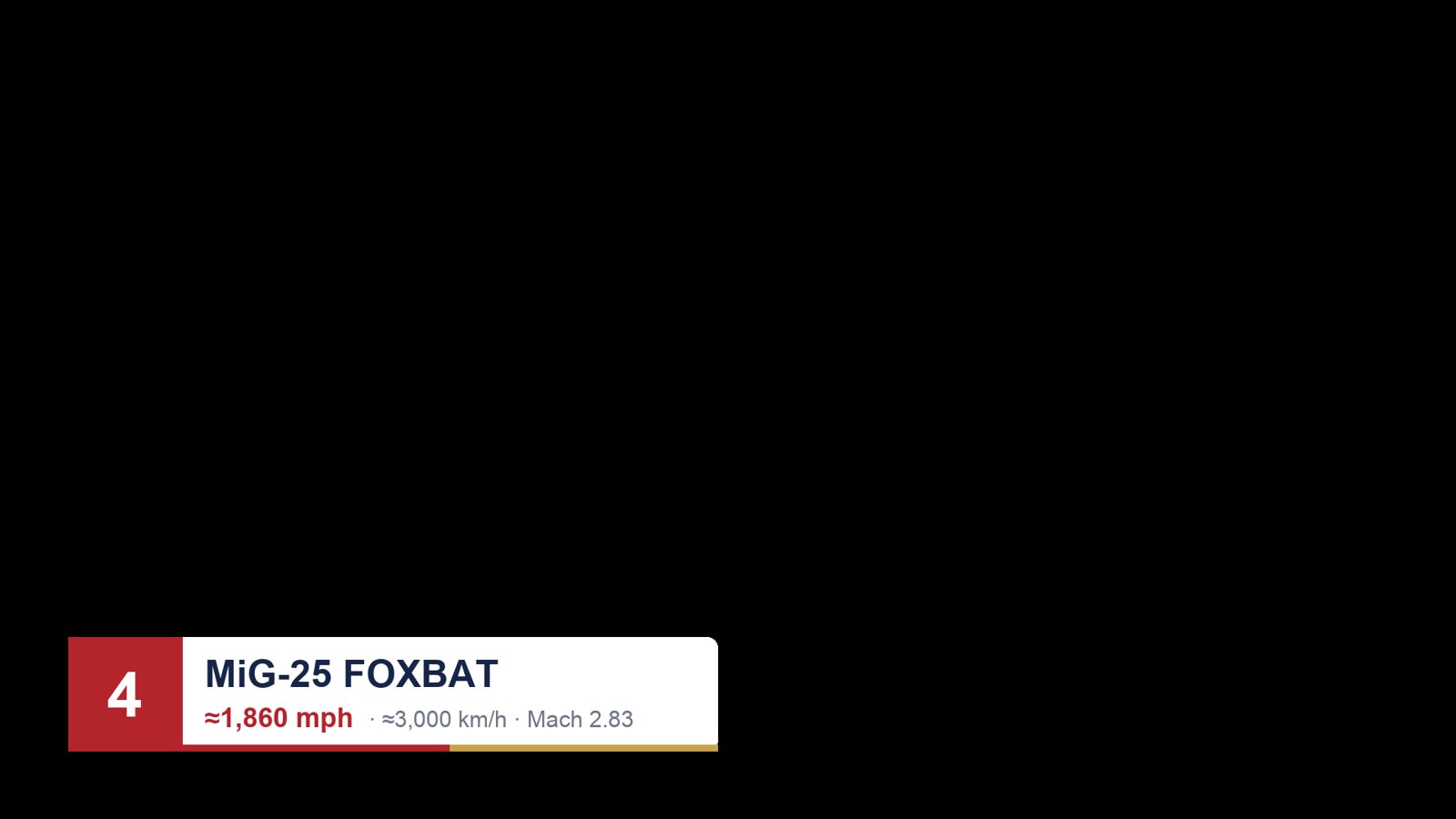
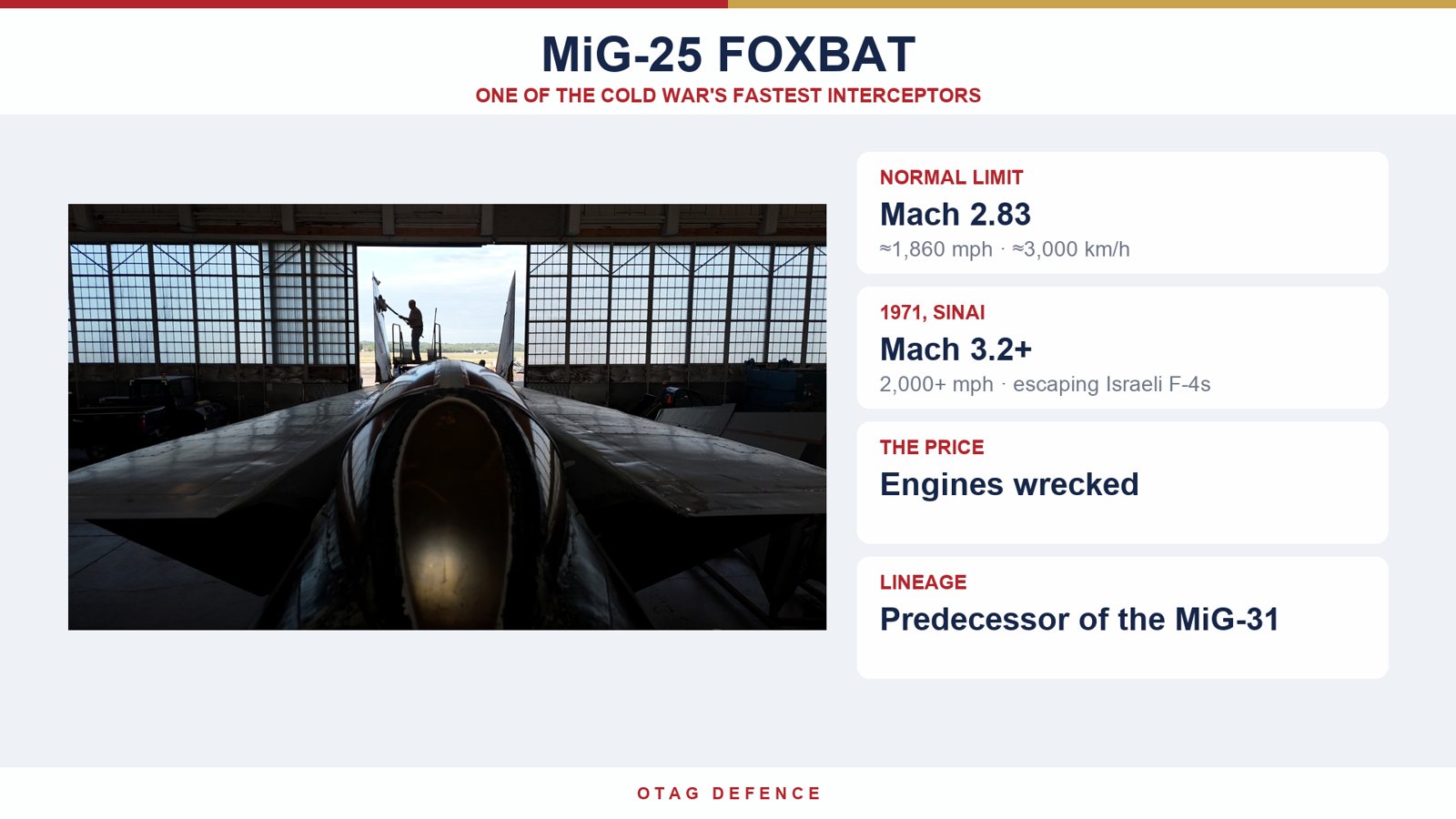
In fourth place, the MiG-25 Foxbat is the MiG-31's ancestor. In normal operations, a limit of Mach 2.83, or about 3,000 km/h, was used. In 1971 a MiG-25 escaping from Israeli F-4s reached Mach 3.2, about 3,400 km/h; but its engines were wrecked.
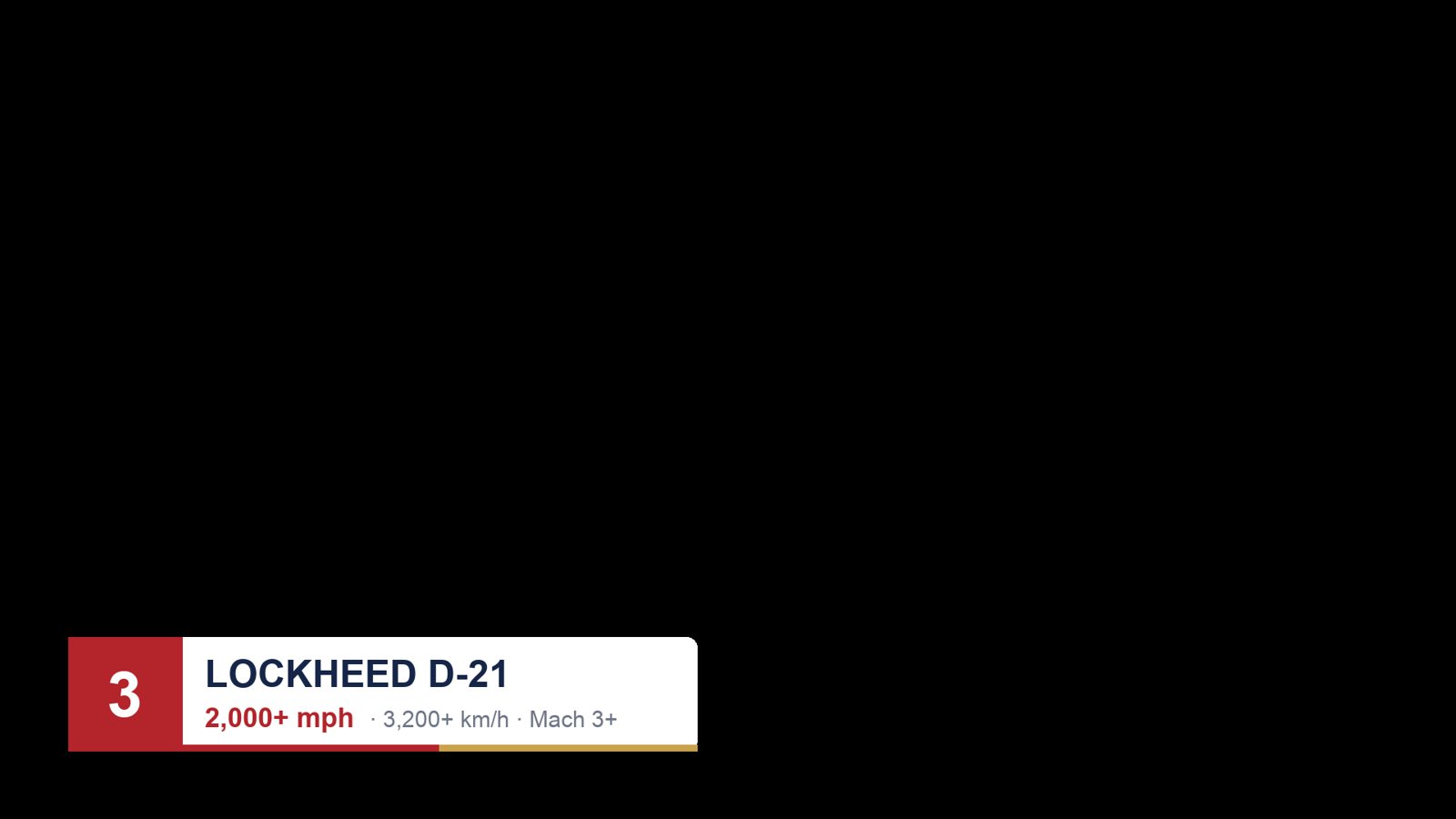
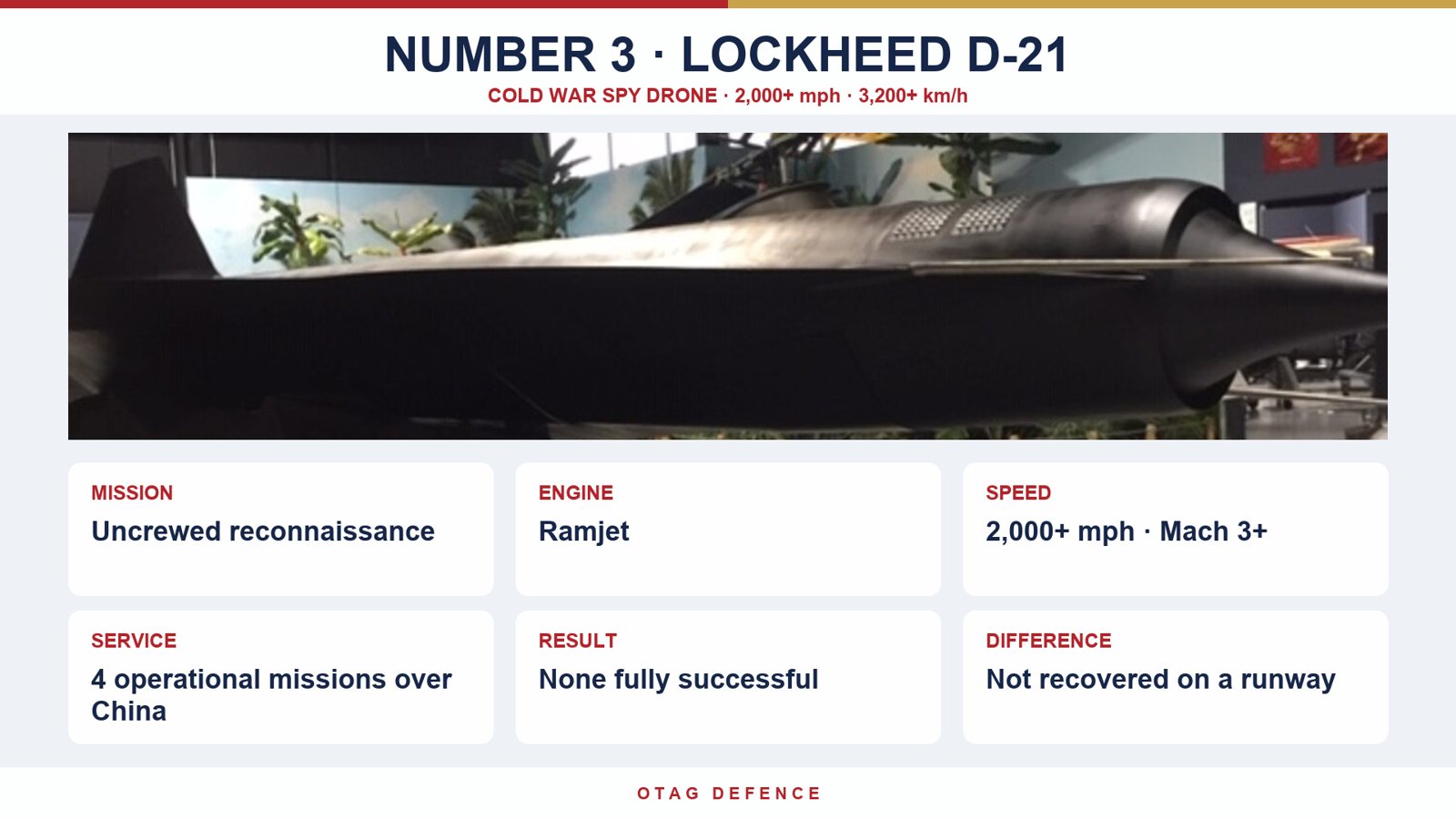
An unmanned vehicle enters the top three: the Lockheed D-21. This unusual Cold War reconnaissance drone could reach more than Mach 3, over 3,200 km/h, with its ramjet engine. It was used on four operational missions over China, but none of them was fully successful.
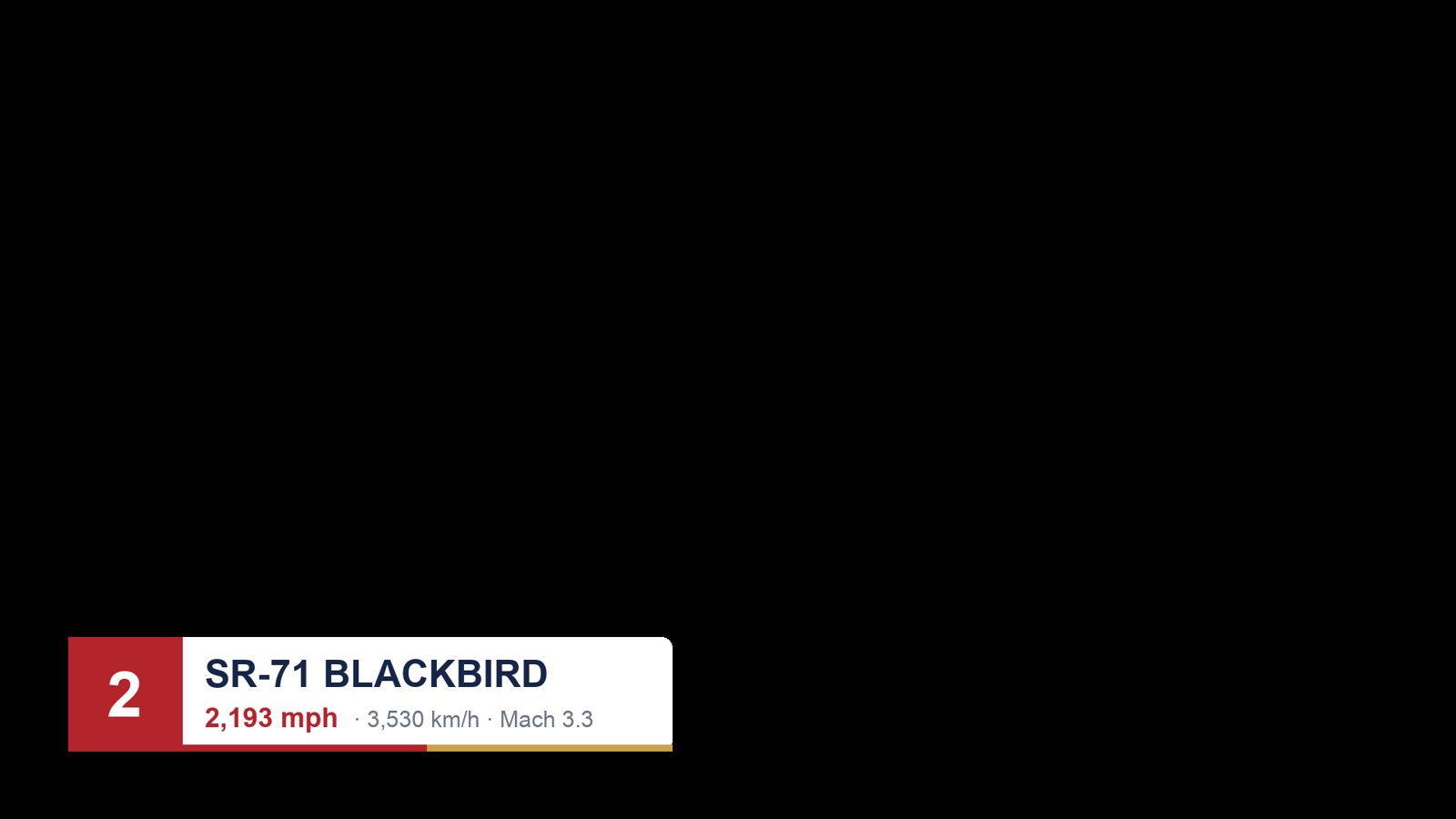
Second place belongs to the legendary SR-71 Blackbird. On 28 July 1976 it set the official world record at about 3,530 km/h. That record turned 50 this year and still stands. Its real achievement was being able to use this speed on real reconnaissance missions.
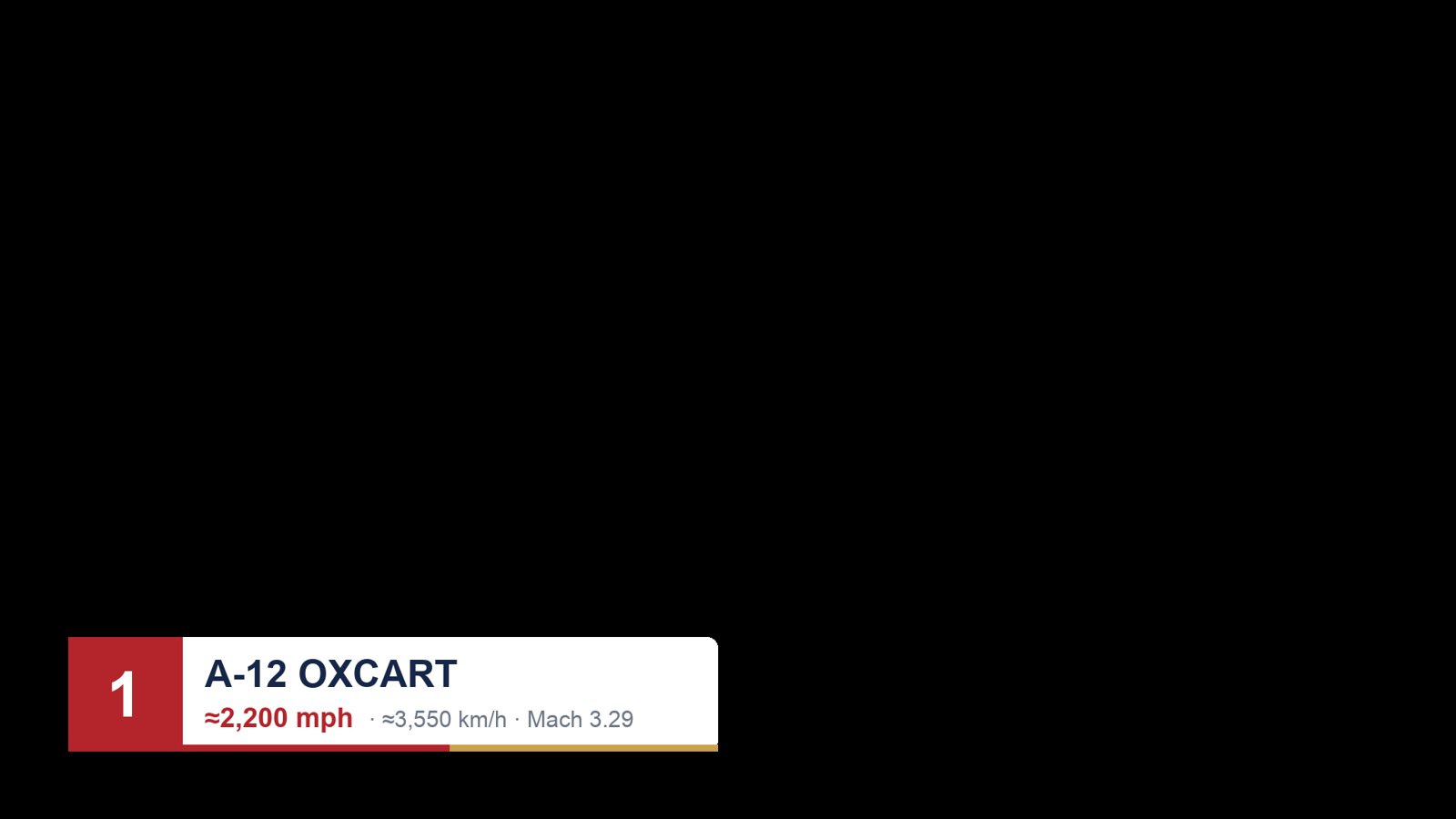
And at the top is the Blackbird's predecessor: the A-12 Oxcart, developed for the CIA. According to CIA records, on flights in 1965 it reached Mach 3.29, about 3,550 km/h, at an altitude of around 27 kilometres. It flew real reconnaissance missions over Vietnam and North Korea.
But one distinction should not be forgotten. The A-12's figure is a documented test maximum, while the SR-71's is an official speed record. Because the two speeds were not measured under the same conditions, it is not possible to say for certain which is faster. According to the documents, the A-12 is ahead by a hair.
So why are fighters that fly at 3,200 km/h, in other words at Mach 3, no longer built?
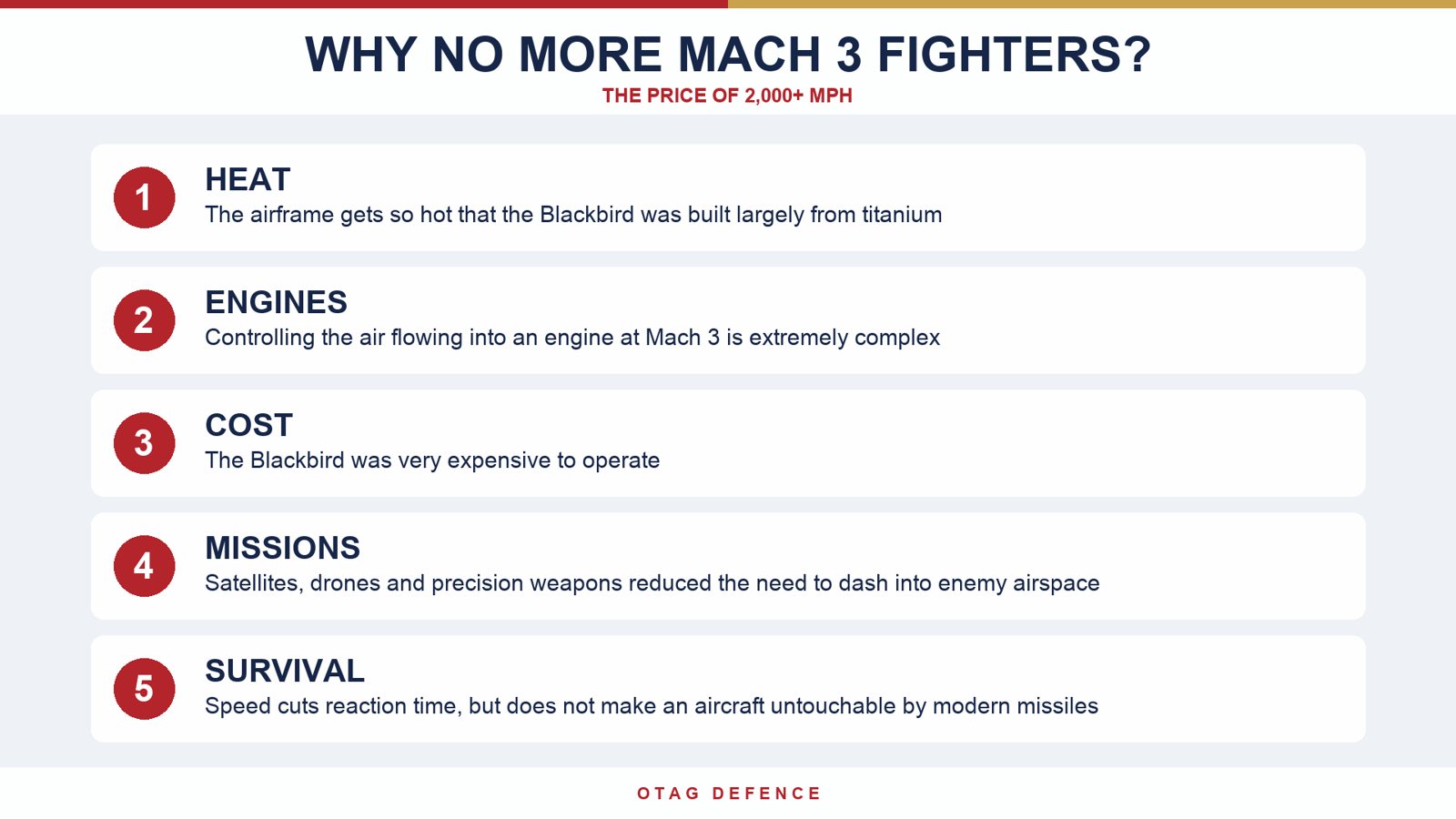
The first reason is heat. At this speed the airframe gets so hot that the Blackbird was built largely from titanium.
The second is the engine. At this speed, controlling the air entering the engine is extremely complex.
The third is cost. The Blackbird was very expensive to operate.
The fourth is that missions changed. Satellites, unmanned aerial vehicles and precision-guided weapons reduced the need to enter enemy airspace at such speeds.
The fifth is survival. Speed shortens the enemy's reaction time; but it does not make an aircraft untouchable against modern air defence missiles.
This is where low observability comes in.
Speed or stealth?
Low observability, or stealth, does not make an aircraft invisible; it makes it harder for radars to detect, track and target it. In addition, heating at high speed increases the aircraft's infrared signature.
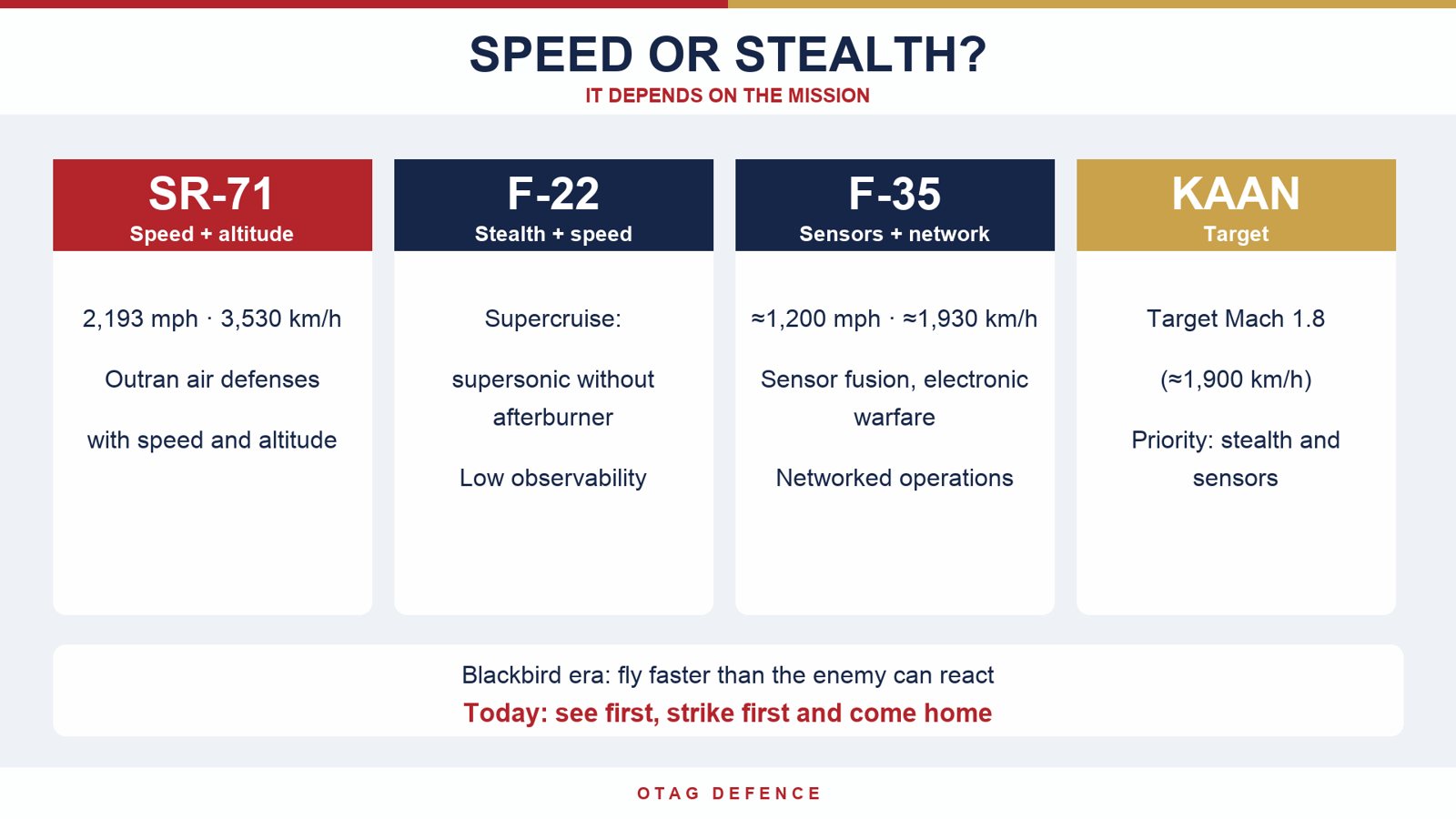
So which one wins? The answer depends on the mission. To intercept a distant bomber, speed is critical. To enter an area with advanced air defences, low observability, electronic warfare and sensors matter more.
The F-22 Raptor combines low observability with supercruise, supersonic flight without using afterburners. The F-35 stands out not for its top speed of about 1,930 km/h but for its sensors and electronic warfare capability. Türkiye's KAAN, the fifth-generation fighter being developed by Turkish Aerospace, follows the same approach: its target top speed is Mach 1.8, or about 1,900 km/h, and the priorities are low observability and sensors. In short, in the Blackbird's era the goal was to fly faster than the enemy could follow; today it is to detect the enemy first, act first and come back from the mission alive.
Has nothing flown faster than the Blackbird?
It has. NASA's experimental X-43A reached Mach 9.6, more than 11,000 km/h, in 2004. But its engine ran for only a short time and the vehicle did not return to a runway. The real issue is not reaching a speed; it is turning that speed into military value.
So what will be decisive in the fighters of the future? Hypersonic speed, low observability or AI-supported systems? Share your views in the comments, and don't forget to follow Otag Defence.
Shorts on this topic

What flew faster than the Blackbird?

Speed or stealth? What F-22, F-35 and KAAN tell us

The 50-year-old speed record nobody has broken
Share your view in the comments under the video.
Comment on YouTubeSources
- FAI (World Air Sports Federation) press release
- FAI, 50th anniversary release (June 2026)
- CIA – About the A-12 Oxcart
- U.S. Air Force – F-15 Eagle fact sheet
- U.S. Air Force 104th Fighter Wing – F-35A Lightning II
- U.S. Navy National Naval Aviation Museum – F-14A
- NASA – X-43A
- Habertürk (in Turkish) – KAAN completes its first flight
More analysis
 8:32
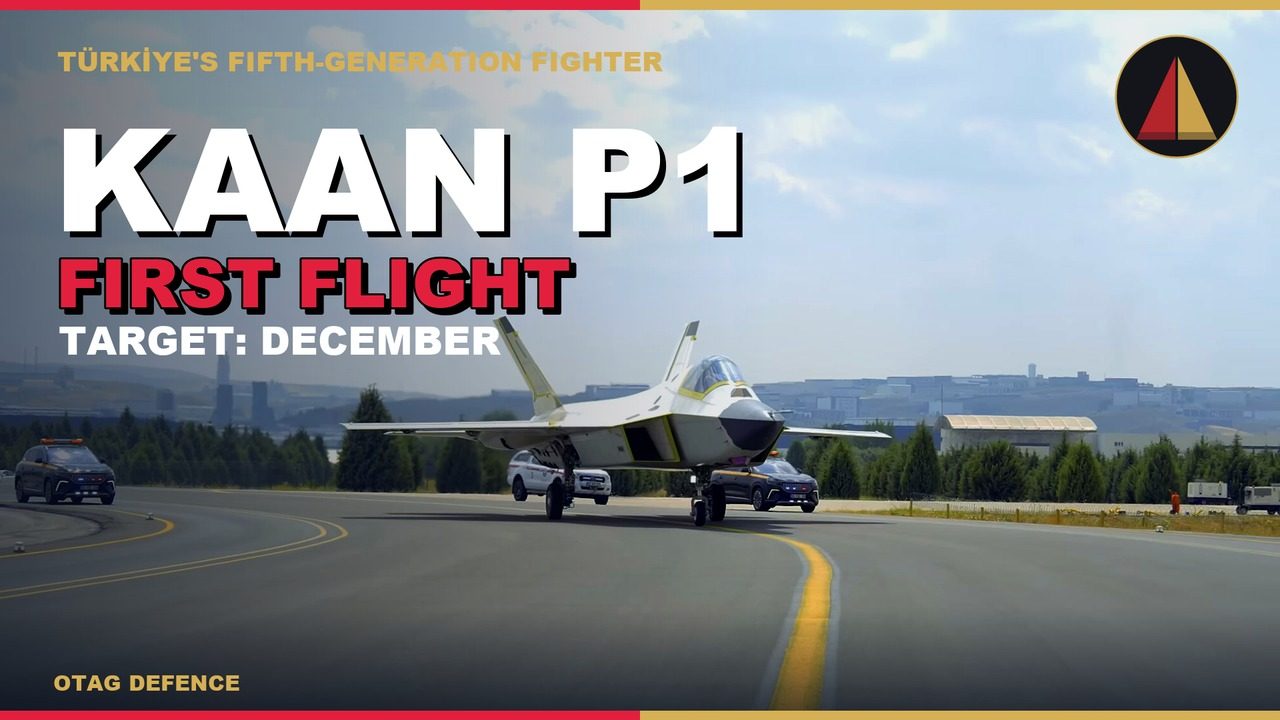
Türkiye's KAAN Stealth Fighter: Second Prototype Targets December First Flight
Otag Defence assessment“For KAAN, the question for 2026 is no longer "will it fly?" It is "how fast will the prototypes multiply?"”
 7:29
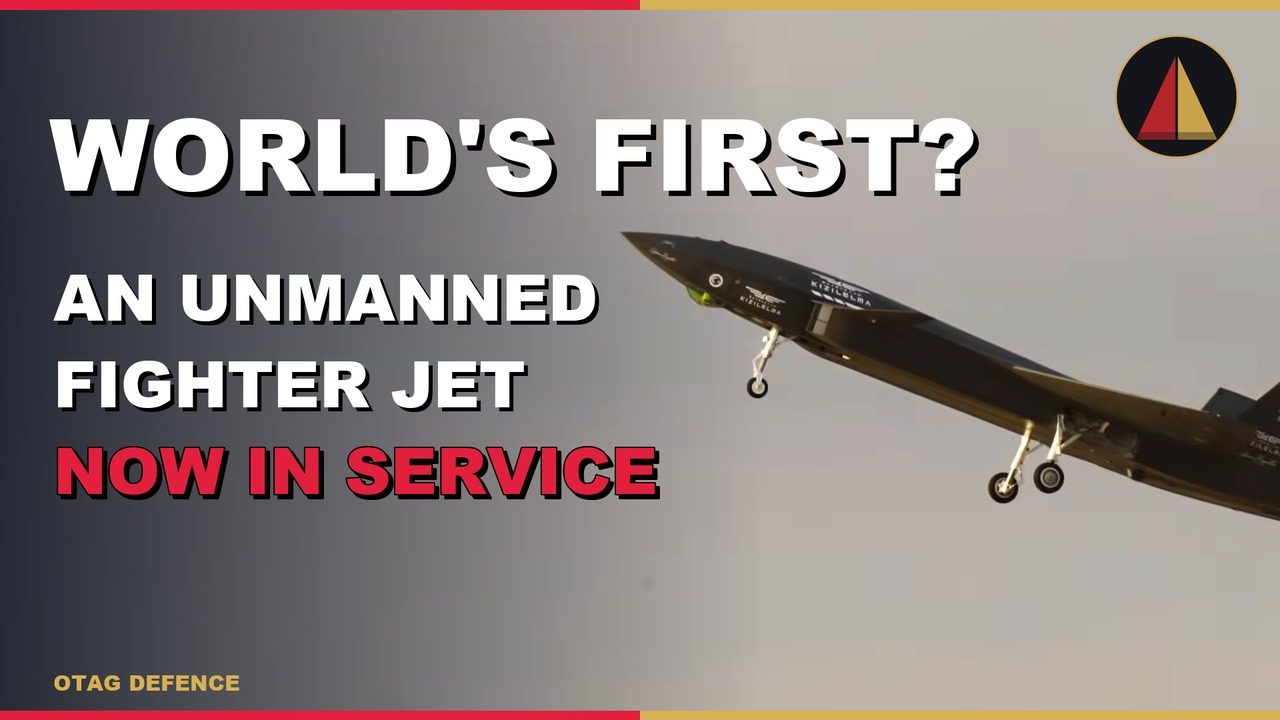
Türkiye's Kizilelma: The World's First Unmanned Fighter Jet in Service?
Is KIZILELMA really the world's first unmanned fighter in service? What does entering service actually mean? And what will Türkiye do with three aircraft?
 7:54
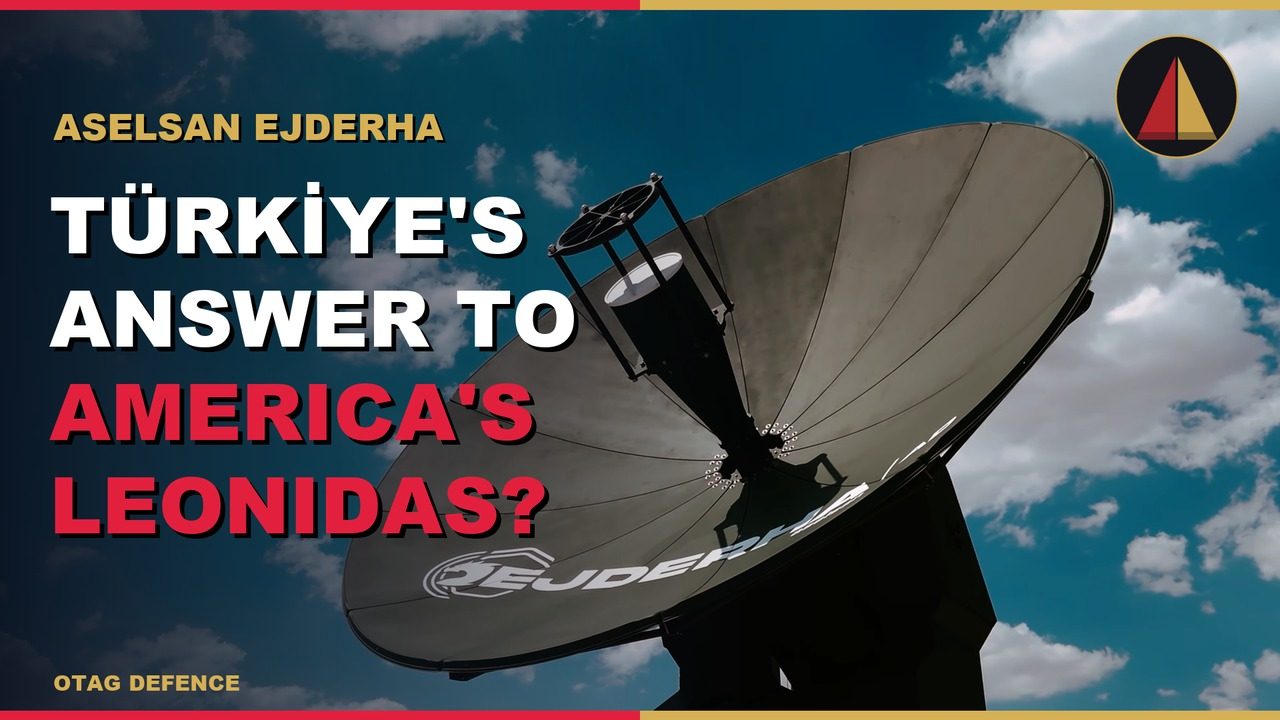
Türkiye's Answer to America's Leonidas? ASELSAN EJDERHA Explained
ASELSAN, Türkiye's largest defence electronics company, marked its 51st anniversary with a two-stage demonstration at its Gölbek Firing and Test Center near Ankara. According to the company's statement on 15 November, in the first stage EJDERHA disabled two different fibre-optic drones from about 1,000 metres. In the second stage, 51 drones launched at the same time were stopped within seconds with a single command. No missiles or bullets were used.