Türkiye's 2035 Target: 1,500 Combat Aircraft
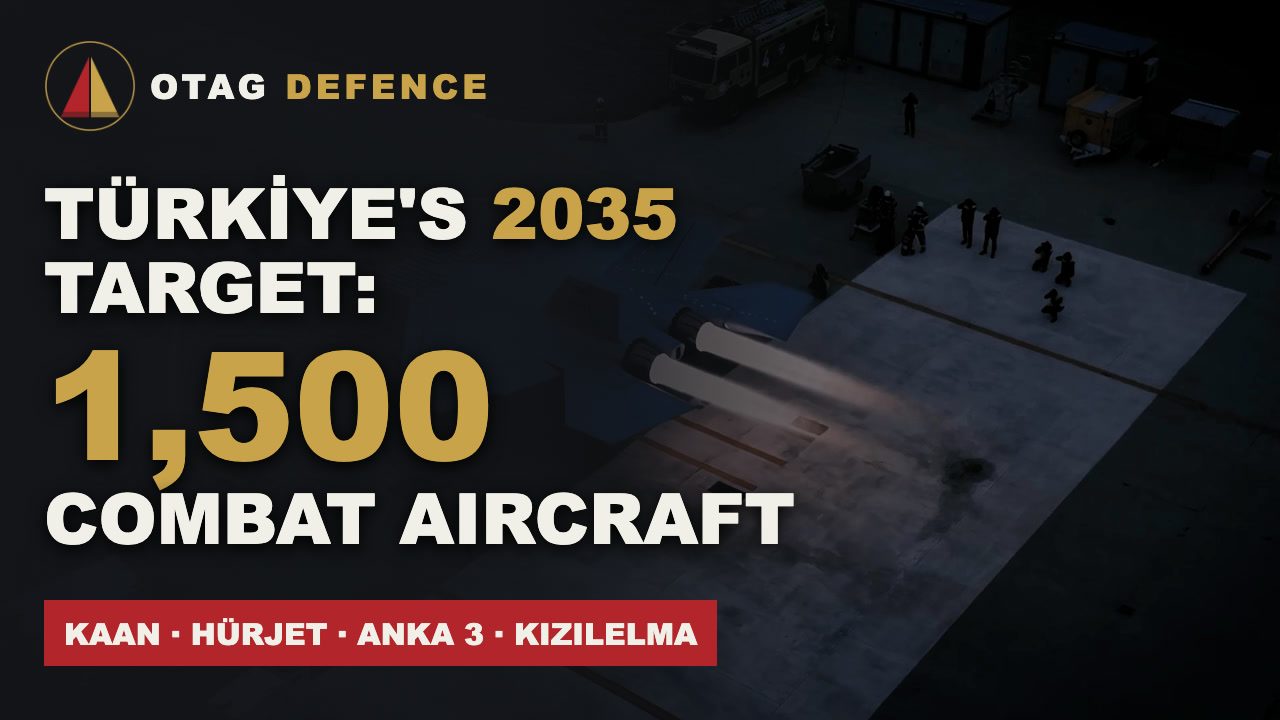
Turkish Aerospace (TUSAŞ) aims to build more than 1,500 military air platforms by 2035. KAAN, HÜRJET, HÜRKUŞ, ANKA 3, AKSUNGUR, GÖKBEY and ATAK are part of this target, while Baykar's KIZILELMA, AKINCI and TB3 production comes on top of it.
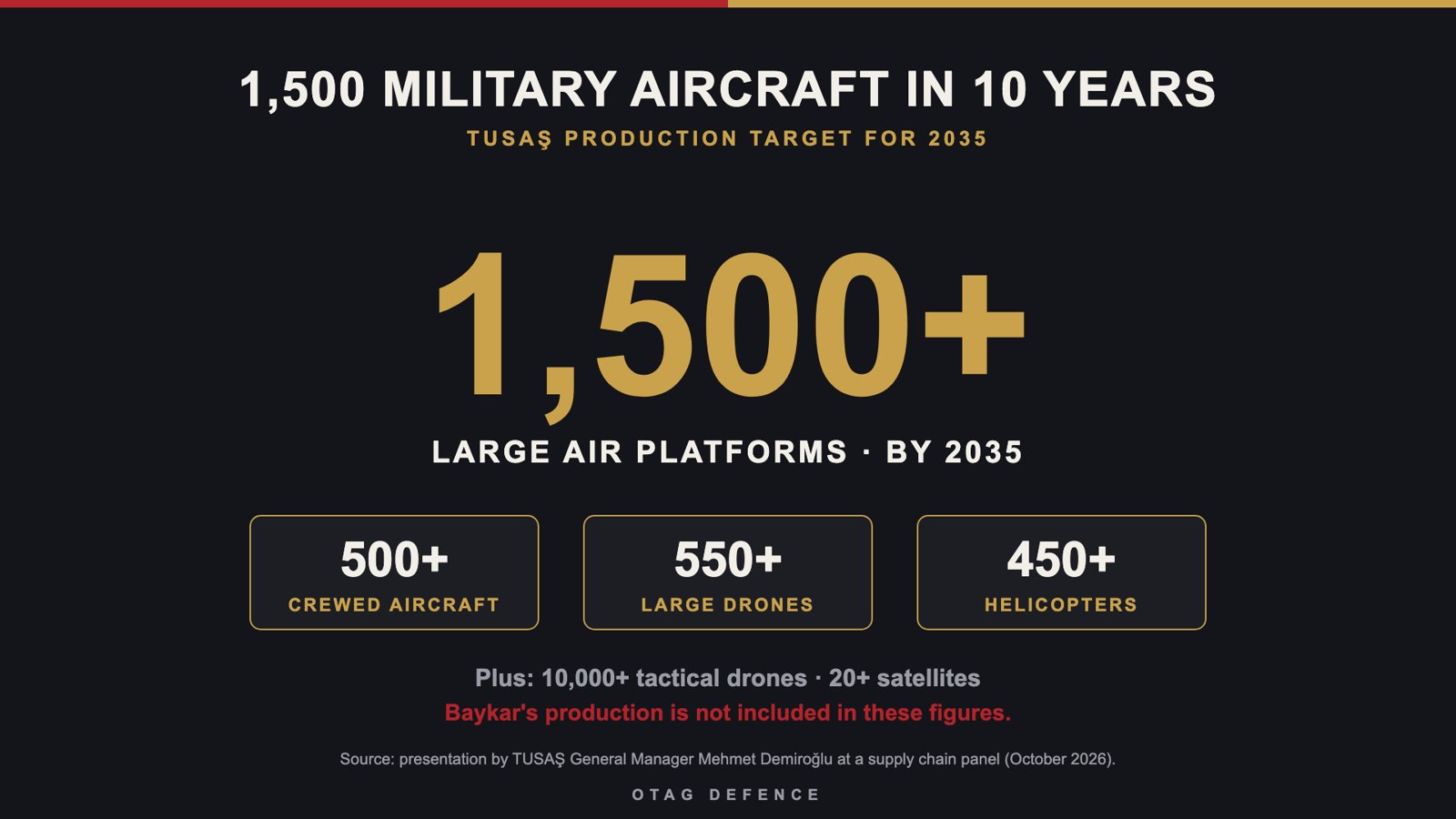
Türkiye is preparing to build more than 1,500 military aircraft over the next 10 years. The target belongs to Turkish Aerospace (TUSAŞ), the country's main state-backed aircraft manufacturer. The company plans to produce more than 1,500 air platforms by 2035. The list includes the KAAN fighter, the HÜRJET jet trainer, the HÜRKUŞ basic trainer, the ANKA 3 unmanned combat aircraft, the AKSUNGUR and ANKA drones, the GÖKBEY utility helicopter and the ATAK attack helicopter. On top of these come more than 10,000 tactical drones and more than 20 satellites. And these figures do not include production by Baykar, Türkiye's other big aircraft maker, of its KIZILELMA, AKINCI, TB2 and TB3 drones. The targets became public through a presentation by Turkish Aerospace General Manager Mehmet Demiroğlu at a panel on subcontracting and supply management. So what do these numbers cover? Which platforms are at which stage? And which technology has Türkiye not yet mastered to reach this scale? That is what we examine in this video.
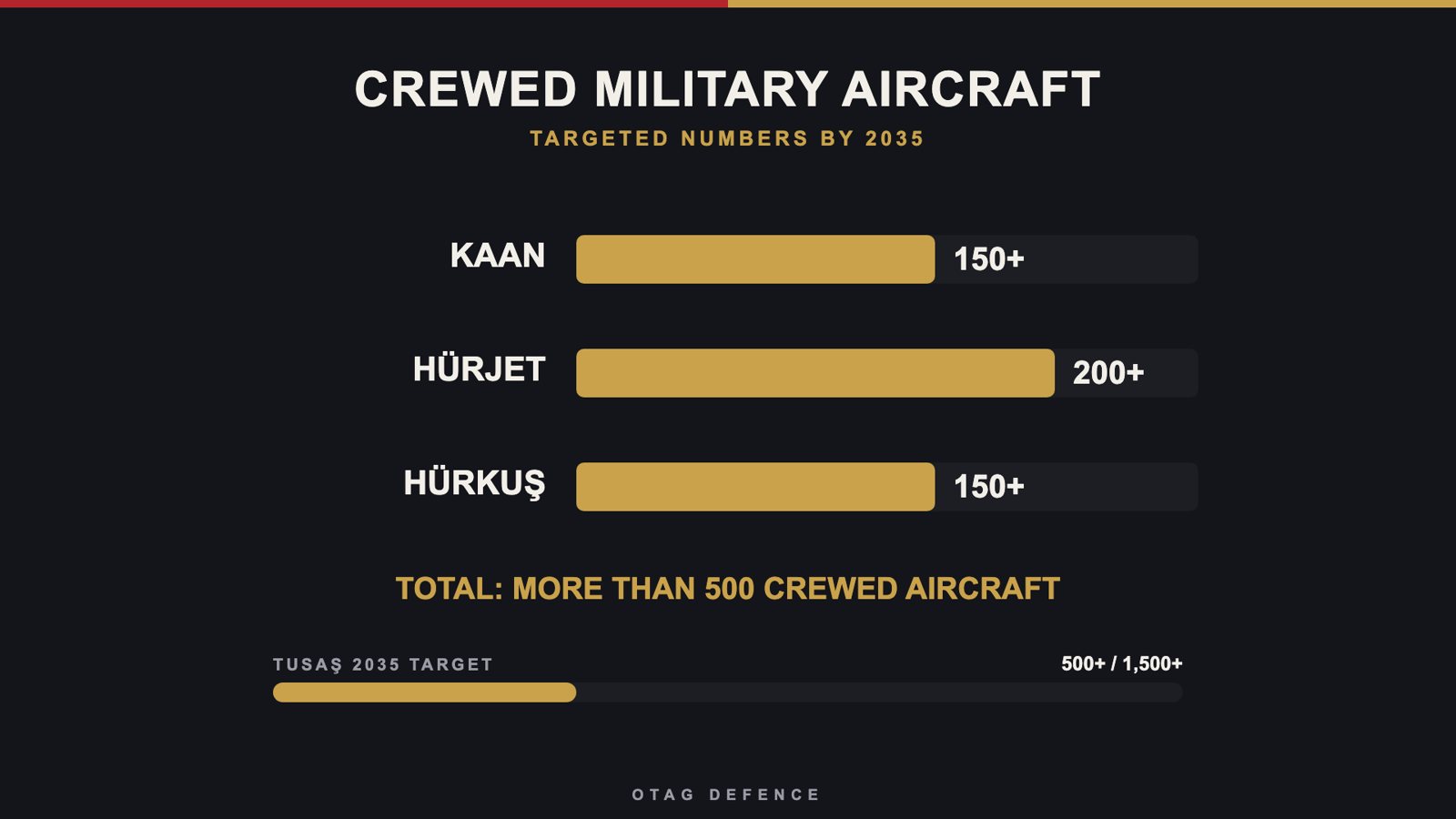
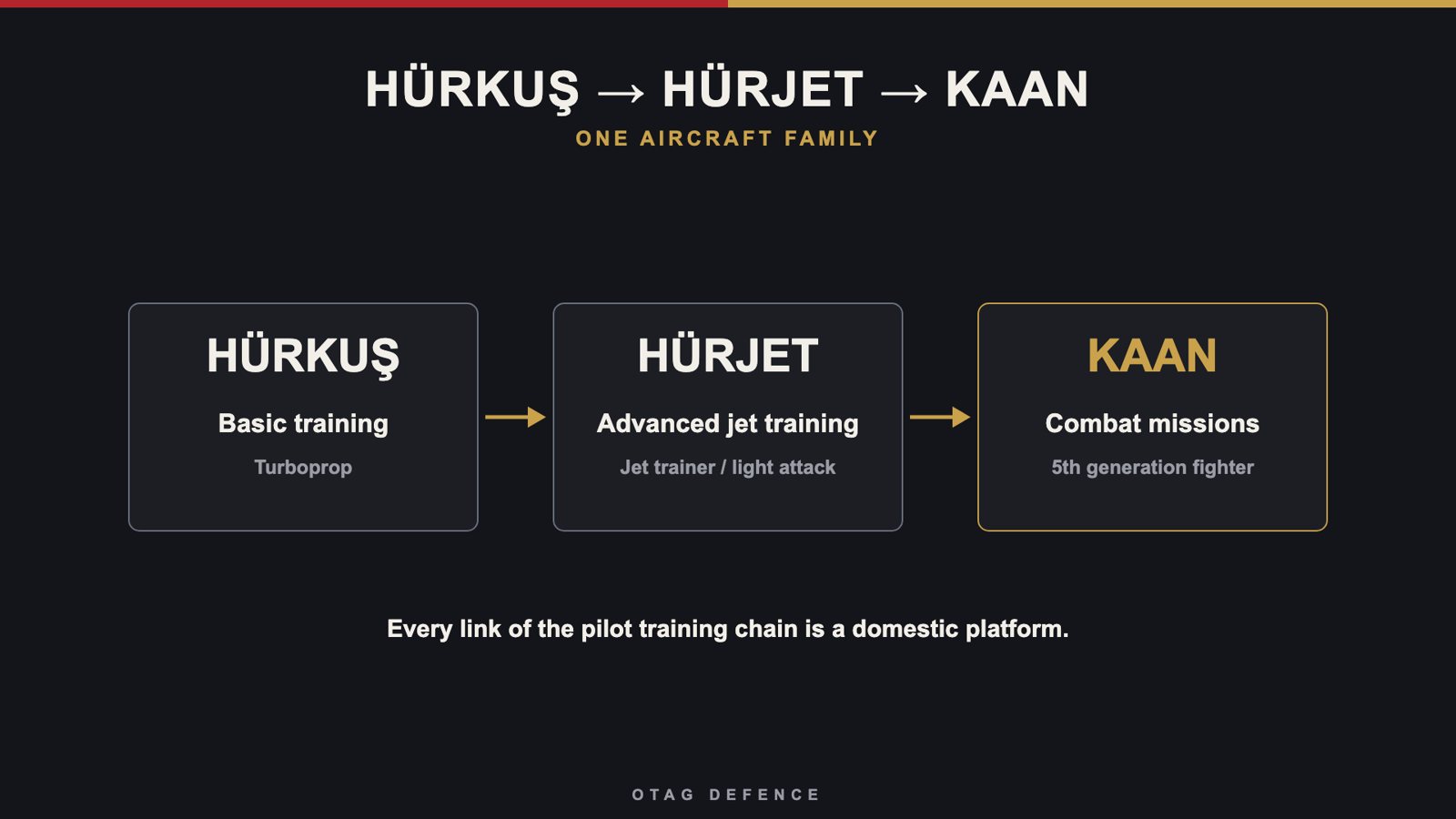
Let us start with crewed aircraft. Turkish Aerospace's 2035 table includes more than 150 KAAN, more than 200 HÜRJET and more than 150 HÜRKUŞ. In total, more than 500 aircraft. These three aircraft cover the Turkish Air Force's pilot training chain from start to finish. Pilots receive basic training on HÜRKUŞ, move on to advanced jet training on HÜRJET, and will fly combat missions in KAAN, Türkiye's own fifth-generation fighter. HÜRKUŞ II entered the Turkish Air Force's inventory in September. According to Demiroğlu, development and certification tests have been completed. In September, an export contract was also signed with Azerbaijan for 14 HÜRKUŞ 2. HÜRJET's biggest gain came from Europe. Spain is buying 30 HÜRJETs in a deal worth about 2.6 billion euros. Deliveries are planned to begin in 2028. Demiroğlu stresses that two major NATO air forces have chosen HÜRJET. On the KAAN side, a 48-aircraft deal has been signed with Indonesia. Serial production is targeted to begin at the end of 2028.
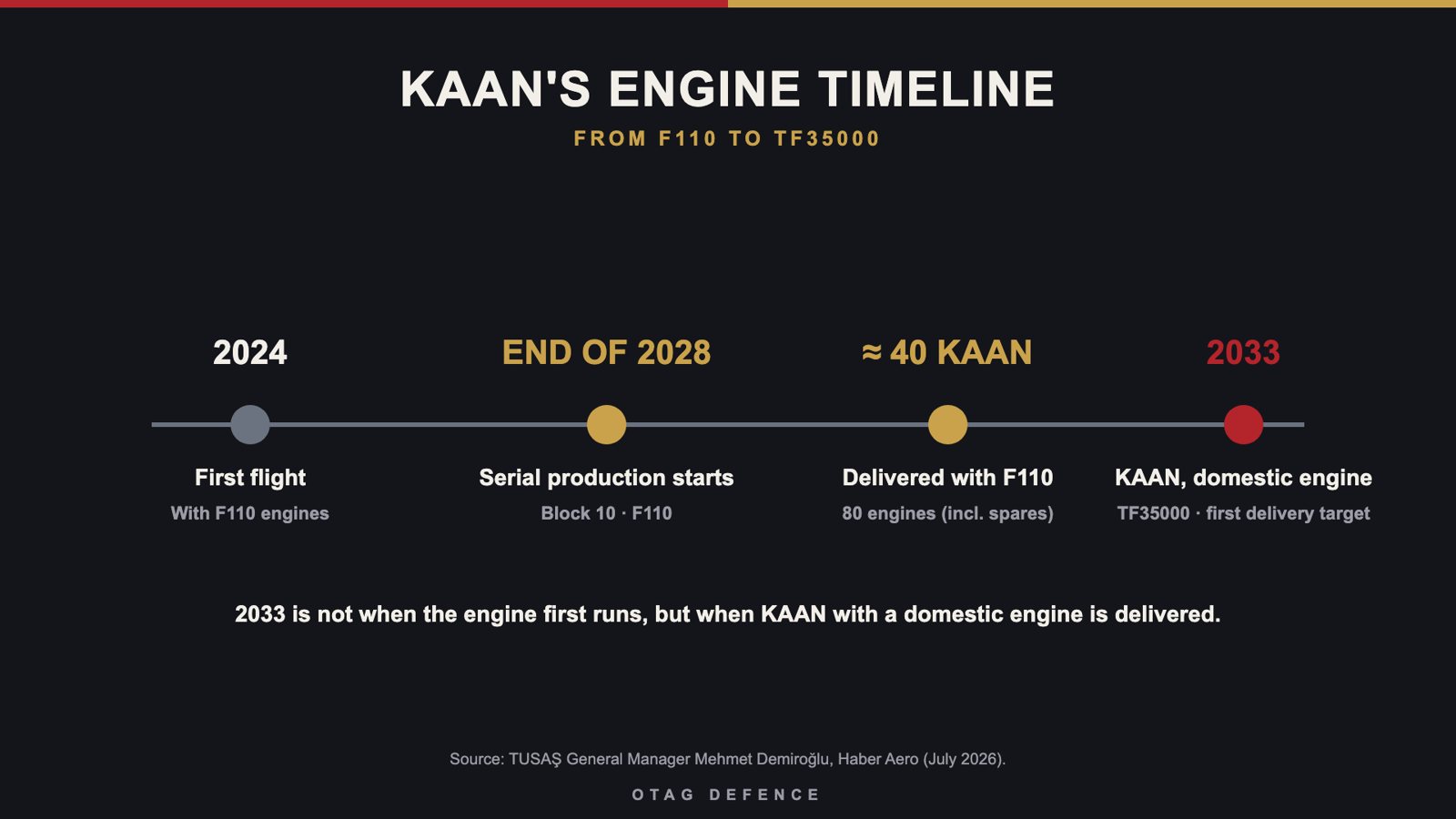
There is an important detail here: the first KAAN aircraft will fly not with a domestic engine but with the F110 engine made by America's General Electric. According to Demiroğlu's statement to the Turkish aviation news site Haber Aero, the current plan covers 80 engines including spares. With these engines, about 40 KAANs are expected to be delivered to the Air Force. The date given for delivering KAANs with a domestic engine is 2033. We will come back to this shortly.
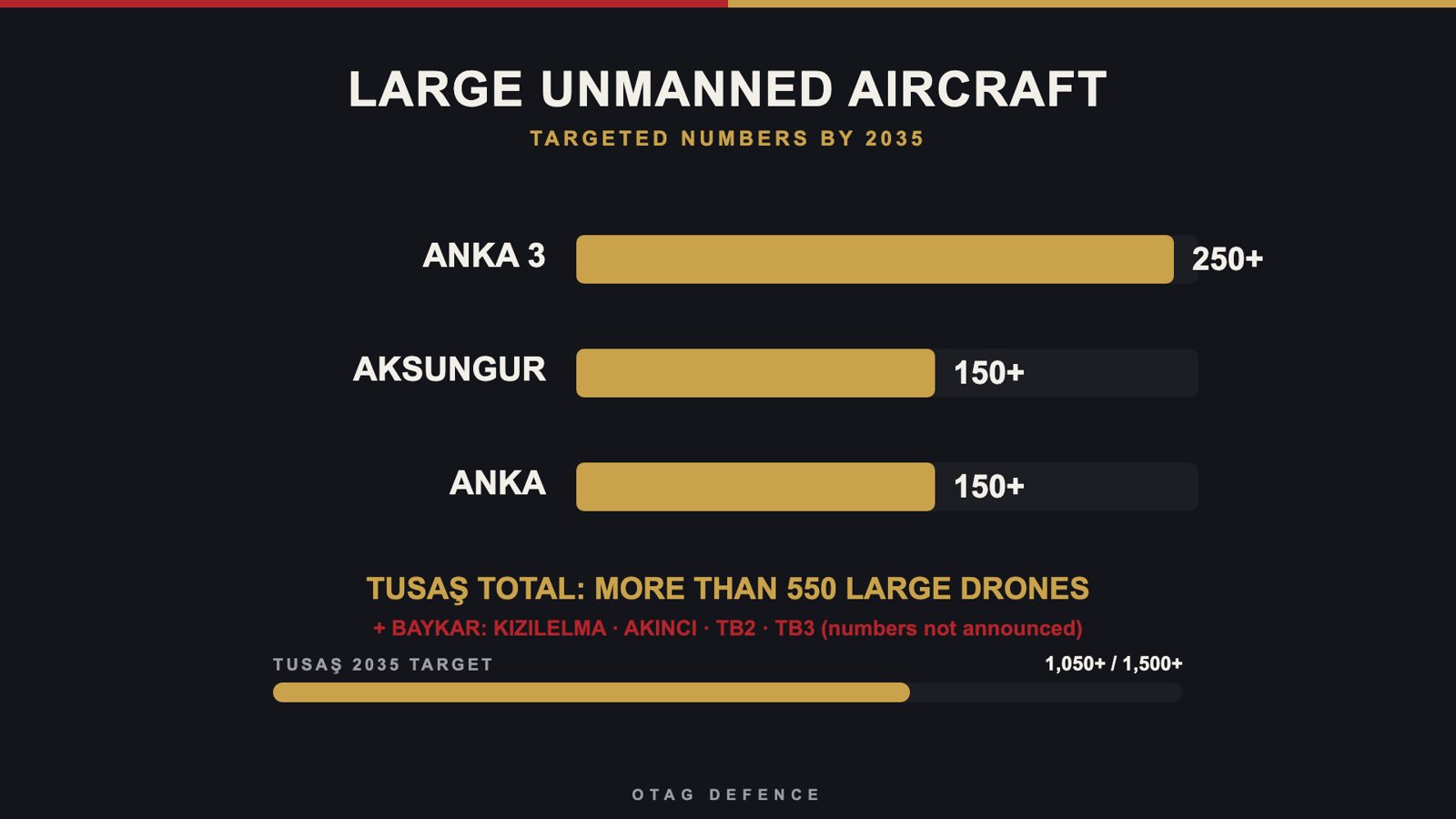
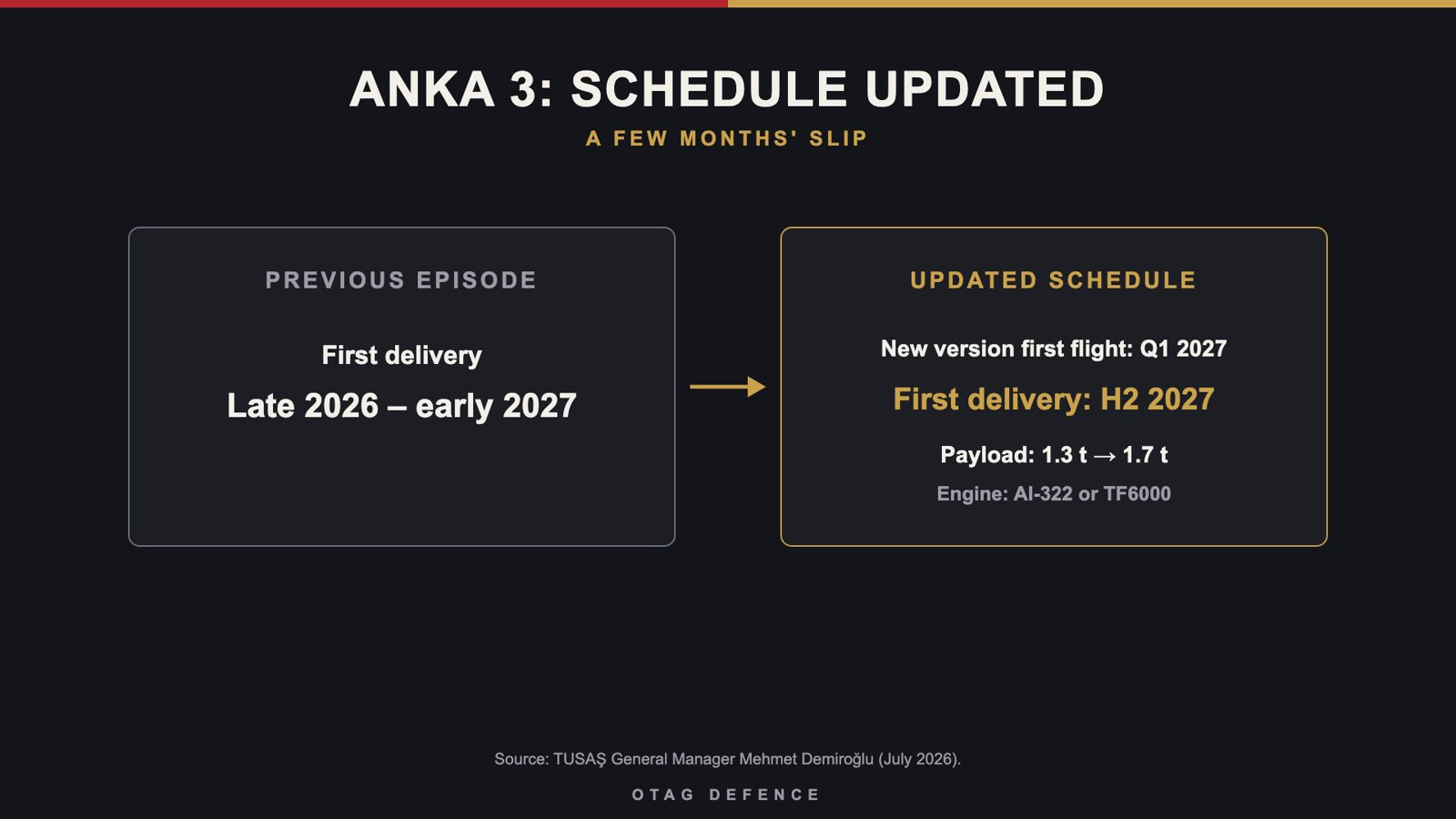
The second big group is unmanned combat aircraft. This is the field for which Türkiye is best known around the world. Turkish Aerospace plans to build more than 550 large drones by 2035. More than 250 of these are ANKA 3. For AKSUNGUR and ANKA, production of more than 150 each is targeted. The schedule for ANKA 3, a jet-powered flying-wing design, has been updated. According to Demiroğlu, the new version will fly in the first quarter of 2027. The first deliveries are targeted for the second half of 2027. Its payload capacity has risen from 1.3 tonnes to 1.7 tonnes. Its radar visibility has also been reduced. On the engine side, two options are being followed: the Ukrainian-made AI-322 and the TF6000 developed by TEI, Türkiye's aircraft engine maker. In our previous episode we reported a delivery schedule for ANKA 3 of late 2026 to early 2027. The new statement shows that the schedule has slipped by a few months.
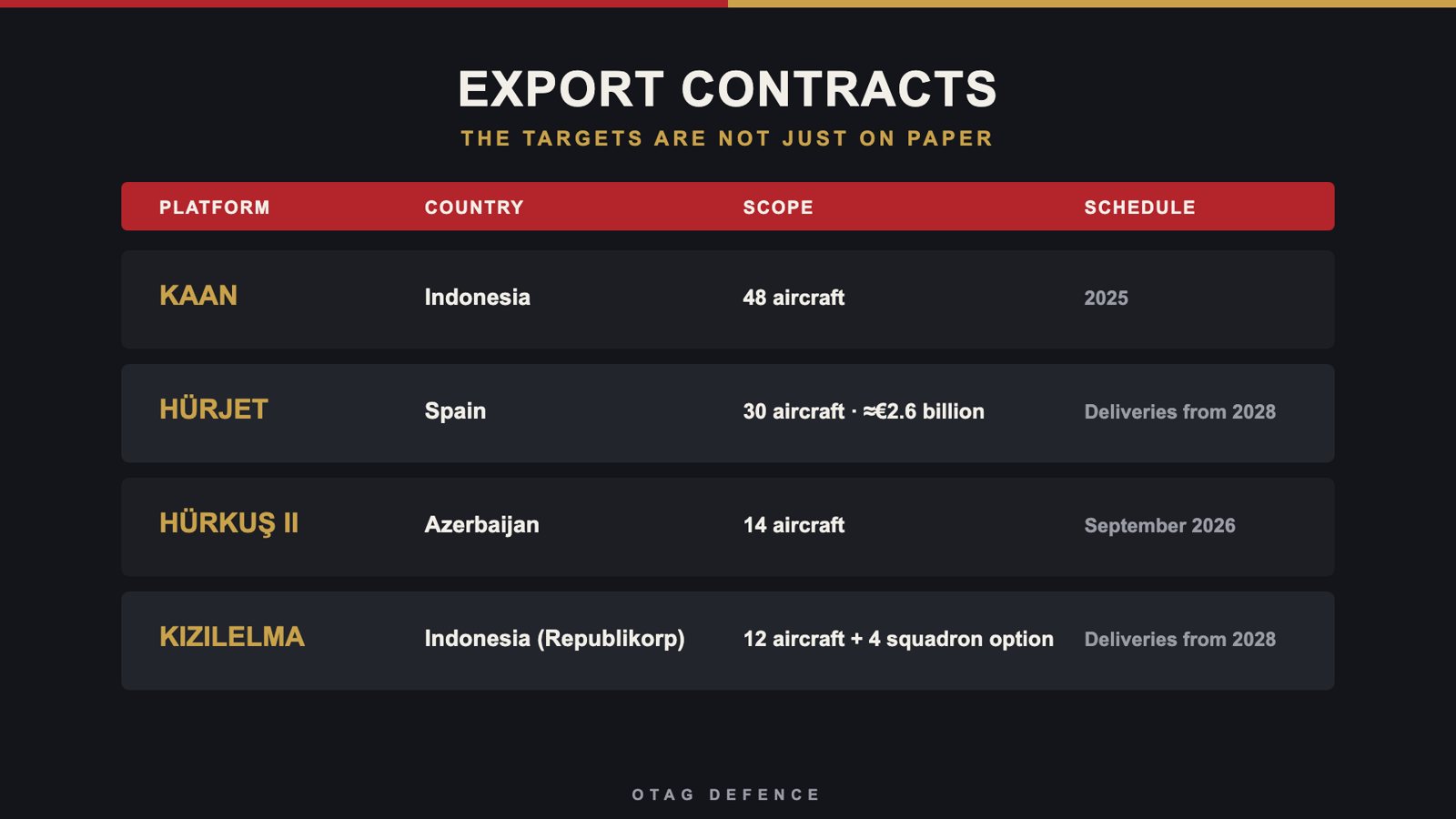
On Baykar's side, KIZILELMA, the company's jet-powered unmanned fighter, stands out. Baykar CEO Haluk Bayraktar announced that they aim to make the first serial deliveries in 2026. However, as of the date we prepared this video, no official delivery announcement has been made. On the export side, the first contract has also been signed. At the SAHA 2026 defence exhibition in Istanbul, a contract for 12 KIZILELMAs was signed with the Indonesian company Republikorp. Deliveries are planned to begin in 2028. The agreement includes an option for 4 more squadrons. How many KIZILELMAs Baykar will build by 2035 has not been announced. That is why we do not use an estimated figure in the total. What is known is this: in 2025 Baykar became the leader of the world's armed drone export market with 2.2 billion dollars of exports. Production of the TB2, AKINCI and TB3 continues. So Türkiye's total drone production will be far above the figures announced by Turkish Aerospace.
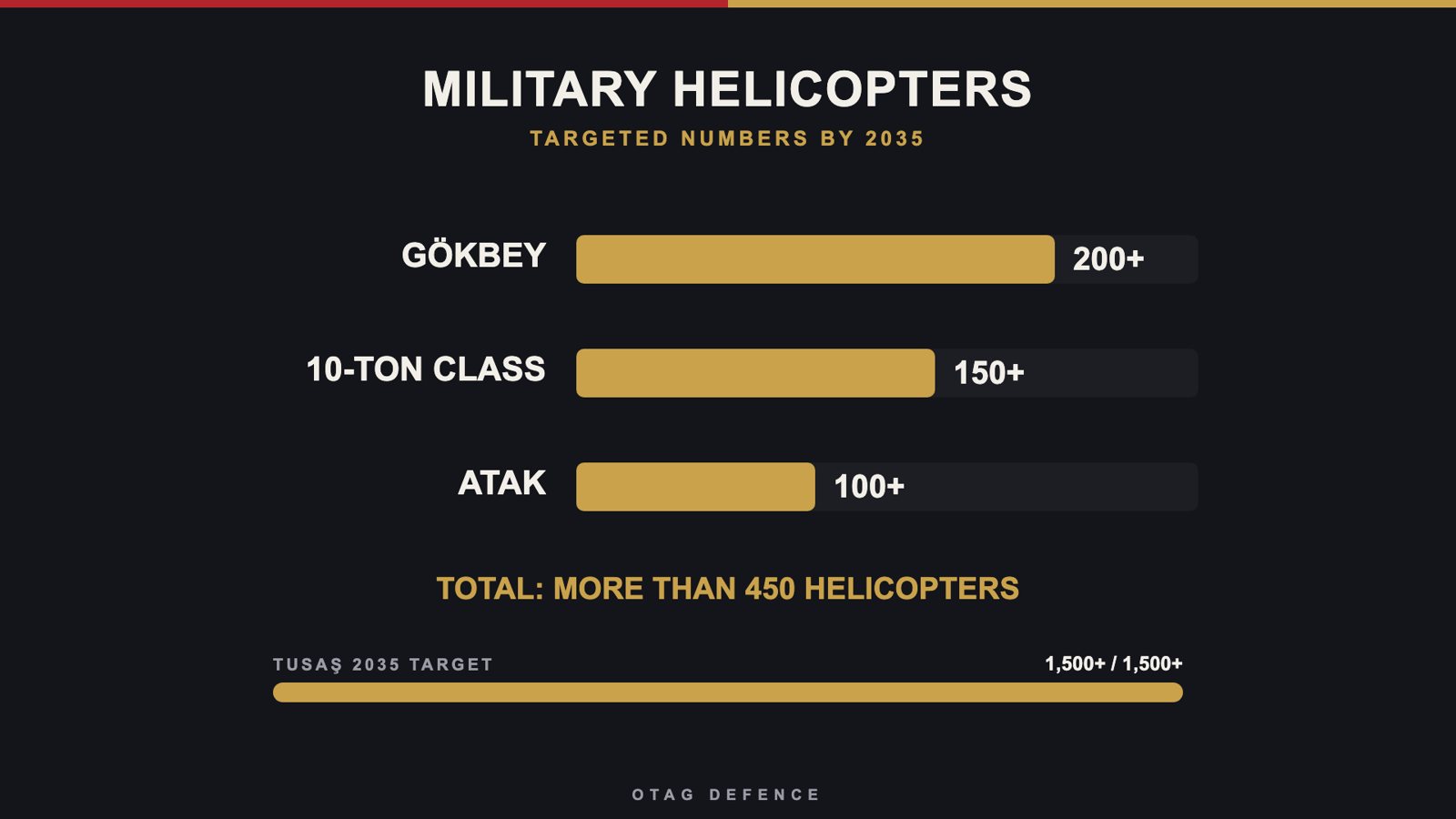
The third group is helicopters. Turkish Aerospace's target table includes more than 450 helicopters: more than 200 GÖKBEY, more than 150 general-purpose helicopters in the 10-tonne class and more than 100 ATAK. The new 10-tonne helicopter will be able to carry 19 personnel and more than 4 tonnes of cargo. According to Demiroğlu, the prototype will be rolled out at the end of the year, and the first flight will take place in the first quarter of 2027. The first platforms will be built for the General Directorate of Forestry, Türkiye's forest service, and military deliveries will begin in 2028. GÖKBEY received its civil type certificate in March 2026. The heavy attack helicopter ATAK 2 does not appear in the list with a separate figure.
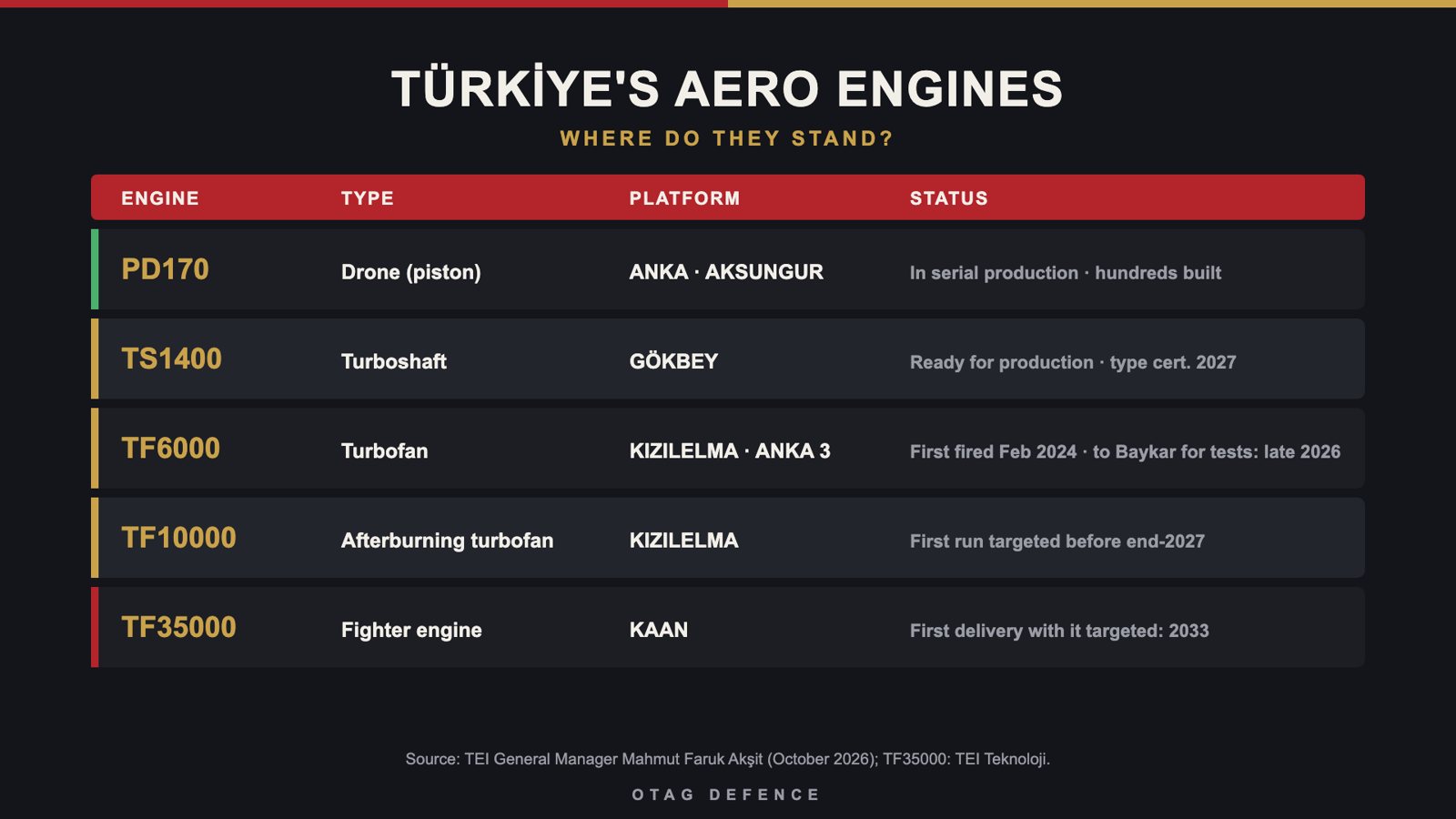
Now we come to the most critical link in this whole picture: the engine. 1,500 aircraft means thousands of engines. The turbine blades of a fighter engine spin inside gases hotter than their own melting point. The blades survive thanks to special superalloys cast as a single crystal, thin cooling channels running through them and ceramic coatings. And the engine must run with the same reliability for thousands of hours, in the desert and in the Arctic. Every new engine goes through thousands of hours of endurance testing in test cells. That is why the companies in the world that can build fighter engines can be counted on one hand: General Electric and Pratt & Whitney in the United States, Rolls-Royce in the United Kingdom and Safran in France. Behind these companies lies more than seventy years of experience. The engine of America's fifth-generation F-35 fighter is made by Pratt & Whitney. Europe's Eurofighter uses an engine from a consortium in which Rolls-Royce is a partner, and France's Rafale uses a Safran engine. Türkiye is trying to join this club. Türkiye's main player in this field is TEI. Founded in 1985 in partnership with General Electric, TEI entered the field by producing the F110 engines of Turkish F-16s under licence. Today it builds engines of its own design. Its success story is the PD170. This engine in the 170-horsepower class is used on the ANKA and AKSUNGUR drones. According to TEI General Manager Mahmut Faruk Akşit, hundreds of PD170 and PD200 engines have been produced. On the helicopter side there is the TS1400, GÖKBEY's engine. Akşit says the engine is ready for serial production and that eight engines are currently being tested in parallel. The target for type certification is 2027. Among jet engines, the TF6000 stands out. This turbofan engine was first fired on 27 February 2024, and the first example is targeted for delivery to Baykar for testing at the end of 2026 or early 2027. KIZILELMA currently flies with a Ukrainian-made engine. The afterburning version of the TF6000, the TF10000, is planned to be run before the end of 2027. Baykar is also running a separate investment in its own engines. So Türkiye's engine ecosystem is not limited to a single company.
And KAAN's engine is the TF35000. A fifth-generation fighter engine is one of the hardest technologies in aviation. In August 2026 a new structure was set up in this field. TRMotor, the state-owned engine company, was restructured under the name TEI Teknoloji. The TF35000 and the TS3000 helicopter engine moved to this new company. TEI will focus on the PD170 and TS1400 programs already in production. The 2033 date needs to be read correctly here. 2033 is not the date the engine will be run for the first time. It is the date when KAAN with a domestic engine is to be delivered to the Air Force. For this schedule to hold, the engine must pass ground tests, airworthiness processes, integration with the aircraft and flight tests. That leaves seven years, which is quite short in the world of engine development. The engine also has an export dimension. On platforms with foreign engines, every sale depends on the approval of the country where the engine is made. According to what Demiroğlu said on the Airport program on the Turkish news channel Habertürk, one of the main conditions of the Indonesia deal is that KAAN be delivered with a domestic engine. In other words, the TF35000 will be decisive not only for the Turkish Air Force but also for KAAN's export future.
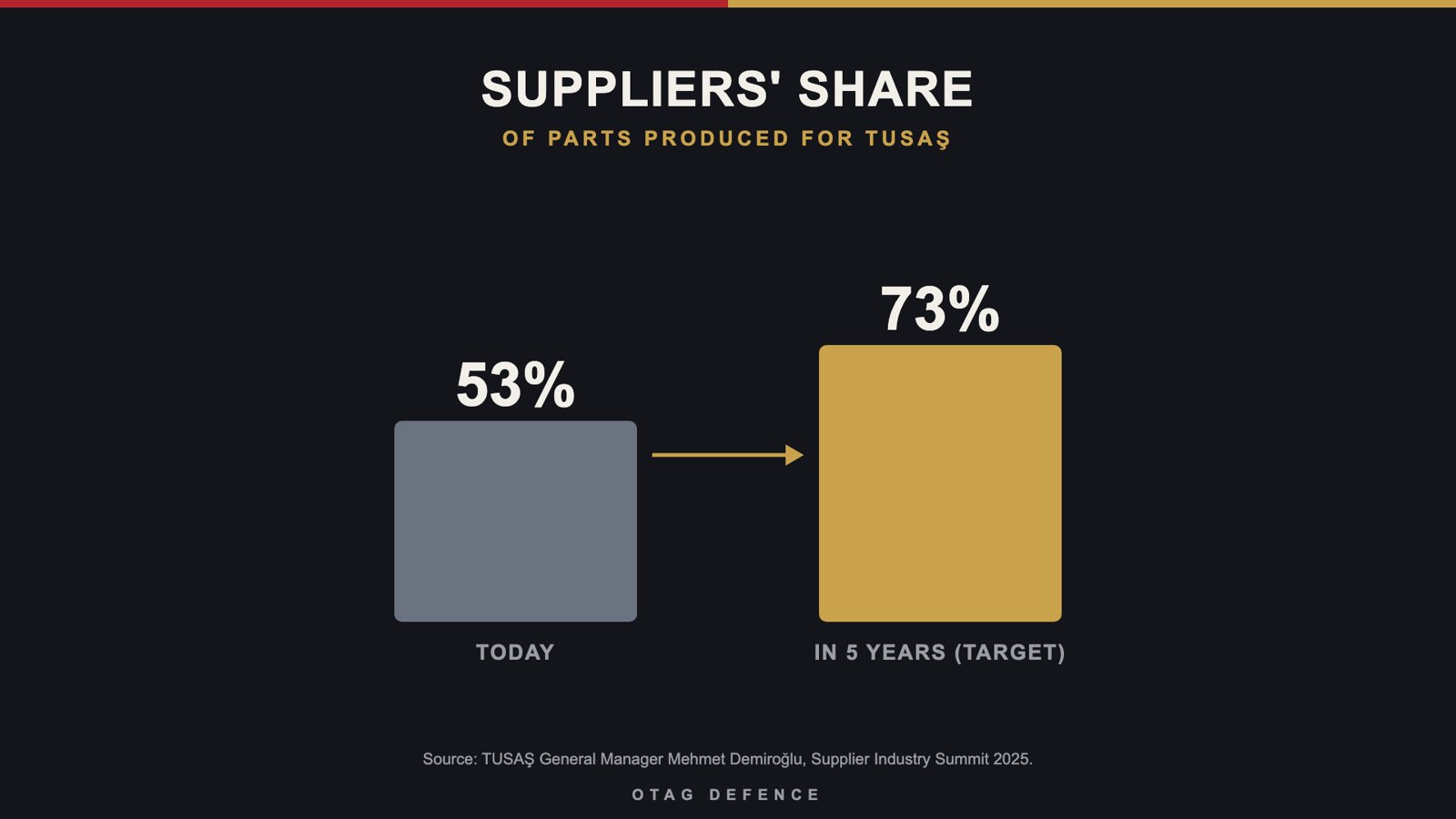
So what kind of industry does this scale require? Building prototypes and building hundreds of aircraft are different jobs. In serial production, the same part has to be made thousands of times, at the same quality, at the same cost and on time. That is exactly why Turkish Aerospace's targets were announced at a supply chain panel. Last year Demiroğlu said that 53 percent of the parts they produce are made by subcontractors, and that they aim to raise this to 73 percent in five years. In other words, 1,500 aircraft will be a test not only for Turkish Aerospace and Baykar but also for hundreds of Turkish suppliers. Then there is after-sales support. In exports, delivering the aircraft is not enough. You need to keep that aircraft flying for 20 to 30 years with maintenance, spare parts and software updates.
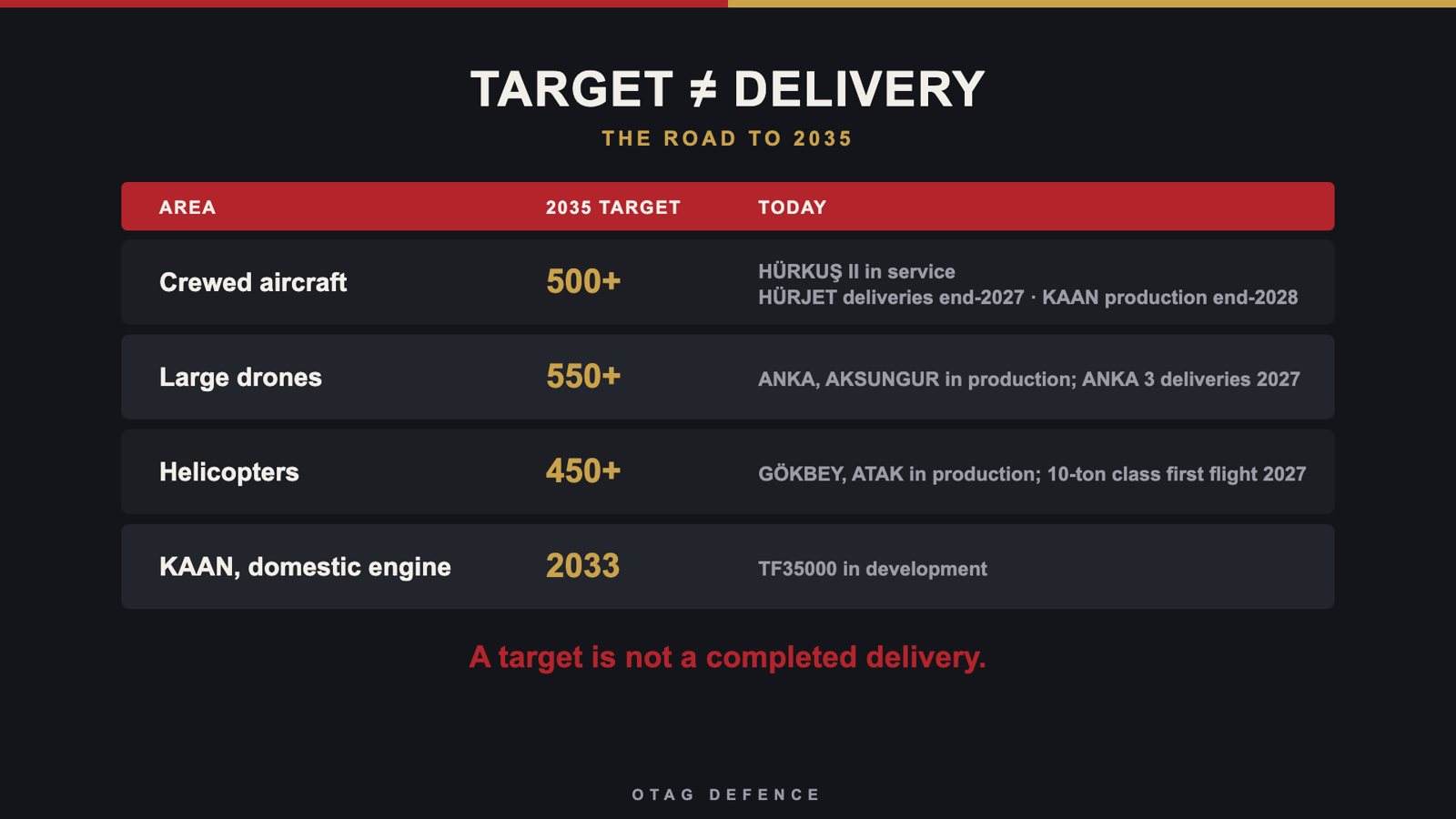
In conclusion, the picture is this: Turkish Aerospace aims to build more than 1,500 air platforms by 2035. Baykar's production is outside this figure. The export contracts for KAAN, HÜRJET and KIZILELMA show that these targets are not just on paper. But these are targets, not completed deliveries. What will shape the next decade is whether the engines arrive on time, whether production lines scale up, whether the supply chain grows and whether new export orders come in. And the hardest of these tests is the 2033 date given for TF35000, KAAN's domestic engine. When we reach 2035, it will not be the announced targets that show Türkiye's place in world military aviation, but how many of them have been achieved.
Shorts on this topic

Where will Türkiye be in 2035?

Target: aircraft, helicopters and drones with domestic engines

1,500 combat aircraft in 10 years!
Share your view in the comments under the video.
Comment on YouTubeSources
- Haber Aero – Interview with TUSAŞ General Manager Mehmet Demiroğlu (in Turkish)
- Haber Aero – TUSAŞ to build around 1,450 air vehicles by 2034 (in Turkish)
- Anadolu Agency – TUSAŞ General Manager Demiroğlu outlines the company's 10-year plans (in Turkish)
- Anadolu Agency – Contract signed for the sale of 48 KAAN jets to Indonesia (in Turkish)
- TRT Haber – HÜRKUŞ enters the inventory (in Turkish)
- Anadolu Agency – Contract signed to supply 14 HÜRKUŞ-II aircraft to Azerbaijan (in Turkish)
- Habertürk – Contracts signed for HÜRJET sale to Spain (in Turkish)
- TRT Haber – KIZILELMA's first export goes to Indonesia (in Turkish)
- Anadolu Agency – Baykar keeps its lead in the global armed drone export market (in Turkish)
- Hürriyet – GÖKBEY receives type certificate (in Turkish)
- Anadolu Agency – Türkiye brings its indigenous aero-engine capabilities under one roof (in Turkish)
- Anadolu Agency – Turkish Aerospace Industries prepares to integrate homegrown engines into aerial platforms
- TRT Haber – TF6000: More than building an engine (in Turkish)
- Anadolu Agency – TUSAŞ meets its subcontractors (in Turkish)
More analysis
 8:32
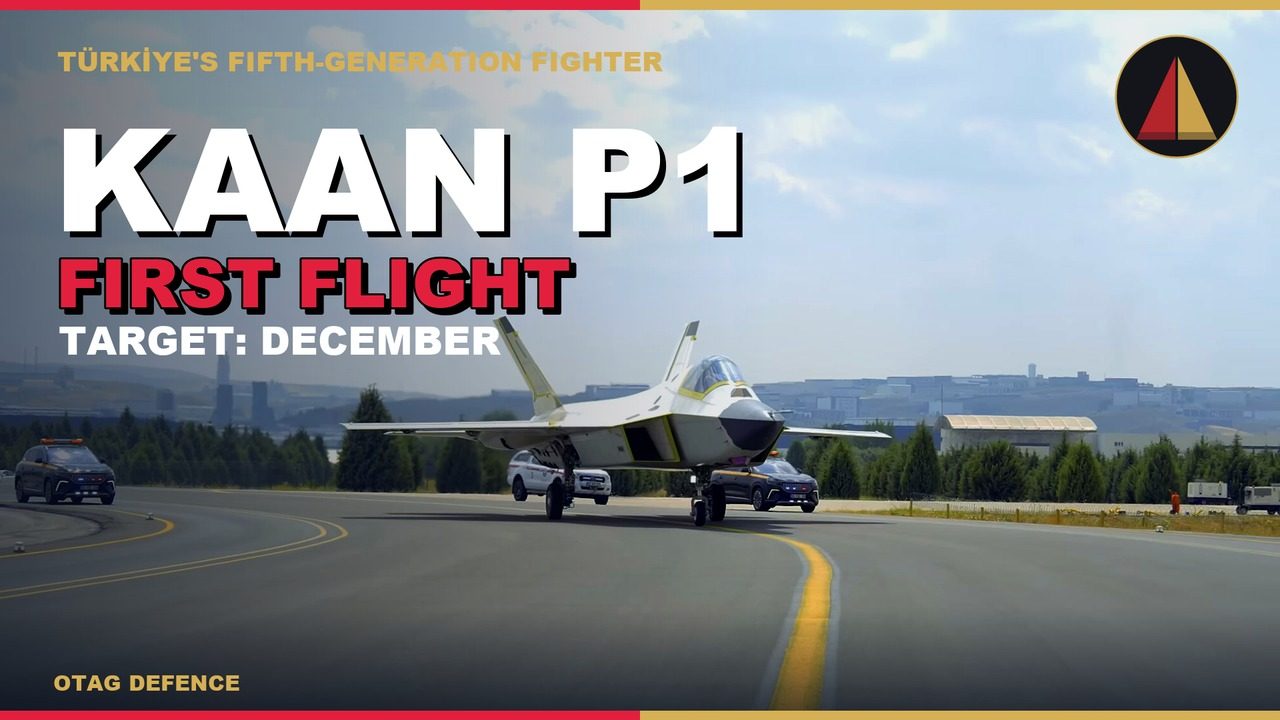
Türkiye's KAAN Stealth Fighter: Second Prototype Targets December First Flight
Otag Defence assessment“For KAAN, the question for 2026 is no longer "will it fly?" It is "how fast will the prototypes multiply?"”
 7:29
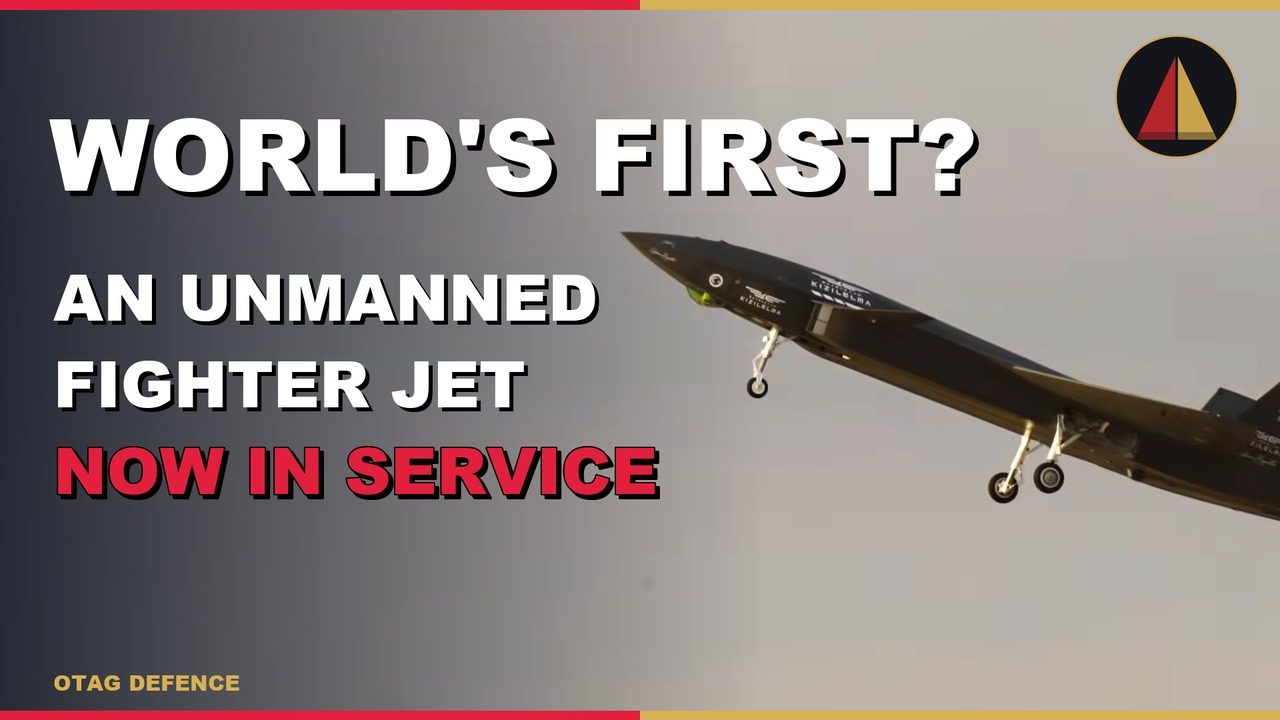
Türkiye's Kizilelma: The World's First Unmanned Fighter Jet in Service?
Is KIZILELMA really the world's first unmanned fighter in service? What does entering service actually mean? And what will Türkiye do with three aircraft?
 7:54
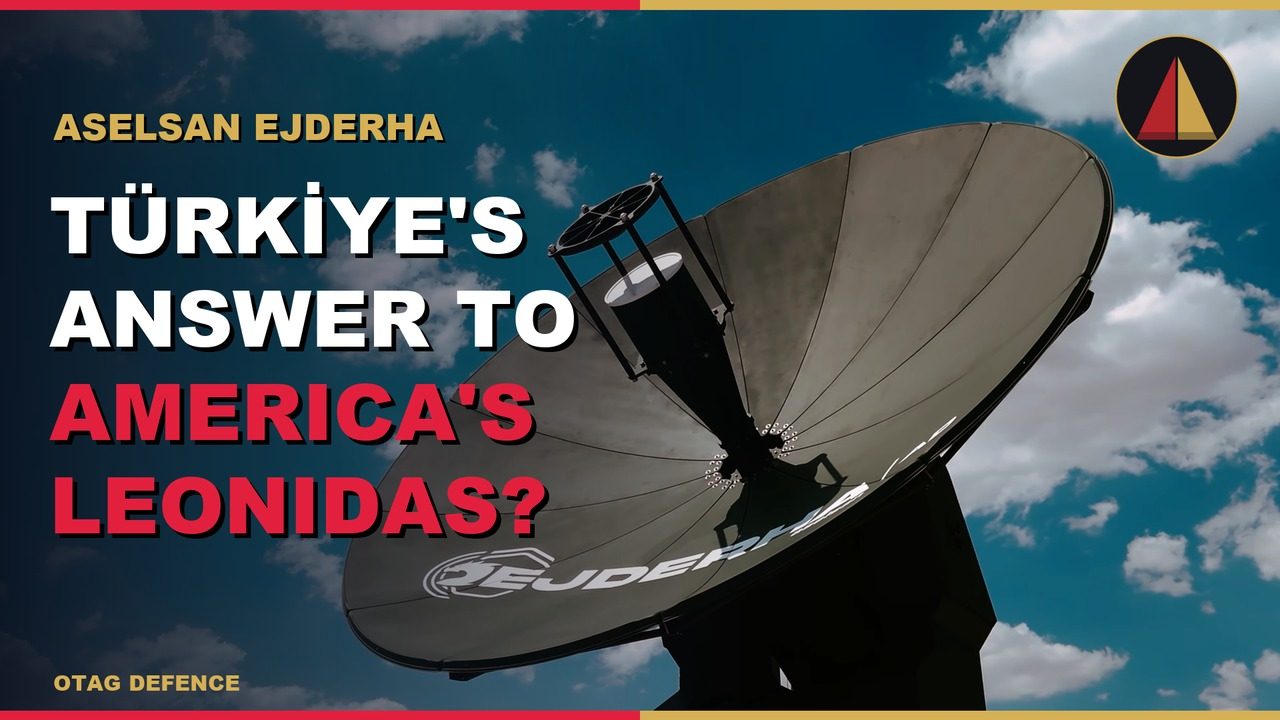
Türkiye's Answer to America's Leonidas? ASELSAN EJDERHA Explained
ASELSAN, Türkiye's largest defence electronics company, marked its 51st anniversary with a two-stage demonstration at its Gölbek Firing and Test Center near Ankara. According to the company's statement on 15 November, in the first stage EJDERHA disabled two different fibre-optic drones from about 1,000 metres. In the second stage, 51 drones launched at the same time were stopped within seconds with a single command. No missiles or bullets were used.