Türkiye's Big Space Plan
Türkiye's big space plan: a spaceport in Somalia, a domestic spacecraft bound for the Moon, ROKETSAN's Şimşek-1 rocket and a new astronaut mission. Most of these goals converge on 2027.
Why is Türkiye building its spaceport not on its own territory but thousands of kilometres away, in Somalia? When will Türkiye send its own satellite into space on its own rocket? Why will the first Turkish spacecraft to go to the Moon crash into the lunar surface at the end of its mission?
Türkiye is building a spaceport on the coast of the Indian Ocean, thousands of kilometres from its own territory. And this spaceport will enter service in 2027.
This was stated by Yusuf Kıraç, President of the Turkish Space Agency, to the Otag Defence team.
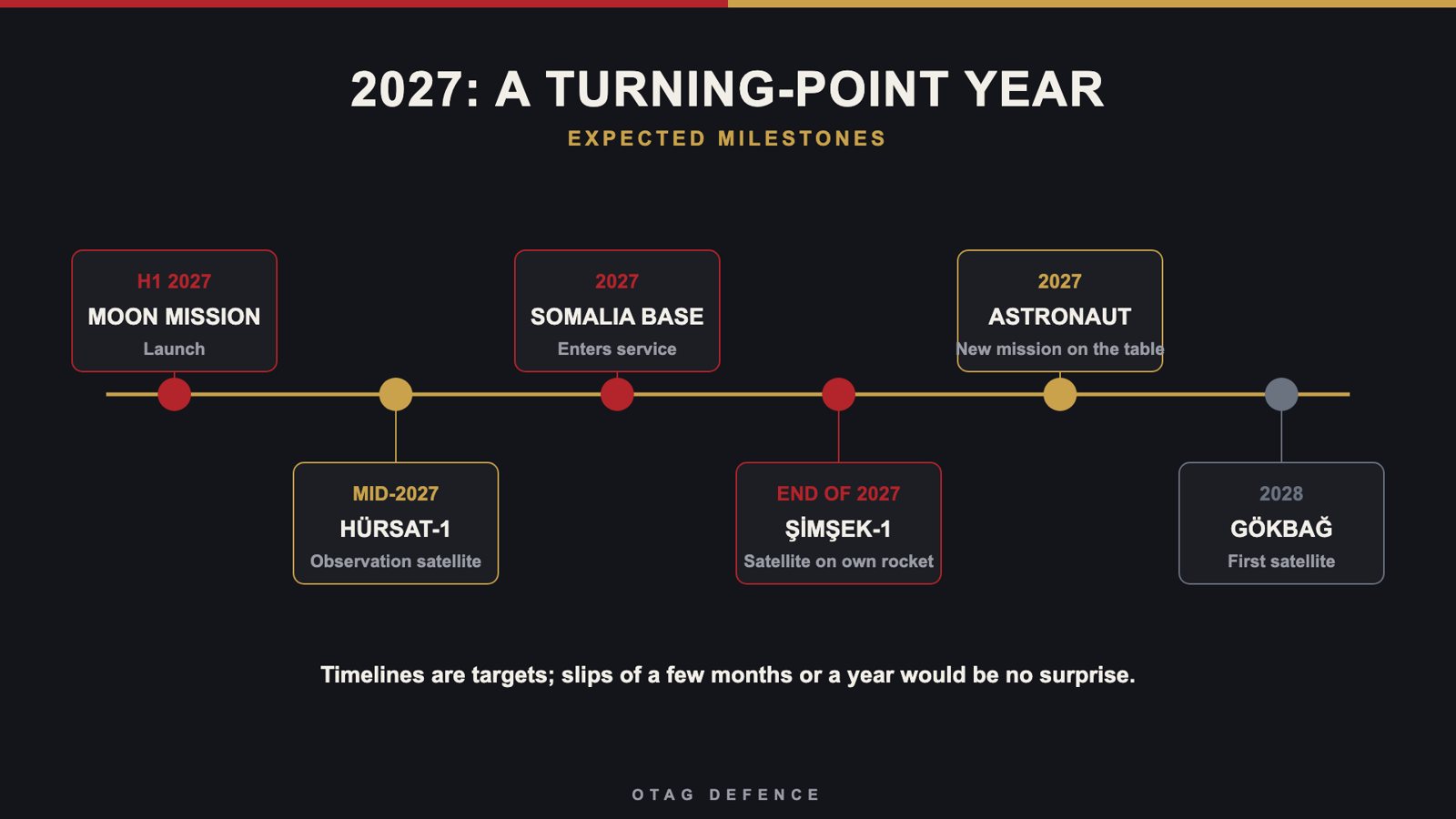
But 2027 is not only the year of the spaceport. In the same year, a domestic spacecraft is due to go to the Moon, a domestic rocket is due to carry a domestic satellite into orbit, and a new astronaut mission is on the agenda.
So where will the base in Somalia take Türkiye? What is expected in 2027? And exactly where does Türkiye stand today? That is what we examine in this video.
Let us start with the base itself.
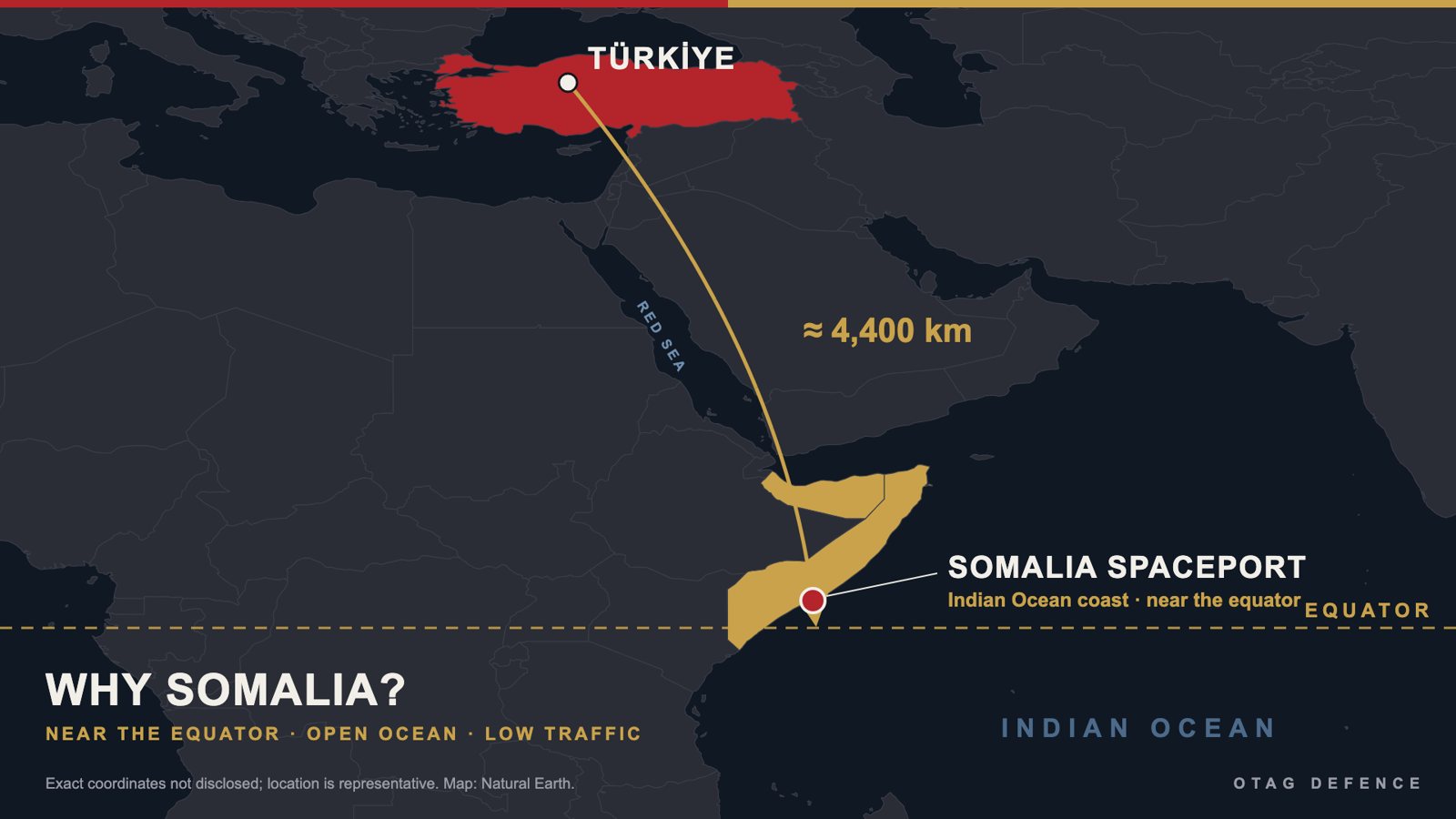
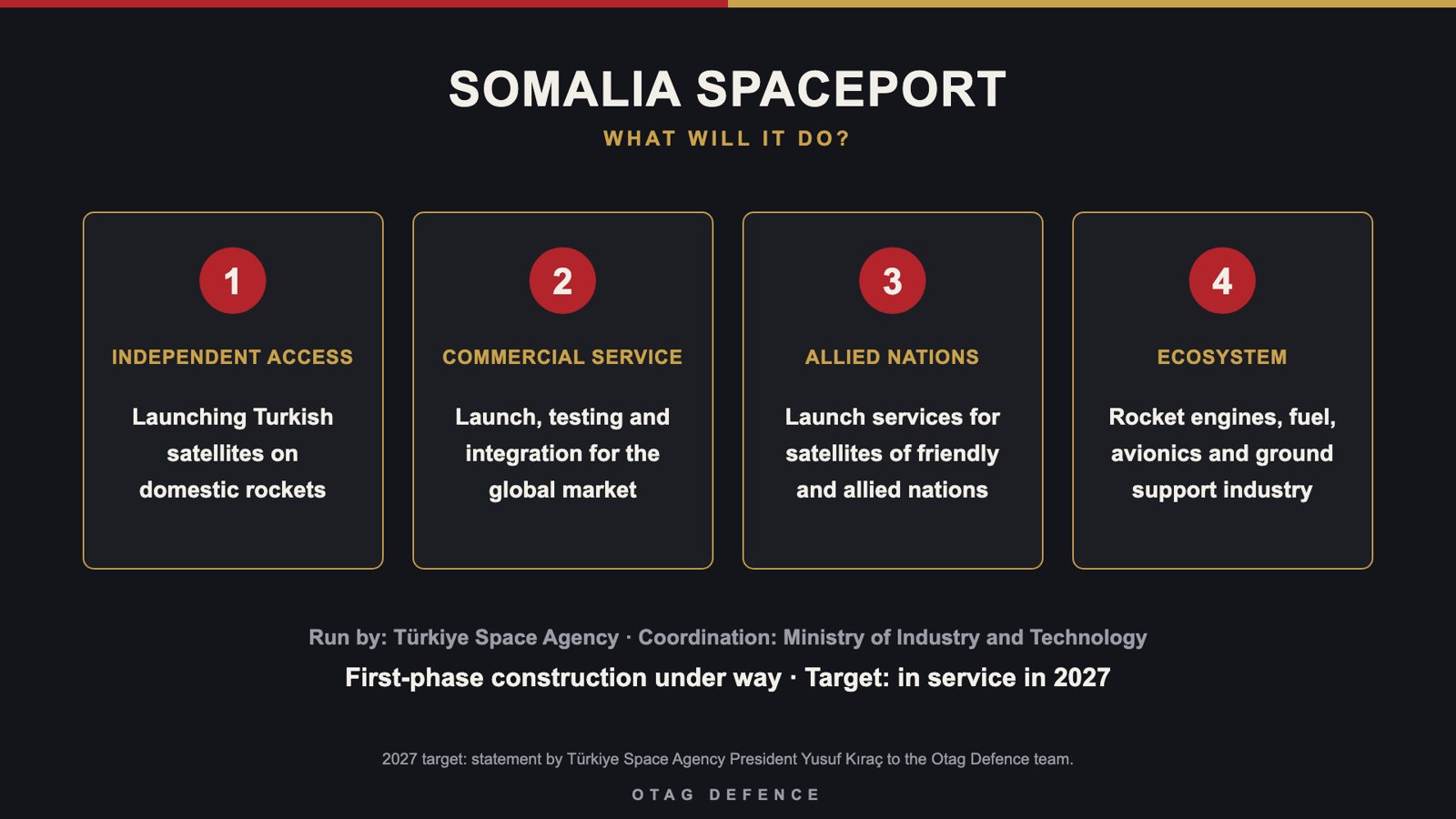
Under a cooperation agreement between the two countries, Somalia has allocated Türkiye a large area on the Indian Ocean coast. The project is run by the Turkish Space Agency under the coordination of the Ministry of Industry and Technology.
Minister Mehmet Fatih Kacır announced that feasibility and design work has been completed and that construction of the first phase has begun. President Erdoğan also announced at the International Astronautical Congress in Antalya that construction is under way.
Minister Kacır describes the base as "a strategic lever" and stresses that very few countries in the world have an independent satellite launch infrastructure.
So why Somalia?
The answer lies in geography. A rocket launched from a point close to the equator benefits more from the Earth's rotation. That means carrying a heavier payload into orbit with the same fuel.
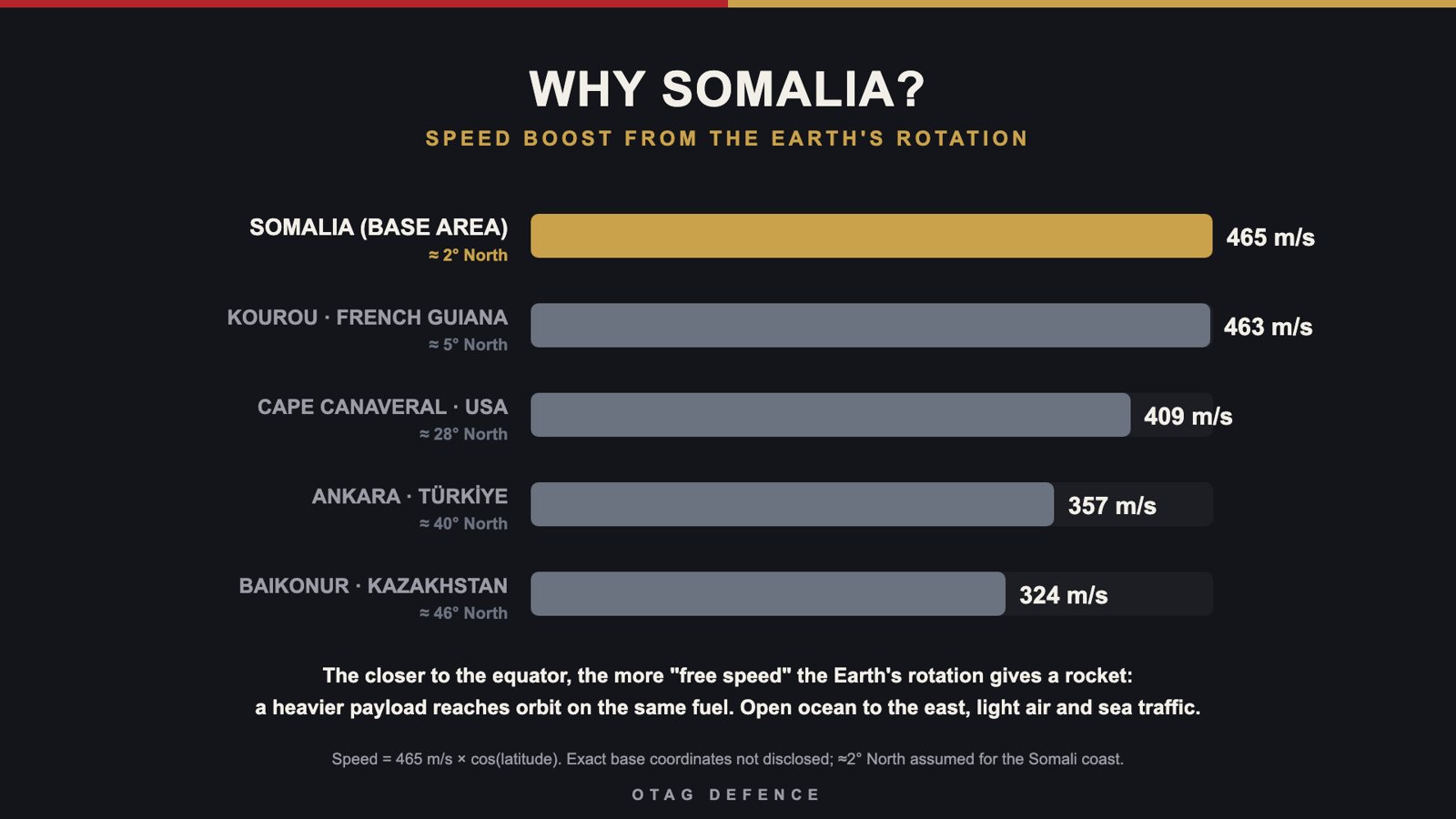
To the east of the base lies open ocean. The rocket's first stages will pass over the sea rather than over populated areas. Air and sea traffic in the region is light, and the weather is suitable for launches all year round.
Türkiye's own territory has none of these advantages. Anatolia is far from the equator and surrounded by dense air traffic and neighbouring countries. So Somalia will be Türkiye's gateway to space.
The base's role is not limited to launching Turkish rockets.
According to official statements, it will offer commercial satellite launch, testing and integration services to the world market. Satellites from friendly countries will also be able to go to space from here. The base could also be used for long-range rocket tests.
This means Türkiye is preparing to become not just a customer in space but a country that provides services.
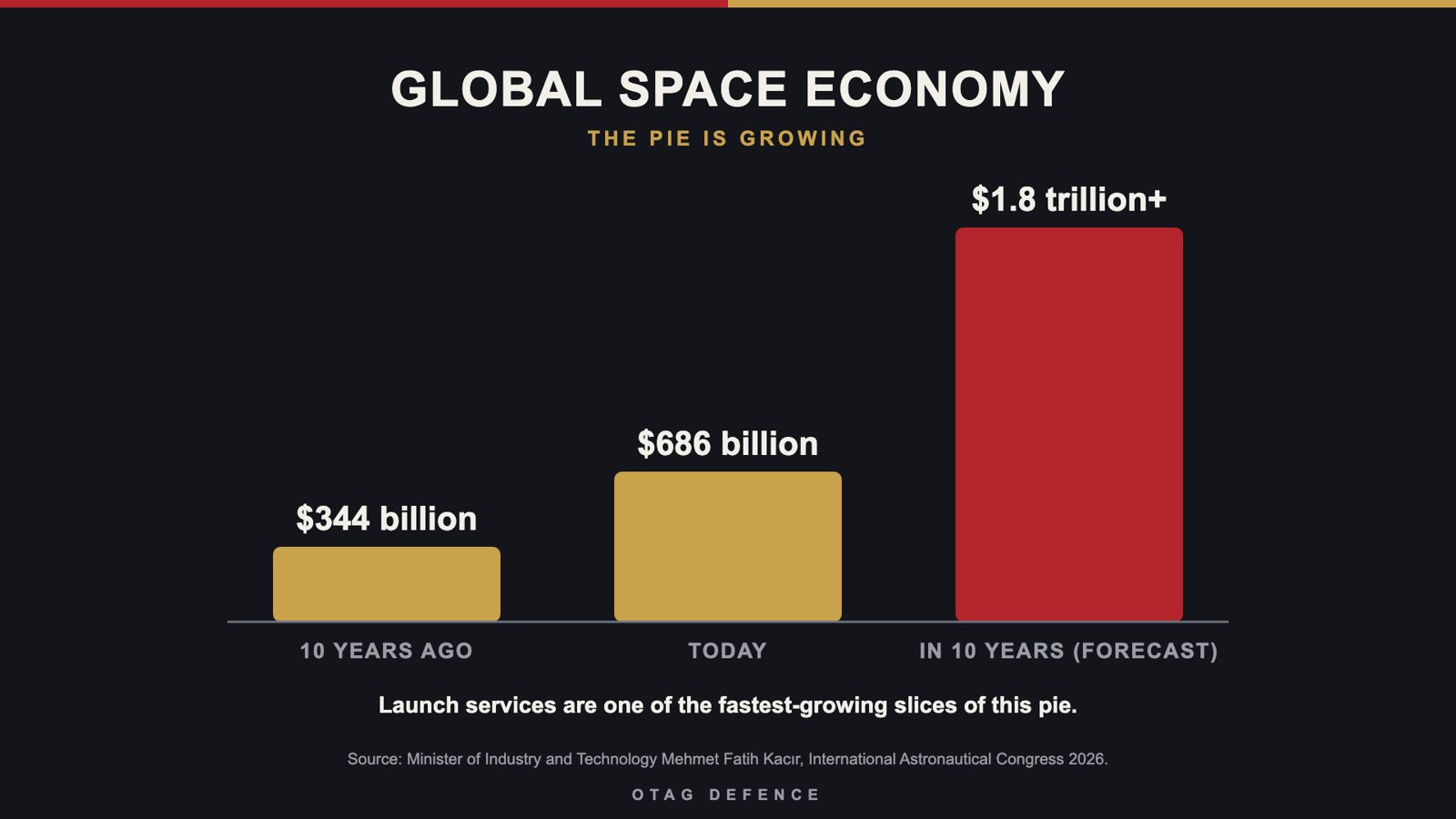
The numbers also explain why this move is being made now. According to figures shared by Minister Kacır, the global space economy grew from 344 billion dollars to 686 billion dollars over the past decade. Over the next decade it is expected to exceed 1.8 trillion dollars.
One of the fastest-growing slices of this pie is launch services. Thousands of new satellites will be sent into low Earth orbit, and the world's launch capacity cannot keep up with this demand. We are in a period when satellites wait months, even years, for a launch slot.
The Somalia base is an opportunity for Türkiye to get out of this queue and, at the same time, to earn income from it.
There is also a strategic dimension. The base strengthens Türkiye's presence in the Horn of Africa. This region overlooks one of the world's most critical maritime trade routes, between the Red Sea and the Indian Ocean. Taken together with Türkiye's military training base in Somalia and its naval cooperation there, the spaceport will be a new link in Türkiye's lasting presence in the region.
But a spaceport is only as valuable as the rocket launched from it.
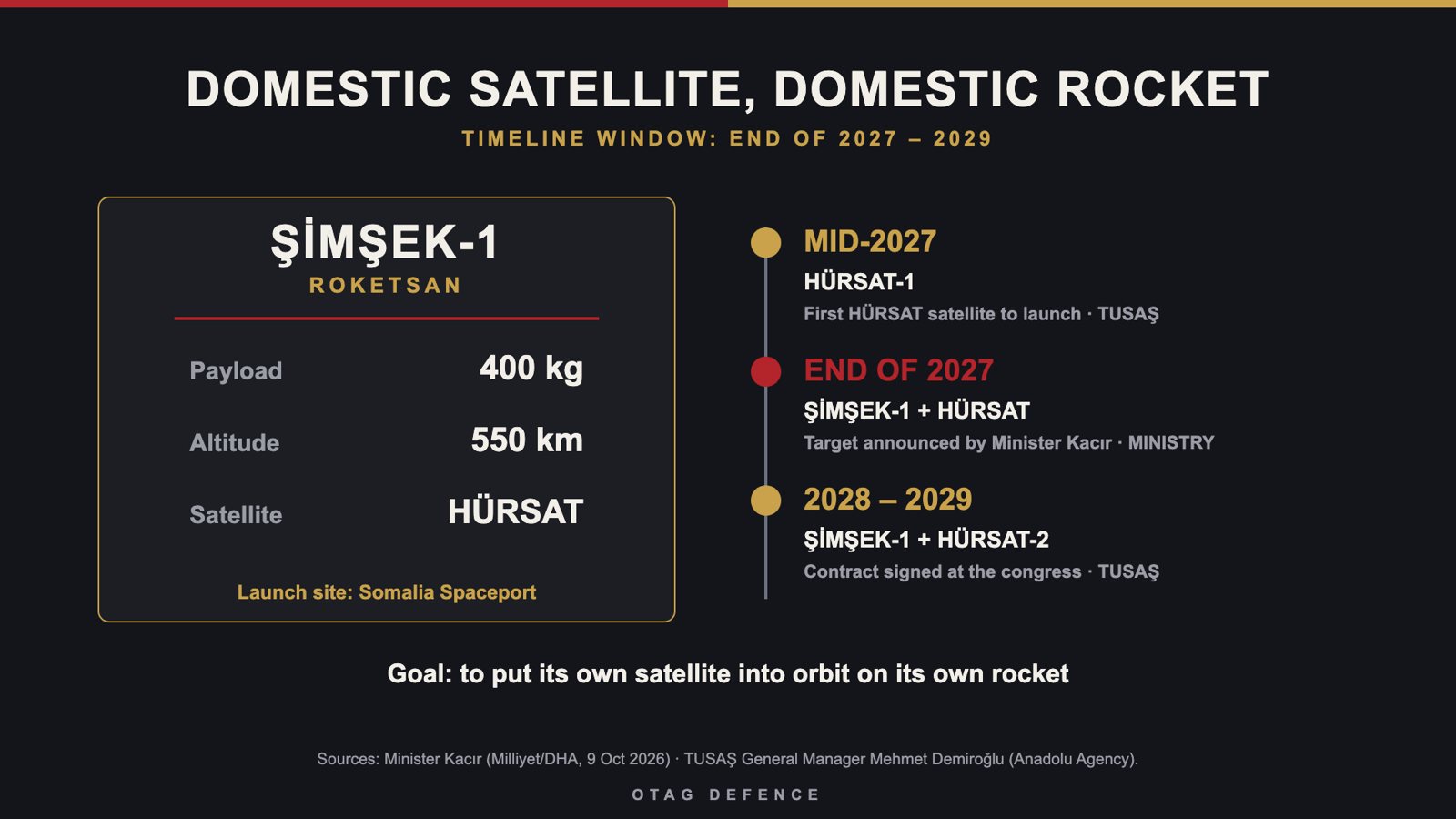
This is where ROKETSAN, Türkiye's main missile and rocket maker, comes in. At the congress in Antalya, Minister Kacır announced the goal for ROKETSAN's Şimşek-1 rocket: to carry the 400-kilogram HÜRSAT satellite to an altitude of 550 kilometres. The target date is the end of 2027.
The minister's words were clear: Türkiye will now become a country that sends its own satellite into space on its own rocket.
One detail should be noted here. Turkish Aerospace (TUSAŞ) General Manager Mehmet Demiroğlu announced that the first satellite of the HÜRSAT family will be launched in mid-2027, and that the second satellite, to be carried by Şimşek-1, will go to space between 2028 and 2029. Turkish Aerospace and ROKETSAN signed the contract for this project at the congress.
So the goal of launching a domestic satellite on a domestic rocket falls into a window between the end of 2027 and 2029. The schedule is ambitious, but ROKETSAN is not starting from zero. In 2020 it crossed the edge of space, reaching an altitude of 136 kilometres with a liquid-fuelled sounding rocket.
The most talked-about mission of 2027, however, will be the journey to the Moon.
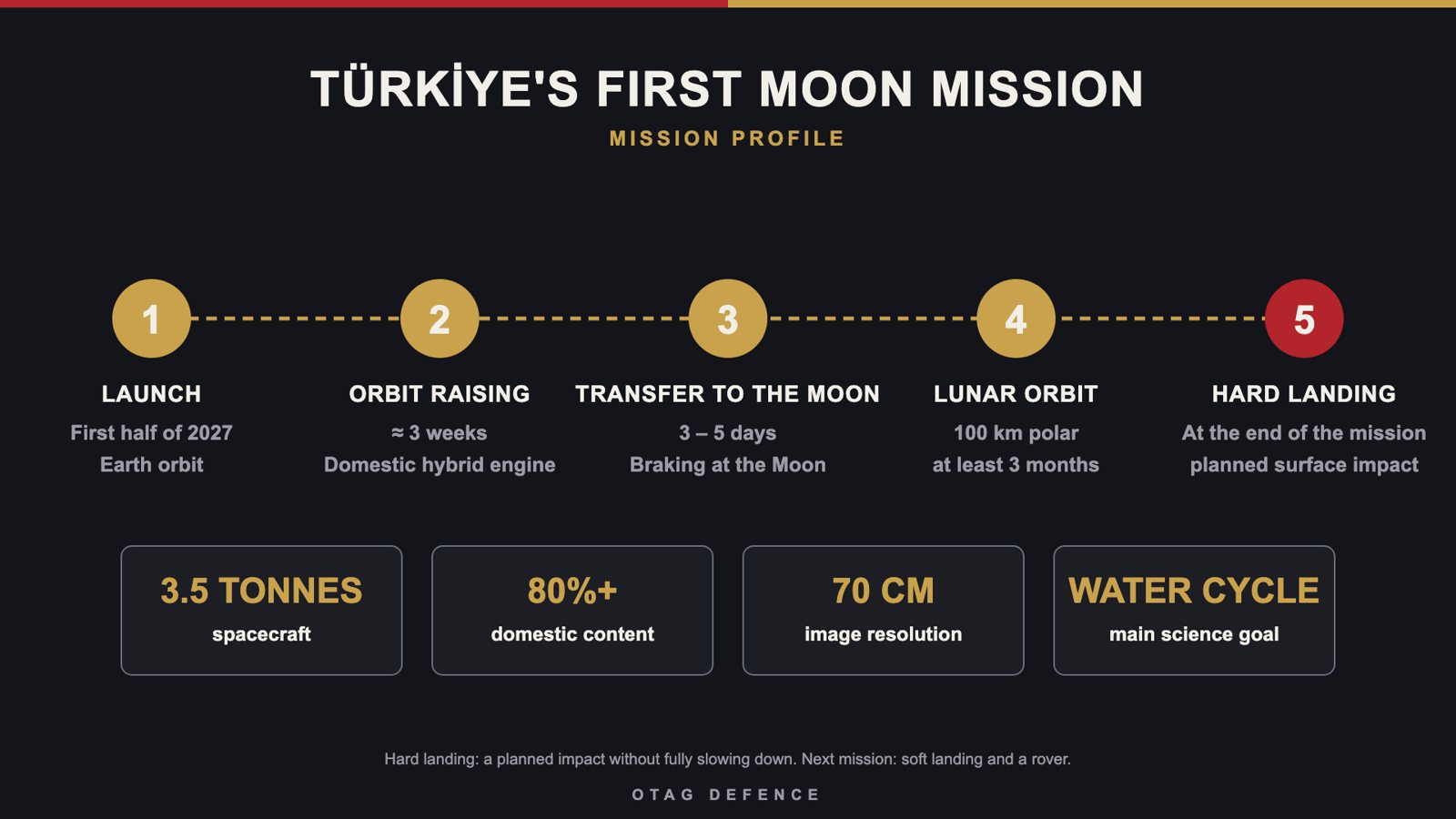
Türkiye's first lunar spacecraft is preparing to launch in the first half of 2027. It was developed by TÜBİTAK UZAY, the space technologies research institute of Türkiye's state science agency. It weighs about 3.5 tonnes, and more than 80 percent of it is domestic.
The mission will go like this: the spacecraft will first reach Earth orbit. For about three weeks it will raise its orbit, then reach the Moon after a journey of 3 to 5 days. It will settle into a pole-to-pole orbit about 100 kilometres above the Moon.
It will operate around the Moon for at least three months. It will study the water cycle on the Moon and image future landing sites at a resolution of 70 centimetres.
In the final stage of the mission, the spacecraft will make a hard landing on the Moon's surface. A hard landing means the spacecraft strikes the surface in a planned way without fully reducing its speed. The spacecraft will most likely break apart on impact. But this is not a failure; it is a deliberate technology demonstration. A hard landing means succeeding in getting a spacecraft to the Moon, putting it into orbit and bringing it into contact with the surface. It is the first big step before a soft landing.
And here is the critical point: the engine that will carry the spacecraft from Earth orbit to the Moon is domestic. The hybrid rocket engine developed by the Turkish company DeltaV has completed all its tests. The same company's hybrid rocket had earlier set an altitude record by going above 200 kilometres.
The next step is also clear. In the second Moon mission, the goal is a soft landing on the surface and putting a rover down.
Another important threshold in hybrid engine technology came from Fergani, the space company of Baykar. The company's orbital transfer vehicle fired its hybrid engine in space. This is Türkiye's first orbital transfer vehicle. In other words, satellites will not only be released into orbit; they will be able to be moved from one orbit to another in space.
On the satellite front, 2027 and beyond will also be busy.
The first satellite of the HÜRSAT family developed by Turkish Aerospace will observe at sub-metre resolution and will be launched in mid-2027.
Having built its own communications satellite with TÜRKSAT 6A, Türkiye is now preparing for TÜRKSAT 7A. Transport and Infrastructure Minister Abdulkadir Uraloğlu announced that production will begin by the end of the year.
The new-generation observation satellites İMECE-2 and İMECE-3 are also on the way. With these satellites, images will be taken of the same area more often and over wider areas.
A quiet but very important step has also been taken in positioning.
For a country, having its own positioning and timing system means independence in war and in peace. Aircraft, ships, missiles, banking and communications networks all depend on precise timing information.
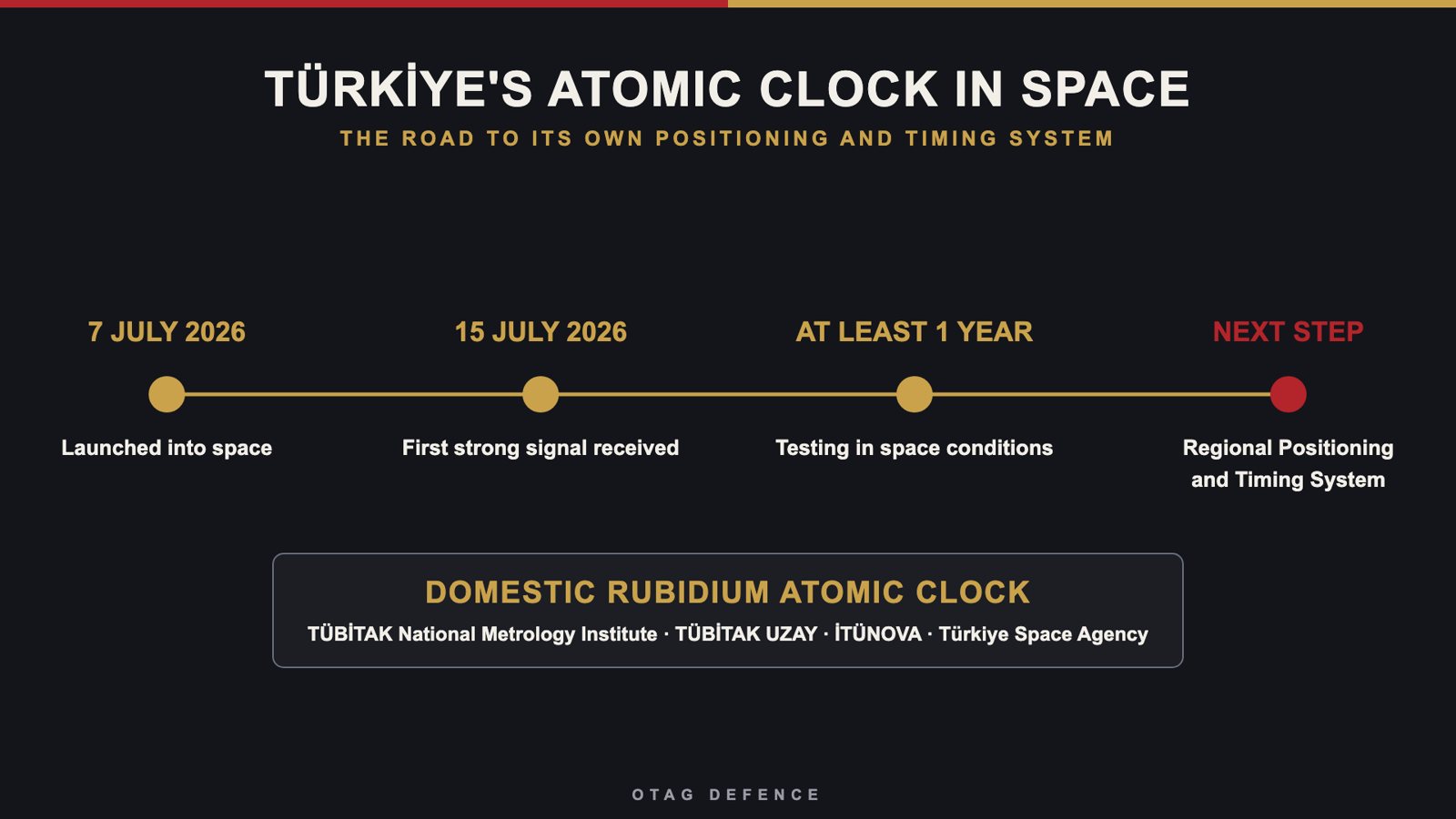
The heart of these systems is the atomic clock. In July 2026, a domestic rubidium atomic clock developed under the leadership of TÜBİTAK's National Metrology Institute was sent into space. The first signal was received on 15 July. The clock will be tested in space conditions for at least a year.
This step is a critical threshold for Türkiye's Regional Positioning and Timing System. In other words, the road to Türkiye's own GPS-like system is opening.
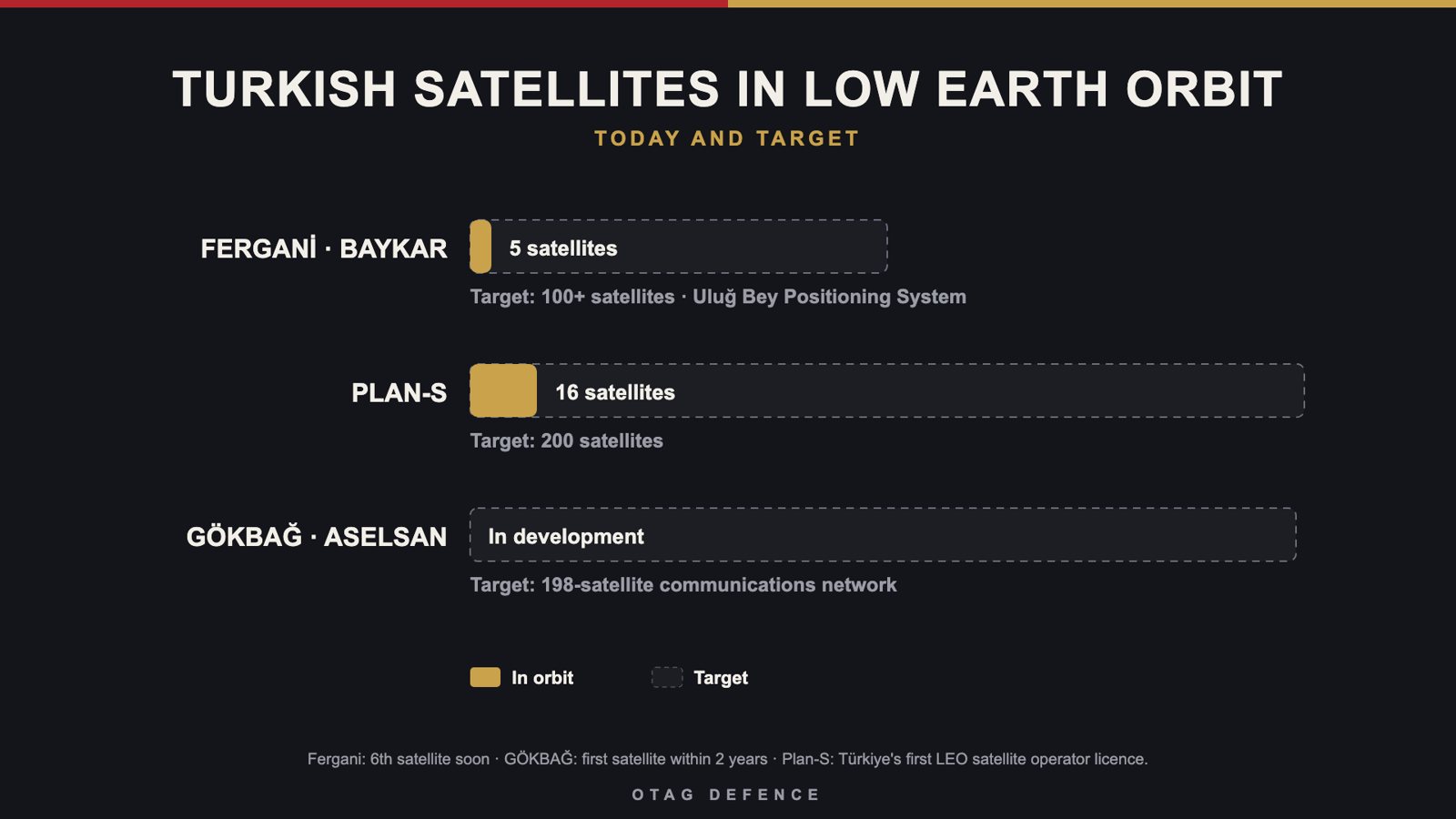
The private sector is in this race too. Fergani, the space company of Baykar, the maker of the Bayraktar TB2 drone, has so far launched five satellites. Selçuk Bayraktar announced that the sixth satellite will be sent into space within two weeks, in October or November.
Fergani's goal is the Uluğ Bey Global Positioning System, made up of more than 100 satellites within five years. The project is funded entirely by Baykar's own resources, from its export income. Fergani's satellite count is expected to reach a significant level in 2027.
ASELSAN, Türkiye's largest defence electronics company, also introduced the GÖKBAĞ project at the congress: a secure communications network of 198 interconnected satellites in low Earth orbit. The first satellite is targeted for launch within two years. Ankara-based Plan-S has reached 16 communications satellites in orbit and became the first company in Türkiye to receive a licence in this field.
The door is also open in human spaceflight.
Alper Gezeravcı went to the International Space Station in 2024. Tuva Cihangir Atasever made a suborbital flight in the same year.
At the congress in Antalya, executives of the American company that carried Gezeravcı to space said new talks with Türkiye were under way and that they expected to take another Turkish astronaut to space soon. In other words, a new Turkish astronaut going to space in 2027 is on the table.
Behind all these projects lies a strong scientific base.
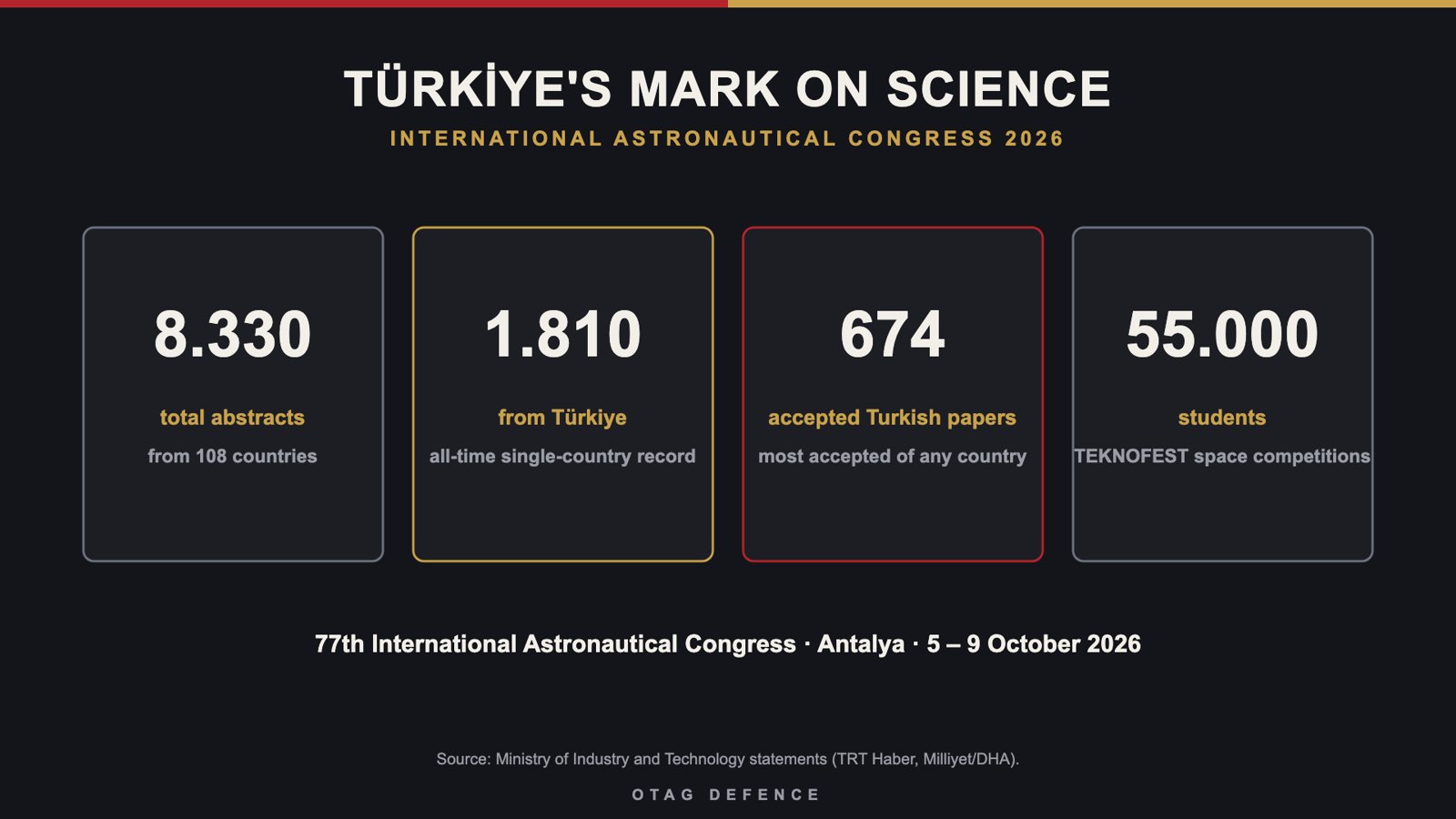
The International Astronautical Congress in Antalya received 8,330 papers from 108 countries. 1,810 of them came from Türkiye. This is the highest number from a single country in the congress's 77-year history.
674 of the accepted papers belong to Turkish scientists. Türkiye was the country with the most accepted papers.
55,000 students applied to the space competitions at TEKNOFEST, Türkiye's large technology festival. These young people, who are designing vertical-landing rockets today, will be the space engineers of tomorrow.
So what does this whole picture mean?
Our view is this: 2027 is a candidate to be a turning point in Türkiye's space history.
If the lunar spacecraft succeeds, Türkiye will become one of the very few countries that have put a spacecraft into lunar orbit and reached its surface. That means competence in deep-space communications, navigation and propulsion technologies.
But the real breaking point is the pairing of Somalia and Şimşek-1. Even our spacecraft going to the Moon will today be launched on a foreign rocket. A country that cannot launch its own rocket from its own base will always depend on someone else's schedule and permission in space.
The Somalia base and the domestic rocket aim to break this dependence.
Of course, the schedules are ambitious. The Moon mission was first planned for 2023. The domestic rocket target has also been postponed several times. But this time the difference is this: the spacecraft has been built, the engine tests have been completed, construction of the base has begun and the contracts have been signed.
Even if not all of the 2027 targets are met, a journey with a clear direction has begun.
So with these developments, which place will Türkiye rise to in the world space league? Who is in the first league, and which countries are competing in the second and third leagues?
We will cover that in our next video.
Share your views in the comments.
Don't forget to follow Otag Defence.
Shorts on this topic

Türkiye's record at the space congress: 1,810 papers

Its own satellite on its own rocket: Şimşek-1

Türkiye's Moon craft will crash on purpose

Why is Türkiye building a spaceport in Somalia?
Share your view in the comments under the video.
Comment on YouTubeSources
- Anadolu Agency – Details of the spaceport to be built in Somalia announced (in Turkish)
- Anadolu Agency – First HÜRSAT satellite launch in mid-2027 (in Turkish)
- TRT Haber – HÜRSAT to enter service in 2027 (in Turkish)
- ROKETSAN – A Turkish rocket reaches space on liquid fuel for the first time (in Turkish)
- Anadolu Agency – Türkiye's first lunar mission to demonstrate deep-space capability (in Turkish)
- CNN Türk – Target for Türkiye's first lunar mission: second quarter of 2027 (in Turkish)
- Anadolu Agency – Türkiye plans to launch lunar spacecraft in early 2027
- DeltaV – Lunar Mission
- Anadolu Agency – DeltaV's hybrid rocket breaks a record by passing 200 km altitude (in Turkish)
- Anadolu Agency – Türkiye's first orbital transfer vehicle FGN-TUG-S01 fires its hybrid engine in space (in Turkish)
- TÜBİTAK – TÜRKSAT 6A officially enters service (in Turkish)
- Haber Aero – Schedule set for Türksat 7A (in Turkish)
- Turkish Space Agency – Türkiye's first domestic atomic clock heads to space (in Turkish)
- TÜBİTAK – Türkiye's domestic atomic clock launched into space (in Turkish)
- TRT Haber – Türkiye's domestic atomic clock launched into space (in Turkish)
- Baykar – Fergani's fifth satellite in orbit (in Turkish)
- Baykar – Fergani Space (in Turkish)
- Habertürk – FGN-100-D3 begins its mission (in Turkish)
- Milliyet – Focus on the race that has not yet begun (in Turkish)
- Anadolu Agency – ASELSAN unveils its GÖKBAĞI communications satellite constellation (in Turkish)
- TRT Haber – First footage of the GÖKBAĞI project's first satellite (in Turkish)
- Anadolu Agency – Plan-S now has 16 satellites in orbit (in Turkish)
- Anadolu Agency – A new era in satellite-based communications in Türkiye (in Turkish)
- Anadolu Agency – Türkiye's second astronaut Atasever to carry out seven experiments (in Turkish)
- Haber Aero – After Gezeravcı, a message about the second Turkish astronaut (in Turkish)
- Anadolu Agency – Astronauts stress peaceful use of space at IAC 2026
- TRT Haber – Space summit in Antalya breaks the registration record (in Turkish)
- Sabah – Record number of applications to the International Astronautical Congress (in Turkish)
- TEKNOFEST – Rocket Competition (in Turkish)
- TEKNOFEST – Vertical Landing Rocket Competition (in Turkish)
- Habertürk – Güntay Şimşek, "Türkiye will build a spaceport in Somalia" (in Turkish)
- Habertürk – Güntay Şimşek, "Where will Türkiye stand in space?" (in Turkish)
More analysis
 8:32
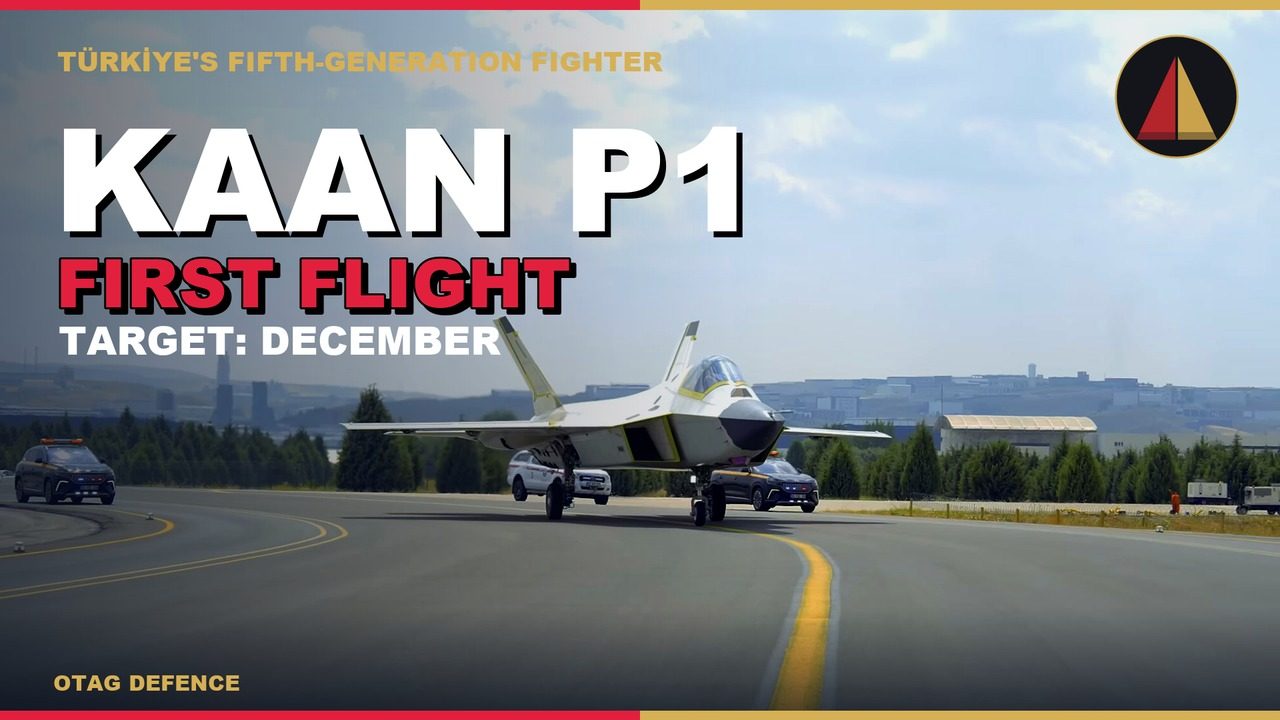
Türkiye's KAAN Stealth Fighter: Second Prototype Targets December First Flight
Otag Defence assessment“For KAAN, the question for 2026 is no longer "will it fly?" It is "how fast will the prototypes multiply?"”
 7:29
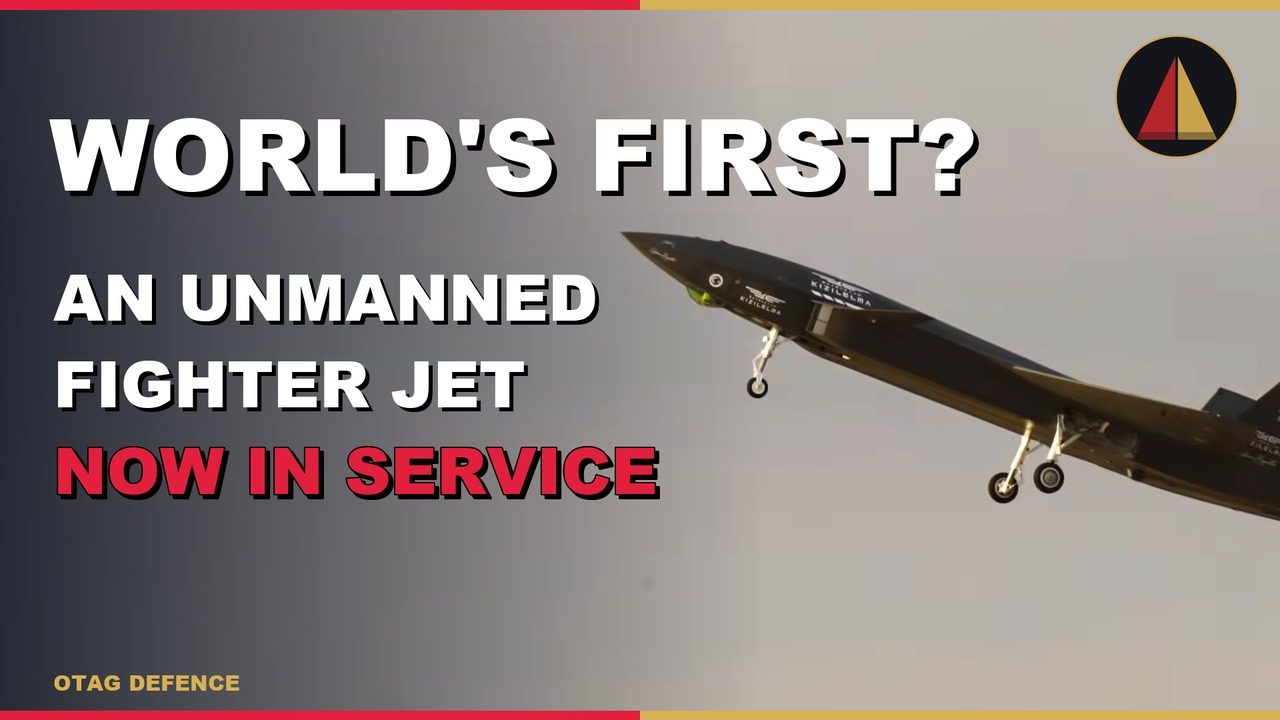
Türkiye's Kizilelma: The World's First Unmanned Fighter Jet in Service?
Is KIZILELMA really the world's first unmanned fighter in service? What does entering service actually mean? And what will Türkiye do with three aircraft?
 7:54
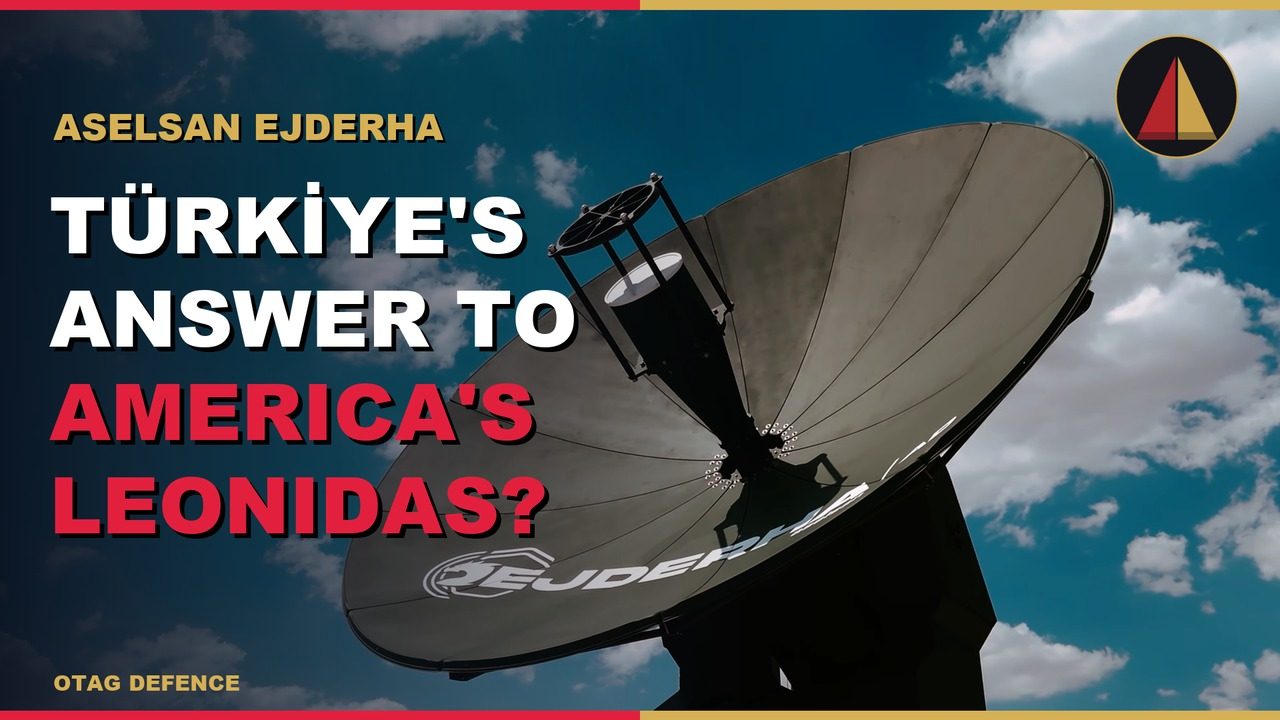
Türkiye's Answer to America's Leonidas? ASELSAN EJDERHA Explained
ASELSAN, Türkiye's largest defence electronics company, marked its 51st anniversary with a two-stage demonstration at its Gölbek Firing and Test Center near Ankara. According to the company's statement on 15 November, in the first stage EJDERHA disabled two different fibre-optic drones from about 1,000 metres. In the second stage, 51 drones launched at the same time were stopped within seconds with a single command. No missiles or bullets were used.